

Key Takeaways
Graduated Driver Licensing (GDL)
Graduated Driver Licensing (GDL) is a system used in all 50 U.S. states that phases new teen drivers into full driving privileges over time. Rather than granting an unrestricted license the moment a teenager passes a test, GDL requires completing several stages - each with specific restrictions that are gradually lifted as experience grows. The goal is to reduce crash risk during the highest-risk period of a new driver's life.
GDL laws vary by state in their exact age thresholds, supervised hour requirements, and restriction details. Parents should verify the specific rules in their state through their state's Department of Motor Vehicles (DMV) or equivalent licensing agency.
Why Graduated Licensing Exists
Motor vehicle crashes are consistently among the leading causes of death for teenagers in the United States. New drivers - regardless of age - lack the hazard perception and split-second decision-making that come only from time behind the wheel. For teenagers, that inexperience is compounded by developmental factors: the part of the brain that governs impulse control and risk assessment is still maturing well into the mid-twenties.
GDL was developed in response to these realities. By introducing driving privileges in stages, the system limits exposure to the highest-risk situations - late-night roads, peer distractions, highway speeds - until a driver has built a foundation of experience in lower-risk conditions. Research has consistently supported GDL's effectiveness. Studies cited by the Insurance Institute for Highway Safety (IIHS) indicate that strong GDL laws are associated with meaningful reductions in fatal crash rates among 16- and 17-year-olds.
#1
Cause of teen death in the U.S.
Motor vehicle crashes are among the leading causes of death for Americans aged 15-19, according to the Centers for Disease Control and Prevention (CDC).
~3x
Crash rate vs. experienced drivers
The IIHS reports that per mile driven, teen drivers aged 16-17 have crash rates approximately three times higher than drivers aged 20 and older.
50
U.S. states with GDL laws
Every U.S. state and the District of Columbia has enacted some form of graduated driver licensing, though the strength and specifics of each program vary considerably.
The Three Stages Parents Need to Know
While the details differ by state, GDL systems generally follow a three-stage structure:
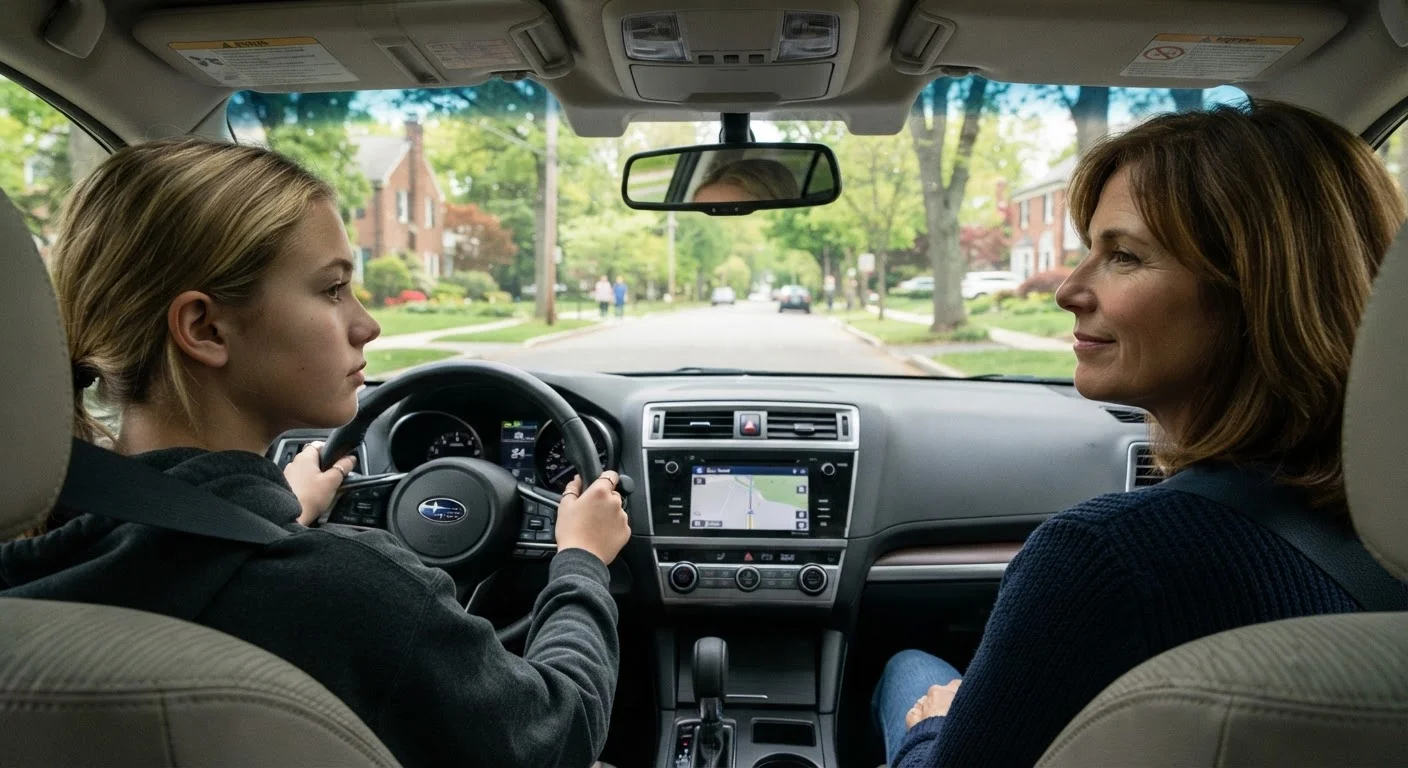
- Learner's Permit: The teen may drive only when supervised by a licensed adult. Most states require a written knowledge test to obtain the permit, set a minimum holding period (often six months), and mandate a minimum number of supervised practice hours before advancing. This stage is the foundation - and parents are the primary instructors.
- Intermediate (Provisional) License: The teen has passed a road skills test and can drive independently - but with restrictions. The most common limits involve nighttime driving (curfews that vary by state) and passenger limits (often no more than one non-family teen passenger). These restrictions target the two situations most strongly linked to teen crash risk.
- Full Unrestricted License: After maintaining a clean record and meeting the state's minimum age and time requirements, restrictions are lifted. This typically happens at age 17 or 18, depending on the state.
Understanding which stage your teen is in - and what the specific rules are in your state - is a parental responsibility. The DMV website for your state is the authoritative source.
Keep a Practice Log from Day One
Many states require documentation of supervised hours when advancing through GDL stages. Start a simple driving log the day your teen gets their permit, recording date, duration, conditions, and type of driving practiced. This removes guesswork when it's time to apply for the next stage - and helps you identify gaps in practice experience.
Common Restrictions and Why They Matter
Nighttime restrictions exist because crash risk rises sharply after dark for all drivers, and especially for inexperienced ones. Reduced visibility, fatigue, and a higher proportion of impaired drivers on the road combine to create conditions that demand advanced hazard-anticipation skills. For more on how night driving differs from daytime, see our guide: Night Driving Demands a Different Approach Than Daytime.
Passenger restrictions address a well-documented phenomenon: crash risk for teen drivers increases with each additional peer passenger in the vehicle. Conversation, noise, and social pressure to drive impressively all divert attention at moments when full focus is essential.
Cell phone and hands-free restrictions are stricter for teens in most states than for adult drivers. Many states prohibit all handheld and even hands-free device use for drivers under 18, regardless of whether the state permits hands-free use for adults.
These aren't arbitrary rules. Each restriction maps directly to a documented crash risk factor for new drivers. What New Drivers Often Get Wrong in Their First Year explores many of the same patterns that GDL restrictions are designed to address.
How Parents Can Support Safe Skill-Building
State minimums for supervised practice hours are a floor, not a target. Safety advocates and researchers generally recommend significantly more supervised time - including practice in a variety of conditions: rain, highway merging, night driving under supervision, and busy urban traffic. Each environment demands different skills.
Structured practice matters more than simply accumulating hours. Parents can help by narrating hazards aloud, asking the teen to explain their decisions, and introducing more complex scenarios progressively. Modeling calm, attentive driving habits is equally important - teens observe how adults behave behind the wheel.
GDL Rules Apply Even After Passing the Road Test
A common source of confusion: earning an intermediate license through a successful road test does not mean all restrictions have been lifted. Nighttime curfews, passenger limits, and device restrictions remain in force until the driver meets the state's age and time thresholds for a full license. Violations during this period can delay full licensure or result in suspension.
Once your teen earns greater independence, the conversation shouldn't stop. Discussing real situations they've encountered, reinforcing the purpose of GDL rules rather than just the rules themselves, and building their habit of defensive driving sets a foundation that outlasts any licensing stage.
When your teen approaches full licensure, the responsibilities of ownership expand significantly. Our guide to first car ownership covers the financial and legal realities that come with that next step.