

Key Takeaways
Starting System Triad
The battery, alternator, and starter are three distinct but tightly interdependent components that together make a vehicle start and keep running. The battery provides the initial electrical burst, the starter uses that energy to crank the engine, and the alternator replenishes the battery while the engine runs. When any one of these components fails, the result is often a car that won't start or one that dies unexpectedly.
These three components form the heart of a vehicle's charging and cranking circuit, which operates at 12 volts DC in virtually all modern gasoline and non-hybrid diesel passenger cars sold in the United States.
What Each Component Actually Does
Understanding why a car won't start begins with knowing what each component is supposed to do in the first place.
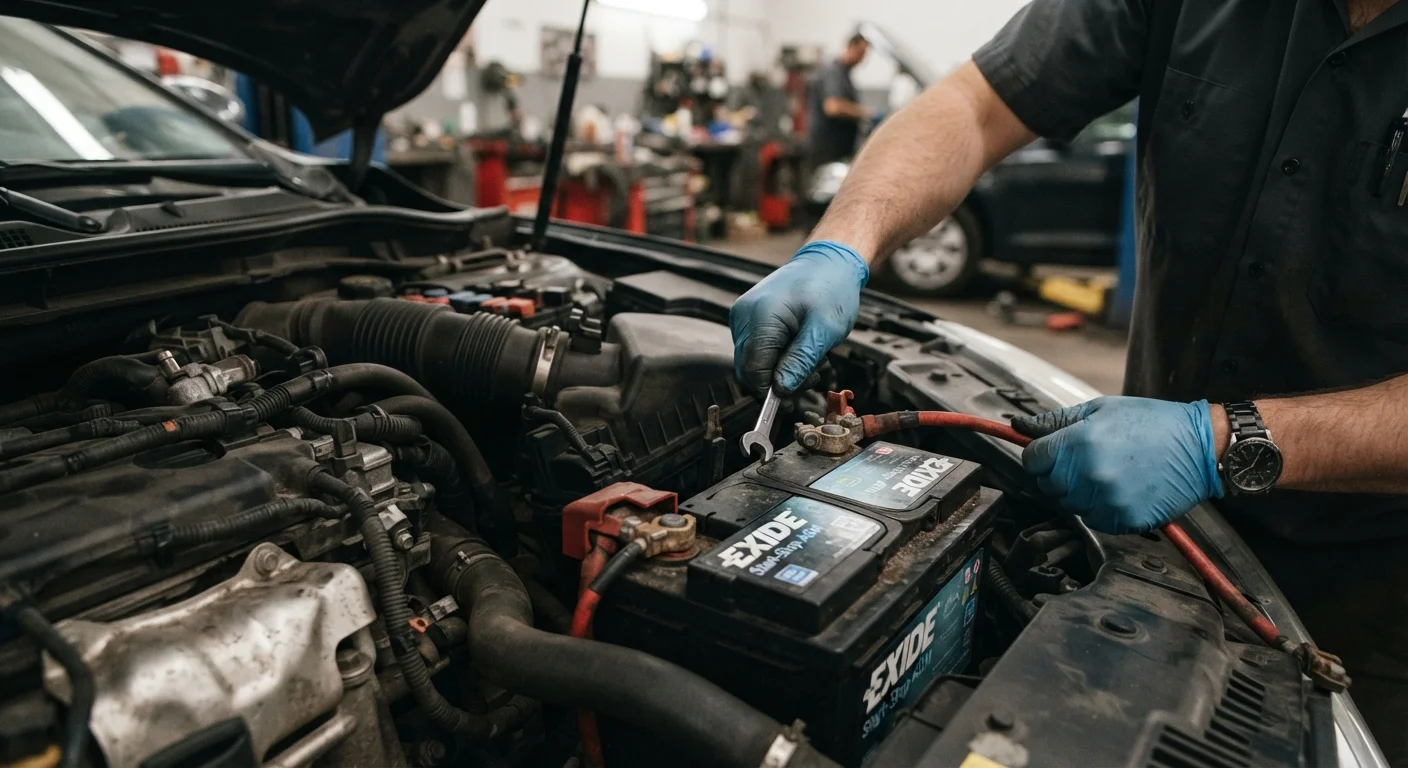
The battery is the system's power reservoir. It stores chemical energy and converts it to electrical energy on demand. When you turn the key or press the start button, the battery delivers a high-amperage surge to both the starter motor and the vehicle's electronics. It also powers lights, the radio, and control modules when the engine is off.
The starter is a small but powerful electric motor bolted to the engine block. It engages a gear (called a pinion) that meshes with the engine's flywheel and physically spins the engine fast enough for combustion to begin - typically 200 RPM or more. Once the engine fires, the starter disengages automatically.
The alternator is driven by a belt connected to the running engine. It generates alternating current (AC), which is converted internally to direct current (DC) to continuously recharge the battery and power all electrical systems while the engine runs. Without a functioning alternator, every mile driven draws down the battery until the car eventually stalls.
How the Three Systems Work Together
These three components function as a loop. The battery enables the starter; the starter enables the engine; the running engine drives the alternator; and the alternator sustains the battery. Break any link in that chain and the loop fails.
3-5 years
Typical car battery lifespan
According to AAA, most car batteries need replacement within 3 to 5 years, with failure rates rising sharply after year four.
~200 RPM
Minimum engine speed needed to start
Most gasoline engines require the starter to spin them to at least 200 RPM before the ignition and fuel systems can sustain combustion independently.
Up to 35%
Cold-weather battery power reduction
Battery Council International notes that a lead-acid battery can lose up to 35% of its cranking power at 32°F compared to its rating at 80°F.
A cold start places the greatest combined stress on all three systems simultaneously. Cold temperatures thicken engine oil, requiring more torque from the starter to turn the engine over. At the same time, cold reduces a battery's available cranking power - a battery that performs adequately at 70°F may deliver significantly less power at 20°F. The alternator then works harder during the first minutes of driving to restore the charge the battery just spent. This is why cold-weather mornings are when aging components reveal themselves.
For a broader look at the electrical and mechanical systems every driver should monitor, see our guide to essential car maintenance for new drivers.
Diagnosing Which Component Has Failed
The symptoms of failure differ enough between the three components to provide useful diagnostic clues - though professional testing is always advisable before replacing parts.
Test Before You Replace
Before spending money on a new battery, alternator, or starter, have each component tested individually. Many auto parts retailers perform battery and alternator load tests at no charge using professional-grade equipment. This step can save you from replacing the wrong part - a common and costly mistake when diagnosing starting problems.
- Rapid clicking, no crank: The battery likely lacks sufficient charge or has a bad cell. The starter solenoid is clicking but not engaging because there isn't enough current to operate the motor.
- Slow, labored cranking: The battery may be weak or the starter motor may be drawing too much current due to wear. Both should be tested.
- Single loud click, no crank: Often points to the starter solenoid or a seized starter motor. A bad battery connection can also produce this symptom.
- Engine starts, then warning lights appear or car stalls while driving: The alternator is a primary suspect. Dashboard warning lights - particularly a battery icon or a charge warning - illuminate when the system voltage drops below normal.
- Car starts normally but battery repeatedly goes dead overnight: This suggests either a weak battery that can no longer hold a charge, or a parasitic electrical drain unrelated to the alternator.
Many nationwide auto parts retailers provide free battery and alternator testing using a handheld load tester. These tests take only a few minutes and can confirm whether a component is within spec before you commit to a replacement.
Keeping All Three Components Healthy
Preventive awareness goes a long way toward avoiding a stranded situation. A few practical habits help extend the life of all three systems.
Have the battery tested annually once it is three years old. Most batteries carry a 3-5 year service life, and proactive testing reveals a weakening battery before it leaves you stranded. Keep battery terminals clean and free of corrosion - a buildup of white or bluish residue on terminals increases resistance and can mimic battery failure.
Listen for changes during startup. A starter that once engaged instantly but now takes an extra half-second or sounds rougher is worth having inspected. Similarly, flickering interior lights or headlights that dim noticeably at idle can indicate the alternator is underperforming.
Avoid habits that stress the charging system unnecessarily: leaving lights or accessories on for long periods with the engine off, or making exclusively very short trips that don't give the alternator enough run time to fully recharge the battery. Understanding how these three systems interact puts you in a much stronger position to describe symptoms accurately to a mechanic and to make informed decisions about repair.