

Key Takeaways
Start here
Why Maintenance Matters More Than Most New Drivers Realize
Next
The Fluids Every Driver Should Know How to Check
Then
Tires, Brakes, and Lights: The Safety-Critical Systems
Apply it
Building a Maintenance Schedule You'll Actually Follow
Go deeper
When to DIY and When to See a Mechanic
Why Maintenance Matters More Than Most New Drivers Realize
For many first-time car owners, maintenance is an afterthought - something addressed only when a dashboard light turns on or a strange noise becomes impossible to ignore. In reality, consistent upkeep is what separates a vehicle that runs reliably for 150,000 miles from one that requires expensive repairs after 60,000.
Neglected maintenance doesn't just cost money - it creates safety risks. Worn brake pads extend stopping distances. Low coolant can cause an engine to overheat on a highway. Underinflated tires increase the likelihood of a blowout. The good news is that the habits that prevent these outcomes are neither complicated nor time-consuming.
Keeping vehicle costs under control over your ownership period starts with understanding which systems need regular attention and why. This guide builds that foundation.
Start with Your Owner's Manual
Before searching online for maintenance advice, open your glove box. Your owner's manual contains service schedules, fluid specifications, and tire pressure recommendations tailored specifically to your vehicle. Generic advice found elsewhere may not apply to your make, model, and model year.
The Fluids Every Driver Should Know How to Check
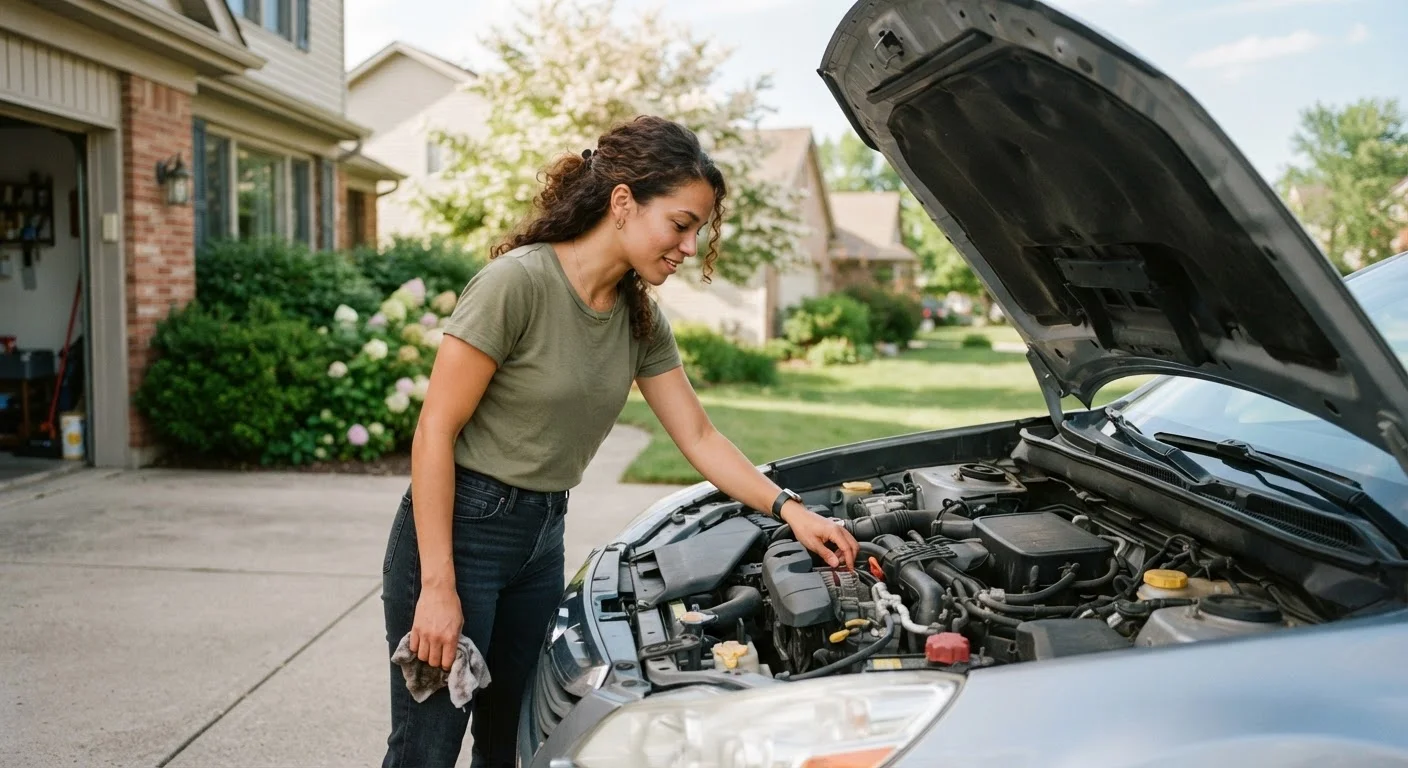
Modern engines depend on multiple fluids working together. Each serves a distinct purpose, and running low on any of them can cause damage that far exceeds the cost of a simple top-off.
Dipstick
A metal rod inserted into the engine oil reservoir that lets you check the oil level and condition without tools or mechanical expertise.
PSI
Pounds per square inch - the unit used to measure tire inflation pressure. Your vehicle's recommended PSI is listed on the door jamb sticker.
Tread depth
The measurement of the grooves in a tire's surface. Adequate tread depth is essential for maintaining grip, especially on wet roads.
Service interval
The mileage or time period after which a specific maintenance task - such as an oil change or air filter replacement - should be performed, as specified by the vehicle manufacturer.
Coolant overflow reservoir
A translucent plastic tank connected to the radiator that holds excess coolant. It's the safe place to check coolant level - the radiator cap itself should never be opened on a warm engine.
Brake fluid
A hydraulic fluid that transfers the force of your foot on the brake pedal to the brake components at each wheel. It absorbs moisture over time, which is why periodic replacement is recommended.
- Engine oil - Lubricates internal engine components and reduces friction-related heat. Check the dipstick monthly with the engine off and cool. Oil should appear amber to light brown; dark, gritty oil may indicate it's overdue for a change. For a deeper look at oil choices, see our guide on synthetic vs. conventional motor oil.
- Coolant (antifreeze) - Regulates engine temperature. Check the translucent overflow reservoir - never open the radiator cap on a hot engine, as pressurized coolant can cause serious burns.
- Brake fluid - Hydraulic fluid that transfers pedal force to the brakes. Low or discolored brake fluid warrants immediate professional inspection.
- Power steering fluid - Present in vehicles with hydraulic steering systems. A whining sound when turning may signal low levels.
- Windshield washer fluid - The only fluid safe to top off with a store-bought solution without mechanical knowledge. Keep it full year-round for visibility.
Transmission fluid is equally important but is typically checked and changed by a mechanic at manufacturer-specified intervals rather than during routine owner inspections.
Tires, Brakes, and Lights: The Safety-Critical Systems
Three systems have the most direct impact on whether your vehicle can respond predictably in an emergency: tires, brakes, and lights. Each deserves regular attention.
Tires
Tire pressure should be checked monthly and before any long trip - not just when a tire looks flat. Most passenger vehicles specify a pressure between 30-35 PSI, but always refer to the sticker inside your driver's door jamb (not the maximum pressure printed on the tire sidewall). Tread depth matters equally: the standard penny test can reveal when replacement is due. Rotate tires every 5,000-7,500 miles to promote even wear. Our seasonal car maintenance guide covers additional tire considerations for summer heat and winter cold.
Brakes
Squealing during normal braking often indicates worn brake pads. Grinding sounds, a pulsating pedal, or a pulling sensation when braking are signs to consult a mechanic promptly. Brake system work carries real safety implications and should not be deferred.
Lights
Walk around your parked vehicle periodically to confirm all exterior lights function - headlights, taillights, turn signals, and brake lights. A burned-out brake light is both a safety hazard and a traffic violation in every U.S. state. Replacing bulbs is often a straightforward DIY task.
Before any drive, a quick visual check takes under two minutes and can catch problems early. See our pre-trip vehicle safety checklist for a structured approach.
Building a Maintenance Schedule You'll Actually Follow
The single most underused resource in any new driver's glove box is the owner's manual. It contains manufacturer-specified intervals for every service your vehicle requires - oil changes, air filter replacement, spark plugs, timing belt or chain inspection, and more. These intervals are based on engineering data for your specific engine and drivetrain, making them more reliable than generic advice.
A practical approach is to organize maintenance into three time horizons:
- Monthly: Check tire pressure, oil level, and all fluid reservoirs. Inspect lights.
- Every 6 months or per mileage trigger: Oil and filter change (follow your manual's interval - many modern vehicles extend beyond 3,000 miles), tire rotation, and visual brake inspection.
- Annually or per mileage trigger: Air filter, cabin filter, wiper blades, coolant flush (per manufacturer), and a full mechanic inspection.
Documenting every service is just as important as performing it. A written record helps mechanics diagnose problems faster and protects resale value. Our article on keeping maintenance records explains what to track and how.
Don't Skip Warning Lights
Dashboard warning lights - especially oil pressure, engine temperature, battery, and brake indicators - are not suggestions. Driving with an active warning light can turn a minor issue into a major repair. If a warning light appears, consult your owner's manual to identify it and seek professional diagnosis promptly.
When to DIY and When to See a Mechanic
New drivers often underestimate how much they can handle themselves - and occasionally overestimate it. Drawing an honest line between the two protects both your safety and your budget.
Generally appropriate for careful beginners: checking and topping off fluids, replacing windshield wiper blades, swapping a cabin air filter, checking tire pressure and inflating tires, and replacing exterior bulbs on many vehicles.
Best left to a qualified mechanic: any brake system work, suspension and steering components, timing belt or chain service, transmission service, and anything involving the electrical system beyond a fuse swap. These tasks carry real risks of injury or vehicle damage if performed incorrectly. The full DIY vs. mechanic guide breaks this down in detail.
It's also worth being aware of common misconceptions that can lead new drivers to make unnecessary or incorrect service decisions. Our piece on car maintenance myths that cost drivers money addresses several of the most persistent ones. And if you're thinking ahead about the broader financial picture of ownership, the financial realities new car owners often underestimate is a useful companion read.