
The DIY Car Maintenance Tasks Worth Doing Yourself - and the Ones to Leave to a Mechanic

Key Takeaways
Meaningful savings on routine maintenance costs
Tasks like air and cabin filter replacements carry minimal labor time at a shop but can still cost $30-$80 in service fees. Doing them yourself typically means paying only for the part.
Builds genuine familiarity with your vehicle
Regularly opening the hood and inspecting components helps you notice changes in fluid color, belt condition, or filter buildup before they become costly problems.
Work is done on your schedule
Scheduling shop appointments around work and family commitments can delay maintenance. DIY tasks can be completed on a weekend morning without waiting for an available slot.
Confirms quality of parts used
When you source and install your own parts, you know exactly what went into your vehicle - eliminating uncertainty about whether a shop substituted a lower-grade component.
Brake system work carries serious safety risk
Incorrectly installed brake pads, rotors, or caliper hardware can cause brake fade or sudden failure. Brake work requires precision torque specifications and inspection of hydraulic components that demand professional training.
Fuel system repairs involve fire and explosion hazard
Fuel injectors, fuel lines, and fuel pumps involve flammable liquid under pressure. Even a small leak near an ignition source creates a genuine fire risk that makes this category firmly off-limits for home repair.
Suspension and steering errors affect vehicle control
Incorrect reassembly of ball joints, tie rods, or strut components can cause unpredictable handling or complete loss of steering control at the worst possible moment.
Improper work may void manufacturer warranties
Performing certain maintenance tasks incorrectly or outside manufacturer guidelines can affect warranty coverage, leaving you responsible for repair costs that would otherwise be covered.
Diagnostic errors can compound the original problem
Without proper scan tools and training, misidentifying the root cause of a warning light or symptom often leads to replacing parts that weren't the issue while the actual fault continues to worsen.
Our Verdict
DIY car maintenance is genuinely worthwhile for straightforward, low-risk tasks that require basic tools and don't compromise safety systems. The financial savings are real, and building familiarity with your vehicle has lasting value. However, the line between empowering and dangerous is firm - brake work, fuel system repairs, and anything affecting structural integrity should be handled by a qualified mechanic whose work can be inspected and verified.
Best suited to drivers who are comfortable reading a vehicle-specific manual, have access to proper tools, and want to handle routine upkeep - not those looking to shortcut safety-critical repairs.
Why the DIY Question Matters More Than Ever
With labor rates at many independent shops running well above $100 per hour, the appeal of handling your own car maintenance is understandable. For some tasks, rolling up your sleeves is a genuinely smart move. For others, it's a risk that can cost far more - in repairs, liability, or personal safety - than you'd ever save at the shop.
The challenge is knowing which is which. Most guidance on this topic either overstates how easy things are or reflexively defers every task to professionals. This article takes a more honest position: some jobs belong in your driveway, and some absolutely do not. Understanding the difference is a core part of responsible car ownership. If you're newer to maintaining a vehicle, our introduction to car maintenance for new drivers provides a helpful foundation before you start.
DIY Maintenance: The Real Advantages
When the job is appropriate, doing it yourself offers meaningful benefits beyond just the money saved.
Meaningful savings on routine maintenance costs
Tasks like air and cabin filter replacements carry minimal labor time at a shop but can still cost $30-$80 in service fees. Doing them yourself typically means paying only for the part.
Builds genuine familiarity with your vehicle
Regularly opening the hood and inspecting components helps you notice changes in fluid color, belt condition, or filter buildup before they become costly problems.
Work is done on your schedule
Scheduling shop appointments around work and family commitments can delay maintenance. DIY tasks can be completed on a weekend morning without waiting for an available slot.
Confirms quality of parts used
When you source and install your own parts, you know exactly what went into your vehicle - eliminating uncertainty about whether a shop substituted a lower-grade component.
$100+
Typical shop labor rate per hour
According to AAA, average shop labor rates in the United States have exceeded $100 per hour at many facilities, making even short service visits costly for routine items.
~30%
Of car owners perform some DIY maintenance
Consumer surveys suggest roughly a third of American vehicle owners perform at least some routine maintenance themselves, most commonly oil checks, fluid top-offs, and filter replacements.
That said, savings only materialise when the job is done correctly the first time. Consulting your owner's manual and a vehicle-specific repair resource isn't optional - it's what separates a successful DIY job from an expensive mistake.
Tasks Worth Doing Yourself
These jobs are genuinely suitable for a careful home mechanic with basic tools and a reliable repair reference:
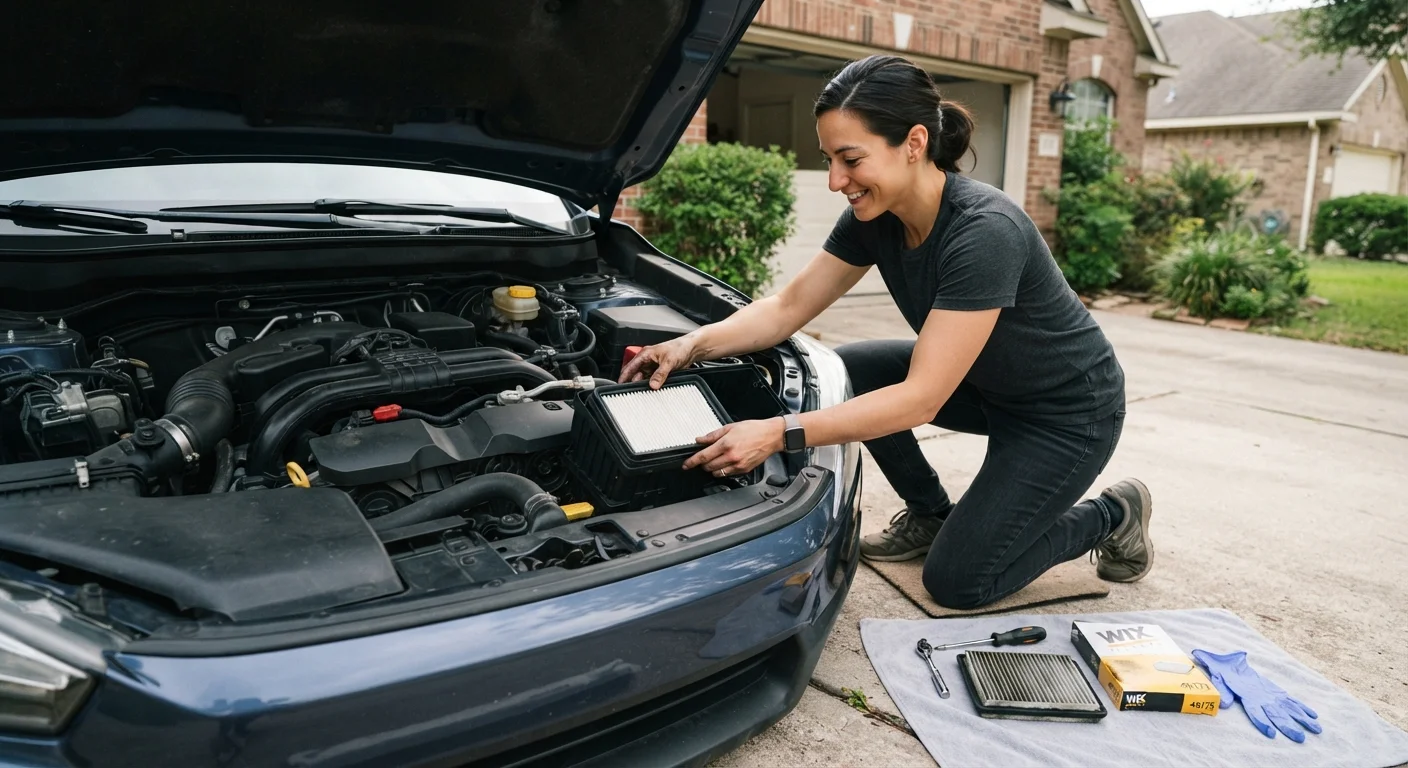
- Engine air filter replacement: Usually involves releasing a few clips or screws. Most filters are accessible without lifting the car, and the correct part is easy to identify by your owner's manual.
- Cabin air filter replacement: Typically located behind the glove box or under the dashboard. Often requires no tools at all.
- Wiper blade replacement: Straightforward on nearly all vehicles; instructions are often printed on the packaging itself.
- Checking and topping off fluids: Engine oil, coolant, windshield washer fluid, and brake fluid levels can all be checked visually. Our guide to under-the-hood fluids and what they each do explains each fluid's role and what warning signs to look for.
- Battery terminal cleaning: Corroded terminals can cause starting problems. Disconnecting and cleaning them with a wire brush is a manageable task - always disconnect the negative terminal first.
- Tire pressure checks and rotation: Checking pressure requires only a gauge. Rotation is achievable with a floor jack and proper jack stands, though shops often include it free with an oil change.
Always Use Jack Stands - Not Just a Floor Jack
A hydraulic floor jack can fail without warning. Any time you work under or around a raised vehicle, use properly rated jack stands positioned at the manufacturer's specified lift points. This is non-negotiable regardless of how brief the task seems. Never work beneath a vehicle supported only by a scissor or floor jack.
Whatever you tackle, keep a clear maintenance record of every task you complete, including the date, mileage, and parts used.
Jobs to Leave to a Qualified Mechanic
Some tasks sit well beyond what a home garage can safely accommodate, regardless of the driver's confidence level.
Brake system work carries serious safety risk
Incorrectly installed brake pads, rotors, or caliper hardware can cause brake fade or sudden failure. Brake work requires precision torque specifications and inspection of hydraulic components that demand professional training.
Fuel system repairs involve fire and explosion hazard
Fuel injectors, fuel lines, and fuel pumps involve flammable liquid under pressure. Even a small leak near an ignition source creates a genuine fire risk that makes this category firmly off-limits for home repair.
Suspension and steering errors affect vehicle control
Incorrect reassembly of ball joints, tie rods, or strut components can cause unpredictable handling or complete loss of steering control at the worst possible moment.
Improper work may void manufacturer warranties
Performing certain maintenance tasks incorrectly or outside manufacturer guidelines can affect warranty coverage, leaving you responsible for repair costs that would otherwise be covered.
Diagnostic errors can compound the original problem
Without proper scan tools and training, misidentifying the root cause of a warning light or symptom often leads to replacing parts that weren't the issue while the actual fault continues to worsen.
The common thread across these jobs is consequence: an error doesn't just mean redoing the work - it can mean brake failure at speed, a fuel fire, or a suspension collapse. That's a category of risk that justifies the professional labor cost every time.
The broader principle of knowing where DIY ends and professional expertise begins applies well beyond cars. Our colleagues cover the same dynamic in the context of home repairs - see DIY vs. licensed professional for home repairs for a parallel framework.
Before You Start Any DIY Job
Even on lower-risk tasks, a few principles apply universally:
- Use your vehicle-specific manual. Generic YouTube tutorials may not match your model year's design, torque specs, or part locations.
- Work on level ground with the parking brake set. Never rely solely on a scissor jack to support a vehicle you're working under - always use rated jack stands.
- Understand the warranty implications. Some newer vehicles have provisions about who performs service. Review your warranty terms before DIYing anything beyond basic checks.
- Know when to stop. If a job reveals something unexpected - unusual wear, an unfamiliar sound, a stripped bolt - pausing and consulting a mechanic is not failure. It's judgment.
Responsible DIY maintenance is as much about recognising your limits as it is about the tasks you take on. The goal is a reliable, safe vehicle - not a project that proves a point.