

| Number of essential fluids | 6 in most passenger vehicles |
| Brake fluid type | Hygroscopic - absorbs moisture over time |
| Typical coolant mixture | 50% ethylene glycol, 50% distilled water |
| Power steering trend | Many newer vehicles use electric, not hydraulic, steering |
| Engine oil check method | Dipstick, engine cold |
| Washer fluid caution | Plain water freezes and can promote reservoir mold |
Why Under-the-Hood Fluids Matter
Modern vehicles depend on a network of fluids to protect mechanical components, transfer force, regulate temperature, and keep critical systems responsive. Neglecting any one of them can lead to accelerated wear, system failures, or safety hazards. The good news: checking most of these fluids takes only minutes and requires no specialized tools.
This reference guide covers the six major fluids found in most passenger vehicles - what each one does, where to find it, and what to watch for. For a broader introduction to routine vehicle care, see Car Maintenance for New Drivers.
| Number of essential fluids | 6 in most passenger vehicles |
| Brake fluid type | Hygroscopic - absorbs moisture over time |
| Typical coolant mixture | 50% ethylene glycol, 50% distilled water |
| Power steering trend | Many newer vehicles use electric, not hydraulic, steering |
| Engine oil check method | Dipstick, engine cold |
| Washer fluid caution | Plain water freezes and can promote reservoir mold |
The Six Essential Fluids Explained
Engine Oil
Engine oil lubricates the dozens of metal parts moving inside your engine, reducing friction and carrying heat away from critical surfaces. It also suspends microscopic debris, keeping contaminants from scoring cylinder walls and bearings. Oil degrades over time as it accumulates combustion byproducts and loses its viscosity - which is why regular changes matter. Check the dipstick when the engine is cold; look for a clear amber-to-brown color and a level between the MIN and MAX marks. Dark, gritty, or milky oil warrants immediate attention. For perspective on how often you actually need to change it, see common car maintenance myths.
Coolant (Antifreeze)
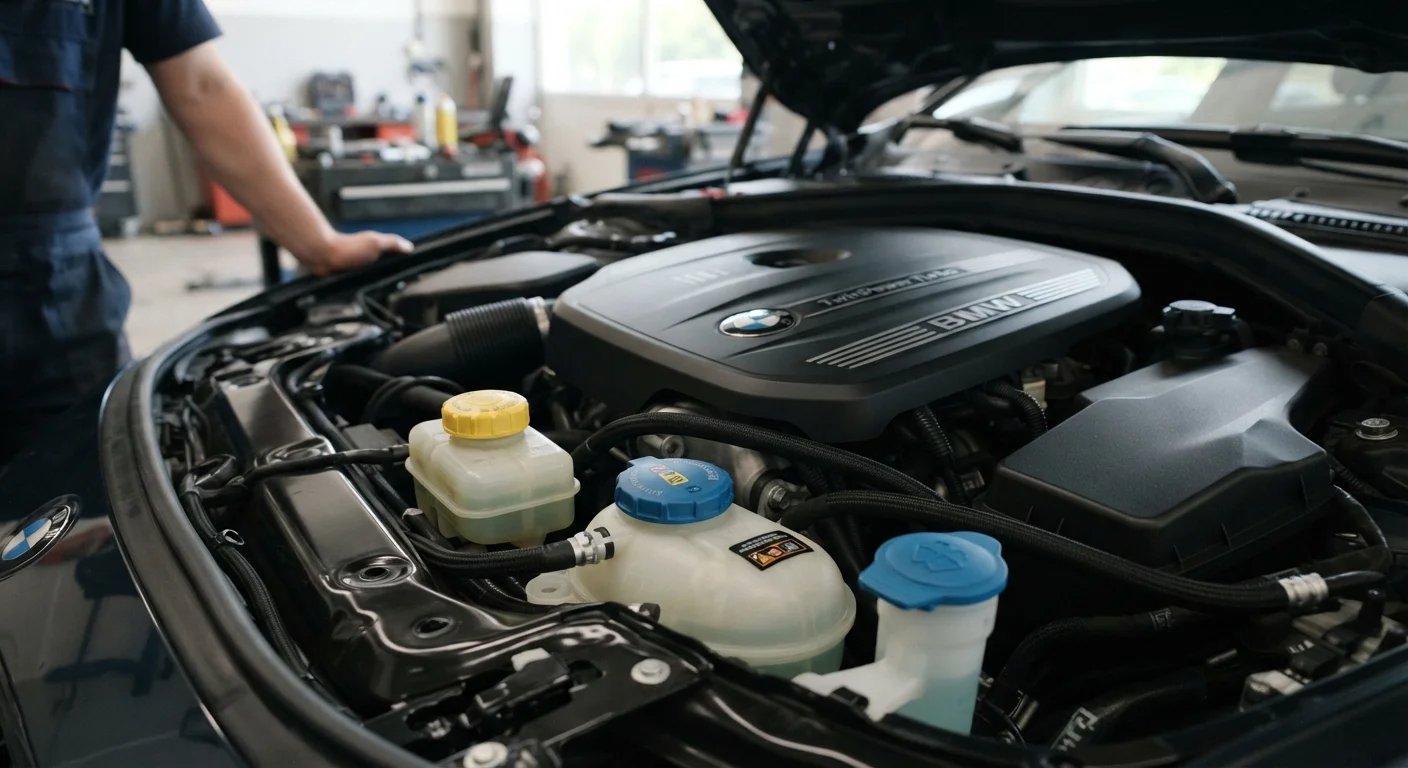
Coolant circulates through the engine and radiator to absorb heat generated by combustion, then dissipates it through the radiator fins. It also prevents the cooling system from freezing in winter and boiling over in summer. Most modern coolants are a 50/50 mix of ethylene glycol and distilled water. Check the overflow reservoir - never open the radiator cap on a hot engine, as pressurized coolant can cause serious burns. Fresh coolant is typically bright green, orange, or pink depending on formulation; murky or oily coolant signals a problem.
Brake Fluid
Brake fluid transmits the hydraulic force from your brake pedal to the calipers and wheel cylinders that physically stop the car. It must withstand extremely high temperatures without boiling. Brake fluid is hygroscopic - it absorbs moisture from the air over time, which lowers its boiling point and reduces braking performance. The reservoir is typically near the firewall on the driver's side. Fluid should appear clear to slightly yellow; dark brown fluid or a low level warrants a mechanic's inspection. Unusual brake behavior often has multiple causes - noises from your brakes can be an early warning sign.
Power Steering Fluid
Power steering fluid pressurizes a hydraulic assist system that makes turning the steering wheel effortless, especially at low speeds. Many newer vehicles use electric power steering and have no fluid reservoir at all - consult your owner's manual. On vehicles that do use hydraulic systems, the reservoir is usually near the front of the engine bay. Low fluid or a whining noise when turning can indicate a leak.
Transmission Fluid
Transmission fluid lubricates gears, clutch packs, and valves inside the transmission, while also acting as a hydraulic medium in automatic transmissions. It's checked via a dipstick (in vehicles that have one) with the engine warm and running. Fresh fluid is typically bright red; dark or burnt-smelling fluid suggests degradation. This is one service best left to a qualified mechanic unless you have the proper equipment.
Windshield Washer Fluid
While not mechanical, washer fluid is a safety fluid - it keeps your windshield clear of road grime, insects, and road salt spray. Use automotive-specific fluid, not water, which can freeze in cold climates and promote mold in the reservoir.
Viscosity
A measure of a fluid's thickness and resistance to flow. Engine oil viscosity ratings (e.g., 5W-30) indicate how the oil flows at both cold and operating temperatures.
Hygroscopic
A substance that absorbs moisture from the surrounding air. Brake fluid is hygroscopic, meaning its performance degrades as it takes on water over time.
Hydraulic system
A system that uses pressurized fluid to transmit mechanical force. Both braking and power steering systems on many vehicles rely on hydraulic principles.
Coolant overflow reservoir
A translucent plastic tank connected to the radiator that holds excess coolant as it expands when heated. This is the safe place to check and top off coolant levels.
Ethylene glycol
The primary active chemical in most automotive antifreeze formulations. It lowers the freezing point and raises the boiling point of the cooling system's water mixture.