

| Equipment Required | None (a pull-up bar expands options significantly) |
| Primary Training Qualities | Strength, stability, mobility, muscular endurance |
| Beginner Entry Point | Modified push-ups, assisted squats, supine rows |
| Advanced Skill Examples | Pistol squat, handstand, muscle-up |
| Key Progression Principle | Master form before increasing difficulty or volume |
| Session Frequency (General) | 2-4 sessions per week with rest days between (General exercise science guidance; individual needs vary) |
What Bodyweight Training Actually Covers
Bodyweight training - sometimes called calisthenics - uses the weight of your own body as resistance to build strength, mobility, and endurance. It spans everything from basic floor exercises to highly skilled movements that take months or years to develop. Because it requires no equipment or gym membership, it's one of the most accessible forms of structured exercise available to adults at any stage of life.
Understanding how movements are categorized by difficulty is the foundation for training safely and making real progress. Whether you're starting from scratch or looking to advance beyond basic exercises, this reference covers the core movement patterns, how they scale in difficulty, and how to approach progression without injury.
For a broader introduction to building strength at home, see our practical starting point for adults.
| Equipment Required | None (a pull-up bar expands options significantly) |
| Primary Training Qualities | Strength, stability, mobility, muscular endurance |
| Beginner Entry Point | Modified push-ups, assisted squats, supine rows |
| Advanced Skill Examples | Pistol squat, handstand, muscle-up |
| Key Progression Principle | Master form before increasing difficulty or volume |
| Session Frequency (General) | 2-4 sessions per week with rest days between (General exercise science guidance; individual needs vary) |
Core Movement Patterns and How They Scale
Most bodyweight exercises fall into a handful of fundamental movement categories. Within each category, difficulty can be adjusted by changing leverage, range of motion, or the number of limbs involved.
Push Patterns
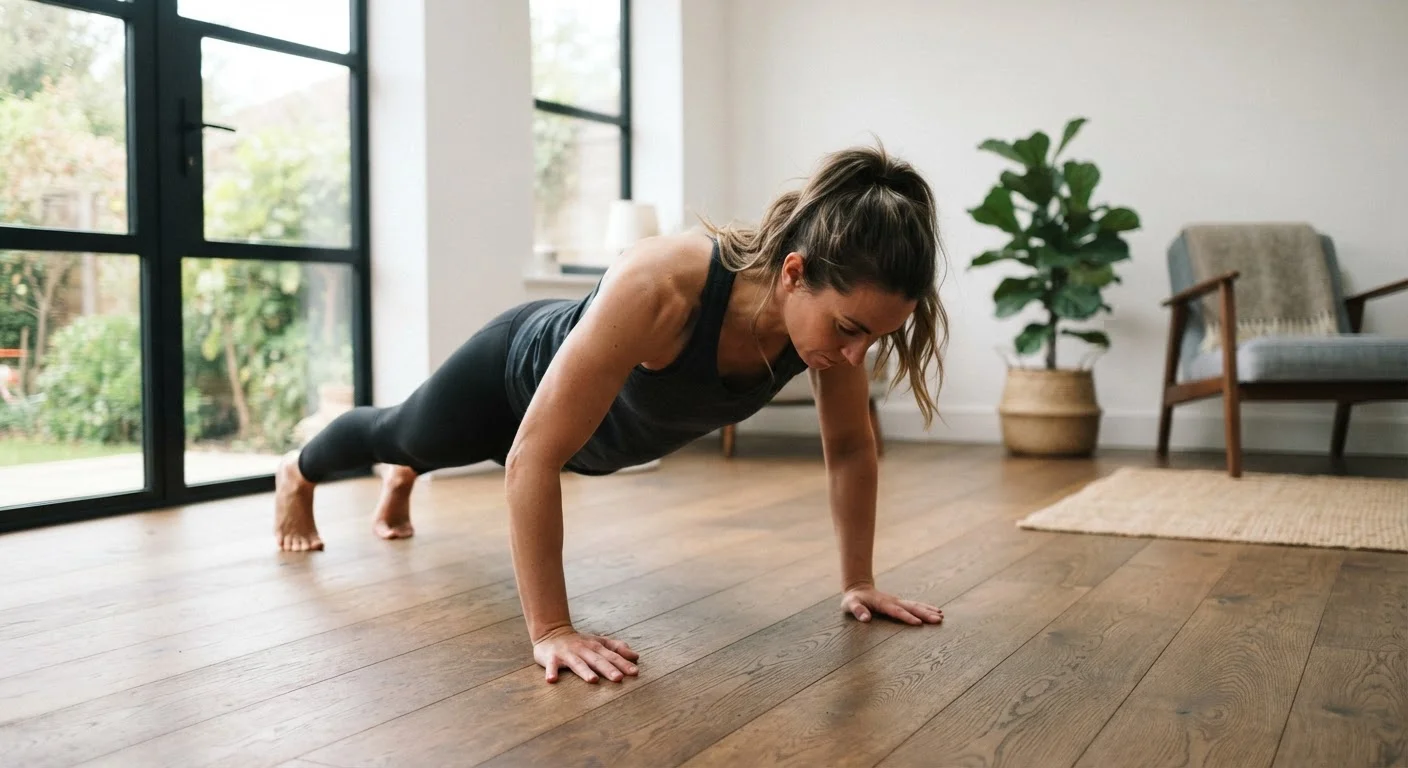
Push movements train the chest, shoulders, and triceps. The progression typically runs: wall push-up → incline push-up → standard push-up → decline push-up → archer push-up → single-arm push-up. Reducing the angle of the body relative to the floor increases the load on the working muscles.
Pull Patterns
Pulling exercises develop the back, biceps, and rear shoulders. Common progression: supine row (using a table or low bar) → assisted pull-up → negative pull-up → full pull-up → weighted pull-up or L-sit pull-up. Pull movements are often the most challenging for beginners because they require supporting full body weight from a hang.
Squat and Hinge Patterns
Lower-body training includes squat variations and hip hinge movements. A general squat progression: assisted squat → bodyweight squat → Bulgarian split squat → pistol squat progression. Hinge patterns, such as single-leg Romanian deadlifts, train the posterior chain - glutes and hamstrings - using balance as the primary challenge.
Core and Anti-Rotation
Effective core training in bodyweight work goes beyond sit-ups. Dead bugs, hollow body holds, plank variations, and side planks build the deep stabilizing muscles that support every other movement. These exercises resist movement rather than create it, which aligns more closely with how the core functions in daily life.
Calisthenics
A form of physical training that uses body weight as the primary resistance. The term encompasses everything from basic push-ups to advanced gymnastic-style movements.
Progressive Overload
The principle of gradually increasing the challenge placed on the body over time - through harder variations, more repetitions, slower tempo, or reduced rest - to drive continued adaptation.
Unilateral Movement
An exercise performed one limb at a time (e.g., single-leg squat, single-arm row). Unilateral work exposes and helps correct strength imbalances between sides of the body.
Posterior Chain
The group of muscles running along the back of the body - including the glutes, hamstrings, and lower back - that are engaged during hinge-pattern exercises like deadlifts and hip thrusts.
Tempo Training
Deliberately controlling the speed of each phase of a movement (lowering, pausing, lifting). Slowing the lowering phase increases time under tension and can accelerate strength development.
Anti-Rotation Core Work
Core exercises that train the muscles to resist unwanted movement or rotation of the spine, rather than actively produce it. Examples include planks, dead bugs, and Pallof presses.
Progressing Safely Across Fitness Levels
The central principle of bodyweight progression is technique before volume, volume before intensity. Moving to a harder exercise variation before mastering the foundational version is one of the most common reasons people plateau or get injured.
Beginner Indicators
A beginner can be defined as someone who cannot yet complete a standard push-up, a bodyweight squat through full range of motion, or a single full pull-up with control. At this stage, modified variations - elevated surfaces for push-ups, partial range squats, and supported rows - build the baseline strength and joint tolerance needed to progress.
Intermediate Indicators
An intermediate practitioner can reliably perform multiple sets of push-ups, squats, and at least a few pull-ups with solid form. This is the stage to introduce tempo training (slowing down the lowering phase), unilateral variations, and more complex movement combinations.
Advanced Considerations
Advanced bodyweight work involves movements that require significant relative strength and body control - think pistol squats, handstands, or muscle-ups. These movements have long skill development arcs and should be approached with patience. Rushing into advanced progressions is a leading cause of overuse injury, particularly in the shoulders and wrists.
Regardless of level, progress is most consistent when paired with adequate recovery and sound nutrition habits. Our nutrition basics guide offers a grounding framework. For thinking about how bodyweight work fits alongside cardio, see our cardio vs. strength training reference.
Bodyweight Training and Older Adults
Bodyweight exercises can be highly appropriate for adults in their 50s, 60s, and beyond, but the emphasis often shifts toward balance, mobility, and fall prevention alongside strength. Older adults managing chronic conditions or returning after a long break should consult a healthcare provider or certified fitness professional before starting a new program. Our decade-by-decade fitness guide outlines how exercise priorities evolve with age.
This article is for general informational purposes only and is not a substitute for personalized guidance from a qualified fitness or healthcare professional. If you have existing injuries, chronic conditions, or other health concerns, consult a professional before beginning or changing a training program.