

Key Takeaways
Before You Start: Setting Up for Success
At-home grooming doesn't have to be a wrestling match. The biggest predictor of a calm session isn't your dog's temperament - it's your preparation. Gather everything you need before your dog is in the tub or on the grooming table, because stepping away mid-session almost always ends in chaos.
What you will need
Slicker brush or deshedding tool
Removes loose fur, detangles, and distributes coat oils - the right type depends on your dog's coat length and density.
Dog-safe shampoo
Formulated for a dog's skin pH; human shampoo can disrupt the skin barrier and cause irritation.
Dog nail clippers
Trim nails to a safe length to prevent discomfort and joint stress from overgrown nails.
Styptic powder
Stops minor bleeding quickly if you accidentally nick the quick during nail trimming.
Handheld sprayer or pitcher
Makes rinsing shampoo from the coat much easier and more thorough than cupping water by hand.
Ear cleaning solution
Loosens debris in the ear canal; must be veterinarian-approved and formulated specifically for dogs.
Grooming table or non-slip mat
Gives your dog stable footing and keeps them from scrambling, reducing injury risk for both of you.
If your dog is new to grooming, start with short, positive sessions. Let them sniff the brush and nail clippers while offering treats, so the tools become familiar objects rather than triggers. Dogs that were introduced to grooming gradually as puppies tend to tolerate it far better as adults - but even older dogs can learn to accept the process with patience. For more foundational advice on building good habits early, see our guide for first-time dog owners.
The Core Grooming Routine: Step by Step
A complete at-home grooming session covers four main areas: brushing, bathing, nail trimming, and ear cleaning. You don't need to tackle all four in one sitting - many owners brush weekly and bathe monthly, with nail trims every three to four weeks depending on how fast their dog's nails grow.
Brush the coat before getting it wet
Always brush before bathing. Water causes tangles and mats to tighten, making them significantly harder to remove afterward. Work in sections from the skin outward, using a brush appropriate for your dog's coat type. Short-coated breeds may only need a rubber curry brush; double-coated breeds like huskies or golden retrievers benefit from a deshedding tool followed by a slicker brush.
Bathe with lukewarm water and dog-safe shampoo
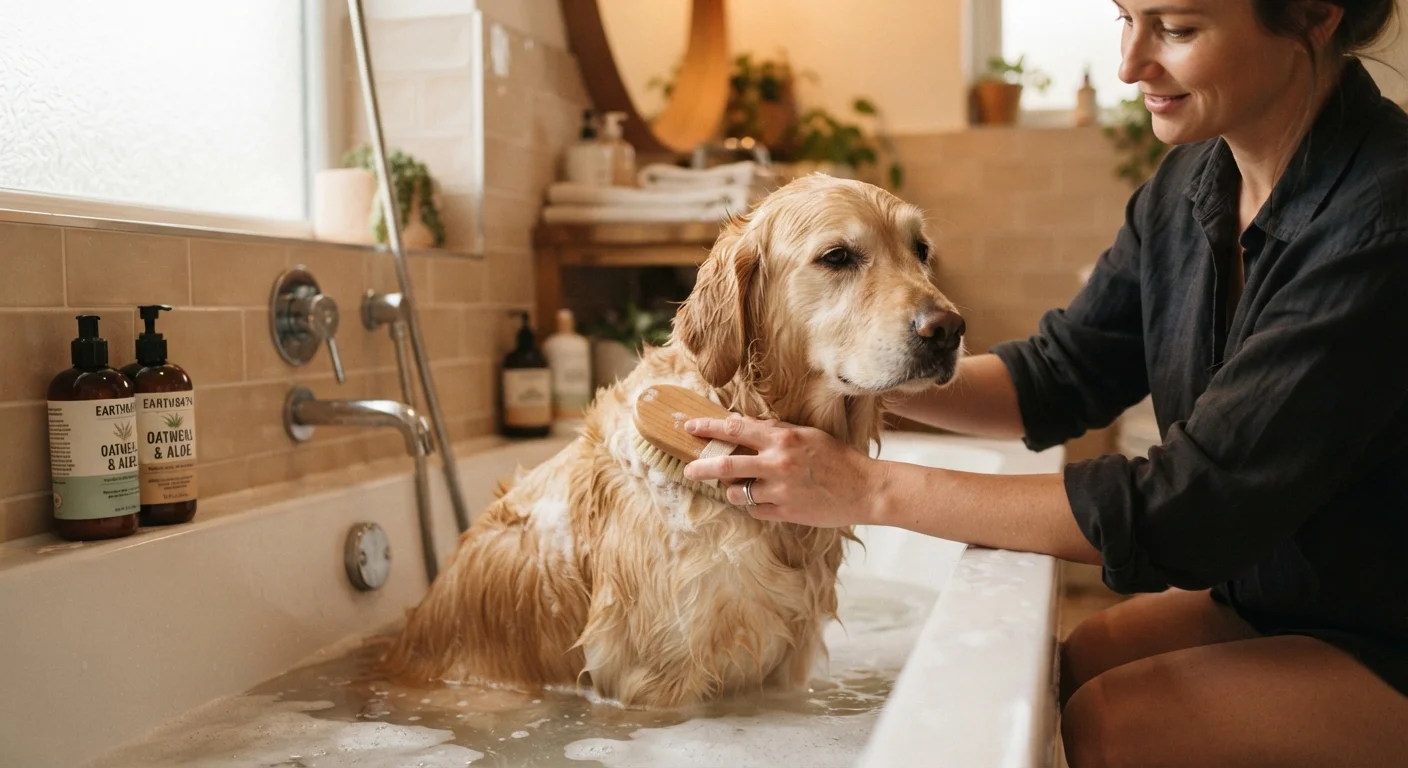
Wet the coat thoroughly - this takes longer than it looks, especially for thick or double coats. Apply shampoo starting at the neck and working toward the tail, avoiding the eyes and ear canals. Massage gently to work up a lather, then rinse completely. Any shampoo left on the skin can cause itching and irritation. A second rinse is rarely a bad idea.
Dry the coat thoroughly
Towel dry first, then use a low-heat blow dryer if your dog tolerates it - keep it moving and hold it at least six inches from the coat to avoid burns. Dogs with dense double coats that stay damp close to the skin are prone to hot spots (moist, inflamed skin lesions), so thorough drying is important, not optional.
Trim the nails
Hold the paw gently but firmly. Clip small amounts at a time - just the curved tip. On light-colored nails, you'll see the quick (the pink vein inside the nail) easily. On dark nails, clip in thin increments and stop when you see a small pale oval appear in the center of the cut surface - that's the edge of the quick. If you nick it and see a drop of blood, apply styptic powder with gentle pressure. The dog may flinch but it isn't dangerous.
Clean the ears
Squeeze a small amount of veterinarian-approved ear cleaning solution into the ear canal, then gently massage the base of the ear for about 20-30 seconds - you'll hear a slight squelching sound. Let your dog shake their head (this is normal and useful), then wipe the visible part of the ear canal and the outer ear with a cotton ball. Never insert cotton swabs into the ear canal.
Keep Sessions Positive and Short
End every grooming session before your dog hits their patience limit, not after. A session that ends on a calm note - followed by a treat and praise - builds positive associations over time. Consistency matters more than perfection: a dog groomed regularly at home is almost always easier to handle than one groomed infrequently.
Watch your dog's skin while you work. Redness, flaking, unusual lumps, or a persistent musty smell can all indicate an underlying condition. Our companion article on common dog skin conditions breaks down what different presentations typically mean and when each warrants a vet visit.
When to Call a Professional Groomer or Vet
At-home grooming covers the basics reliably, but some situations call for professional hands. Groomers who are trained in breed-specific cuts - such as those required for poodles, schnauzers, or spaniels - have tools and techniques that are difficult to replicate safely at home. Similarly, severely matted coats should never be cut at home with scissors; a groomer with clippers and experience can remove mats without injuring the dog's skin.
Don't Attempt to Cut Severely Matted Coats at Home
Matting that is tight against the skin is extremely difficult to see through, and the risk of cutting skin is high. Scissoring through dense mats can result in serious lacerations. Contact a professional groomer who can use clippers safely and assess skin condition underneath.
Your dog's annual wellness exam is also a good opportunity to ask your vet about grooming-related questions - ear conformation, nail growth rate, and skin health are all things a veterinarian can evaluate in context. Our vet visit walkthrough explains exactly what gets assessed during a routine exam and which questions are worth raising.
Know the Signs That Need a Vet, Not a Groomer
Grooming reveals a lot about your dog's health. If you notice lumps, raw or inflamed skin, hair loss in patches, persistent scratching, or a smell that shampoo doesn't resolve, these aren't grooming problems - they're medical ones. Contact your veterinarian rather than attempting to treat them at home. Early attention to skin and coat changes leads to better outcomes.