

| Recommended frequency | Once per year for healthy adult dogs; twice yearly for seniors (7+) (American Veterinary Medical Association general guidance) |
| Average exam duration | 30-45 minutes |
| Core vaccines reviewed | Rabies, DHPP (distemper, hepatitis, parvovirus, parainfluenza) (American Animal Hospital Association Canine Vaccine Guidelines) |
| Routine diagnostics | Heartworm blood test, fecal parasite exam |
| What to bring | Prior vaccine records, current medications/supplements, recent specialist notes |
What to Expect Before You Even Enter the Exam Room
A productive annual visit starts before your dog sees the veterinarian. When you arrive, clinic staff will typically weigh your dog, record the weight in their file, and ask a few baseline questions: Has your dog been eating and drinking normally? Any vomiting, diarrhea, limping, or behavioral changes? These intake questions are not just small talk - they help the veterinarian prioritize what to look at closely during the physical exam.
Bring any records from the past year: recent parasite prevention history, any medications or supplements your dog currently takes, and notes about anything unusual you've observed at home. If your dog has been seen at an emergency clinic or specialist since the last annual visit, bring those discharge summaries too.
| Recommended frequency | Once per year for healthy adult dogs; twice yearly for seniors (7+) (American Veterinary Medical Association general guidance) |
| Average exam duration | 30-45 minutes |
| Core vaccines reviewed | Rabies, DHPP (distemper, hepatitis, parvovirus, parainfluenza) (American Animal Hospital Association Canine Vaccine Guidelines) |
| Routine diagnostics | Heartworm blood test, fecal parasite exam |
| What to bring | Prior vaccine records, current medications/supplements, recent specialist notes |
The Physical Exam: A Head-to-Tail Assessment
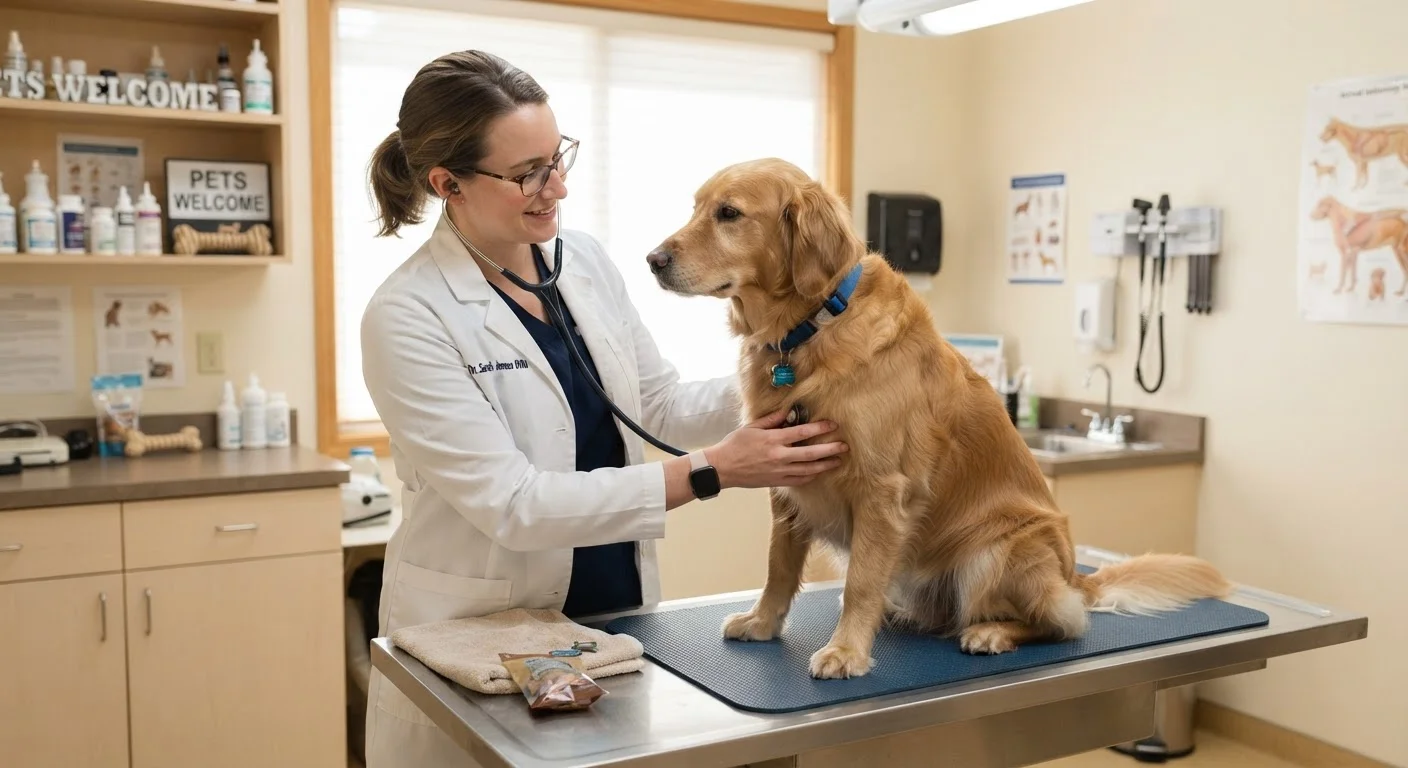
The core of an annual wellness visit is the hands-on physical examination. Your veterinarian will work systematically through your dog's body, checking each system for signs of abnormality.
- Eyes and ears: Checked for discharge, redness, signs of infection, cloudiness, or early cataract formation.
- Mouth and teeth: The vet will assess tooth condition, gum color, and look for tartar buildup or signs of periodontal disease - one of the most common conditions in adult dogs.
- Skin and coat: They'll part the fur to look for parasites, hot spots, lumps, or unusual lesions. (Between visits, a regular grooming routine supports this - see our at-home grooming guide for what to watch for.)
- Lymph nodes and abdomen: Palpation helps detect swelling or irregularities that can signal infection or other internal changes.
- Heart and lungs: A stethoscope check listens for murmurs, irregular rhythms, or abnormal lung sounds.
- Musculoskeletal: The vet will flex joints and observe your dog's posture and gait, especially important for older or large-breed dogs prone to arthritis.
Core vaccine
A vaccine recommended for all dogs regardless of lifestyle, because the diseases they prevent are widespread, serious, or transmissible to humans. Rabies and DHPP are examples.
Non-core vaccine
A vaccine recommended only for dogs with specific risk factors, such as exposure to other dogs in boarding facilities, tick-heavy environments, or standing water. Examples include Lyme disease and leptospirosis vaccines.
Fecal exam
A laboratory analysis of a small stool sample used to detect intestinal parasites such as roundworms, hookworms, whipworms, and giardia.
Heartworm antigen test
A blood test that detects proteins produced by adult heartworms. It is the standard method for confirming heartworm infection and is recommended annually even for dogs on continuous prevention.
Periodontal disease
Infection and inflammation of the structures surrounding teeth, caused by bacterial plaque and tartar buildup. It is one of the most frequently diagnosed conditions in dogs over three years of age.
Vaccines: Which Are Discussed and Why
Vaccination decisions at an annual visit are based on your dog's age, lifestyle, geographic region, and prior vaccine history. Your veterinarian will review what's due, what may be optional, and what can be deferred.
State Laws Vary on Rabies Vaccine Intervals
Rabies vaccination requirements are set at the state or local level, not federally. Some jurisdictions require annual boosters while others accept three-year vaccines. Your veterinarian will know your local rules, but it's worth confirming when you move to a new area or travel with your dog across state lines.
Core vaccines - those recommended for virtually all dogs - typically include rabies and the DHPP combination (distemper, hepatitis, parvovirus, parainfluenza). Non-core vaccines are recommended based on risk exposure and may include bordetella (kennel cough), leptospirosis, Lyme disease, and canine influenza. The veterinarian will ask about your dog's boarding, grooming, dog park, and hiking habits to guide these decisions.
Vaccine intervals vary. Rabies boosters, for example, may be required annually or every three years depending on your state's laws and the product used. Always ask your vet to document vaccines in writing - many boarding facilities and groomers require proof.
Parasite Prevention and Diagnostic Tests
Annual visits typically include a heartworm test (a simple blood draw) and a fecal exam to check for intestinal parasites like roundworms, hookworms, and giardia. Your vet will use these results to guide or confirm your year-round parasite prevention plan.
~1 in 100
Dogs test heartworm-positive annually in the US
According to the American Heartworm Society's national infection data, roughly one in every 100 dogs tested positive for heartworm disease.
80%
Dogs over 3 show signs of periodontal disease
Veterinary dental health organizations estimate that the majority of dogs over age three have some degree of periodontal disease detectable during a professional exam.
Many dogs on continuous heartworm prevention still benefit from annual testing, both to confirm the preventive is working and to catch any exposure that may have occurred during a missed dose. Flea, tick, and heartworm prevention products vary widely - your vet can help match the right approach to your dog's size, health status, and local parasite pressure.
Questions Worth Asking Before You Leave
Don't wait for your next visit to address something you've been wondering about. The annual exam is your dedicated time with your dog's care team. Consider asking:
- Is my dog's weight in a healthy range, and does their diet need adjusting?
- Are there any age-related screenings (bloodwork, urinalysis, blood pressure) we should add?
- What signs should prompt me to call before next year's visit?
- Are there any environmental or home hazards specific to my dog's breed or age? (Our article on building a dog-safe home covers common room-by-room hazards worth reviewing.)
Keeping a running list of observations between visits - changes in appetite, sleep, thirst, or mobility - makes these conversations far more productive. Your veterinarian can only act on what they know, and you are the expert on your dog's daily baseline.
This article provides general educational information about routine veterinary care and is not a substitute for professional veterinary advice. Always consult a licensed veterinarian for guidance specific to your dog's health needs.