

Key Takeaways
Summary
28 items · 45-90 minutes
Why a Dog-Safe Home Audit Matters
Most household injuries to dogs don't happen because owners are careless - they happen because dogs see the world differently than we do. A curious nose at cabinet level, a puppy who chews anything reachable, a senior dog who stumbles on slick floors: each life stage creates a distinct set of risks. The goal of this checklist is to help you walk through your home systematically, identify hazards before your dog encounters them, and make practical changes that reduce risk without turning your home into a sterile space.
If you're still in the early stages of dog ownership, our guide to bringing your first dog home covers the foundational setup decisions that pair well with this room-by-room safety audit. For existing owners, treat this checklist as a periodic review - ideally revisited every six months or after any significant change in your dog's behavior or mobility.
Kitchen & Dining
Living Room & Common Areas
Bathroom & Laundry
Bedroom & Home Office
Garage & Storage Areas
Yard & Outdoor Spaces
Tools and Supplies for a Thorough Home Audit
You don't need specialized equipment to dog-proof your home, but having a few practical items on hand makes the process faster and more effective. Before you begin, gather the supplies below and keep them accessible throughout the walkthrough. Many of the physical fixes - cord organizers, cabinet locks, door stoppers - are inexpensive and widely available at hardware stores.
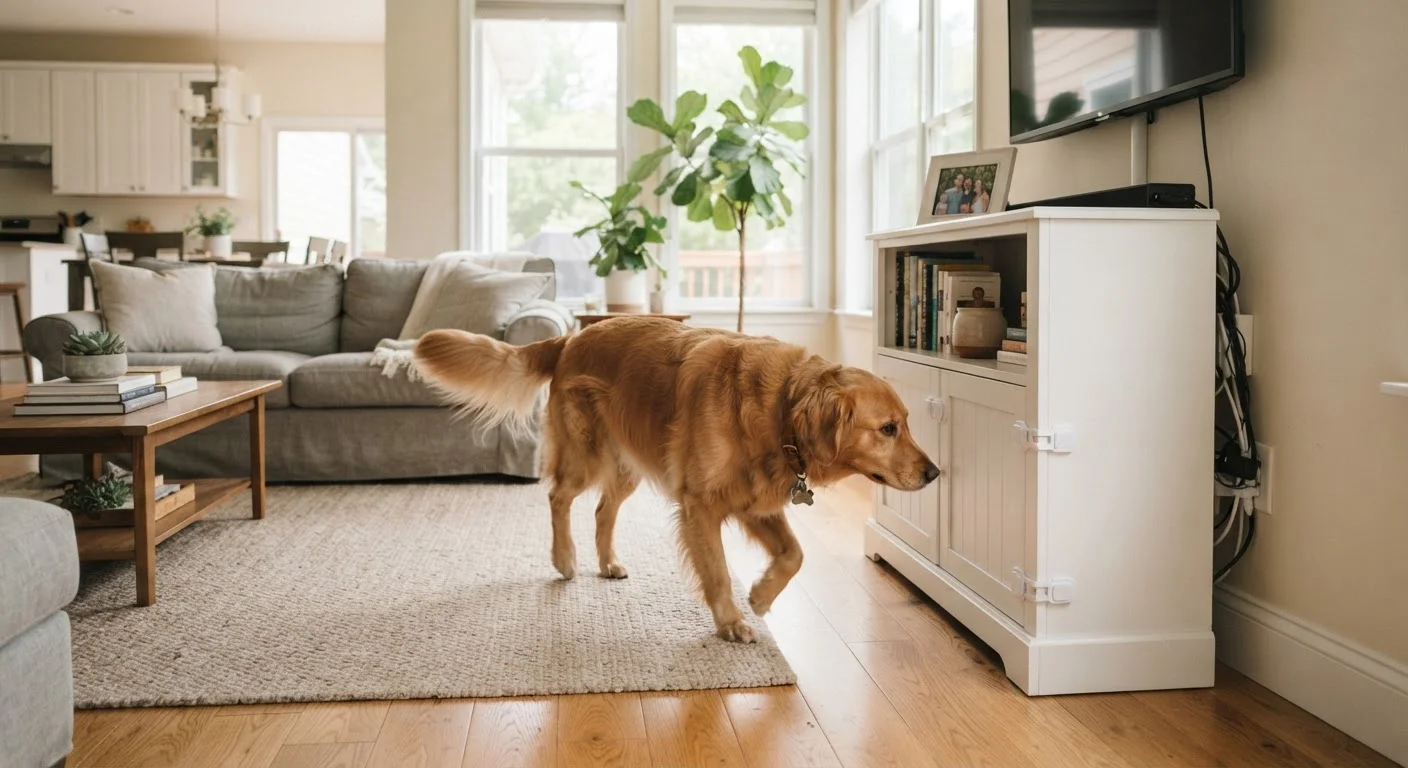
Cabinet safety latches
Prevent dogs from nosing open lower cabinets containing chemicals, medications, or food.
Cord concealers or cable covers
Encase exposed electrical cords to eliminate the chewing hazard in living areas and home offices.
Non-slip area rugs or rug pads
Provide traction on smooth floors, reducing slip-and-fall risk especially for puppies and senior dogs.
Lockable trash can
Keeps food scraps, packaging, and household waste fully inaccessible without requiring cabinet installation.
Wall-mounting hardware (brackets and screws)
Anchor tall furniture and freestanding shelving to walls, preventing tip-overs during active play.
Pet ramp or foam steps
Allows dogs with joint issues or small stature to safely access and descend from furniture without jumping.
Once your supplies are ready, start at the front door and work room by room in a logical sequence. Physically get down to your dog's height at each stop - what's invisible from a standing position is often obvious at nose level.
What to Do If Something Goes Wrong
Even the most thoroughly dog-proofed home carries some residual risk. Knowing what to do in an emergency is as important as prevention. Post the ASPCA Animal Poison Control Center phone number (888-426-4435) and your veterinarian's after-hours number in a visible location - a refrigerator magnet works well. Keep your pet's medical records, vaccination history, and a list of any medications they take in one accessible folder.
Act First, Research Second in Emergencies
If you suspect your dog has ingested a toxic substance, do not wait for symptoms to appear before contacting a professional. Call your veterinarian or the ASPCA Animal Poison Control Center immediately and have the product packaging or plant name ready to describe. Time is a critical factor in poisoning cases, and attempting home remedies without professional guidance can make outcomes worse.
It's also worth establishing a relationship with a 24-hour emergency veterinary clinic in your area before you need one. Locating the nearest emergency clinic under pressure costs valuable minutes. Your regular vet's office can typically recommend one. For ongoing preventive care, our annual vet visit walkthrough describes what routine wellness exams cover and which questions to raise about household safety risks specific to your dog's breed and age.
Yard Chemicals Require Extra Caution
Lawn treatments including herbicides, fertilizers, and insecticides may leave residues on grass and soil long after application. Always follow label instructions regarding re-entry times before allowing your dog outdoors, and consider asking your veterinarian for guidance on minimizing chemical exposure if your dog spends significant time on treated grass. Dogs that groom themselves frequently after outdoor time can ingest surface residues.