

Key Takeaways
Our Verdict
DIY home repair is genuinely valuable for a wide range of cosmetic and low-risk maintenance tasks, and tackling those yourself can keep costs down meaningfully over time. But electrical, gas, structural, and certain plumbing work carries legal, safety, and insurance implications that make professional licensing non-negotiable in most jurisdictions. The smartest homeowners know both their skill ceiling and their local code requirements before picking up a tool.
Homeowners who want a clear, practical framework for deciding which repairs to handle themselves and which to leave - without exception - to a licensed professional.
Why the DIY-vs.-Pro Decision Matters More Than You Might Think
Most homeowners have wondered at some point whether they really need to hire a professional or whether a weekend and a YouTube tutorial will do the job. For a surprising range of tasks, the DIY route is perfectly reasonable. For others, going it alone isn't just risky - it can be illegal, invalidate your insurance, or create problems you'll have to disclose when you sell the house.
Understanding where that line falls isn't about doubting your capabilities. It's about knowing which category a project falls into before you start. See our guide to permits, inspections, and building code for a deeper look at how local regulations affect this decision.
Tasks Most Homeowners Can Safely Handle
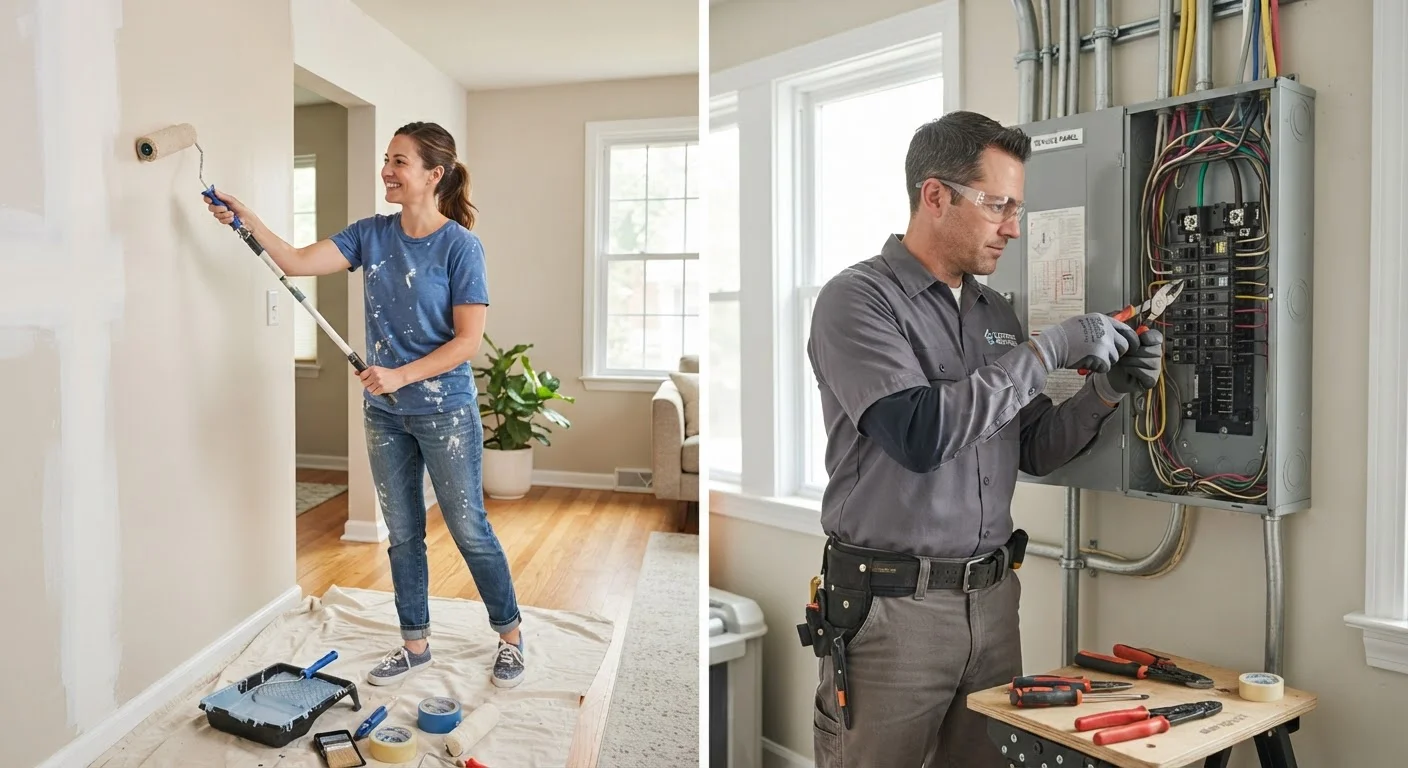
A wide range of maintenance and improvement tasks carry low physical risk and no permit requirement in most jurisdictions. These are generally fair game for a careful, moderately skilled homeowner:
- Interior painting and drywall patching (nail holes, small cracks)
- Caulking and weatherstripping around windows and doors
- Replacing fixtures like faucets, showerheads, and toilet flappers
- Installing flooring such as laminate, vinyl plank, or tile (non-structural subfloor)
- Deck staining, cleaning, and minor board replacement
- Gutter cleaning and minor gutter repairs
- Landscaping and garden installation
These tasks share a common trait: a mistake is usually correctable without endangering anyone or violating building code. Pairing DIY effort with proper seasonal planning also helps - our seasonal home maintenance guide can help you time these projects strategically.
Work That Requires a Licensed Professional
Certain categories of home repair fall under regulated trades for good reason. In most U.S. states and municipalities, the following work legally requires a licensed contractor and often a permit with inspection:
- Electrical panel upgrades, new circuit installation, or rewiring - improper work is a leading cause of house fires.
- Gas line installation or repair - leaks can cause explosions and carbon monoxide poisoning.
- Structural modifications - removing or altering load-bearing walls without engineering sign-off can compromise the integrity of the entire structure.
- New plumbing connections to the main water or sewer line
- HVAC system installation or major repairs - refrigerant handling requires EPA Section 608 certification.
- Roofing that involves structural deck repair
Permits Protect You, Not Just the Code
A permit isn't just a bureaucratic hurdle - it triggers an inspection that verifies the work was done safely and to code. That documentation protects you as a homeowner if a future buyer's inspector questions the work, and it creates a clear record that the project was completed lawfully. Always verify permit requirements with your local building department before starting any regulated work.
Attempting these without a license in jurisdictions that require one can result in fines, forced removal of the work, and real difficulty when selling your home. For a comparable framework applied to vehicles, see which car maintenance tasks to leave to a mechanic.
The Hidden Costs of Getting It Wrong
Beyond the immediate safety risk, unpermitted or unlicensed work on regulated systems creates a paper trail problem. Home inspectors are trained to spot work that looks like it bypassed the permit process, and many mortgage lenders will require corrections before closing. Homeowner's insurance policies may also deny claims for damage traceable to unlicensed work.
~47%
Of home fires attributed to electrical failure or malfunction
According to the U.S. Fire Administration, electrical fires are among the leading causes of residential fires, underscoring why unlicensed electrical work carries serious consequences.
Up to 10%
Reduction in home sale price tied to unpermitted work
Real estate professionals commonly cite unpermitted additions or repairs as a negotiating liability that can reduce offers or require costly remediation before closing.
There's also the resale disclosure issue. In most states, sellers are legally required to disclose known unpermitted work. That can reduce your negotiating leverage or delay a sale entirely. The DIY-or-hire decision guide walks through the full financial calculus when you're weighing upfront costs against these longer-term risks. And if you want to separate cost-saving DIY fact from fiction, our home maintenance myths article is worth reading before you start any project.