

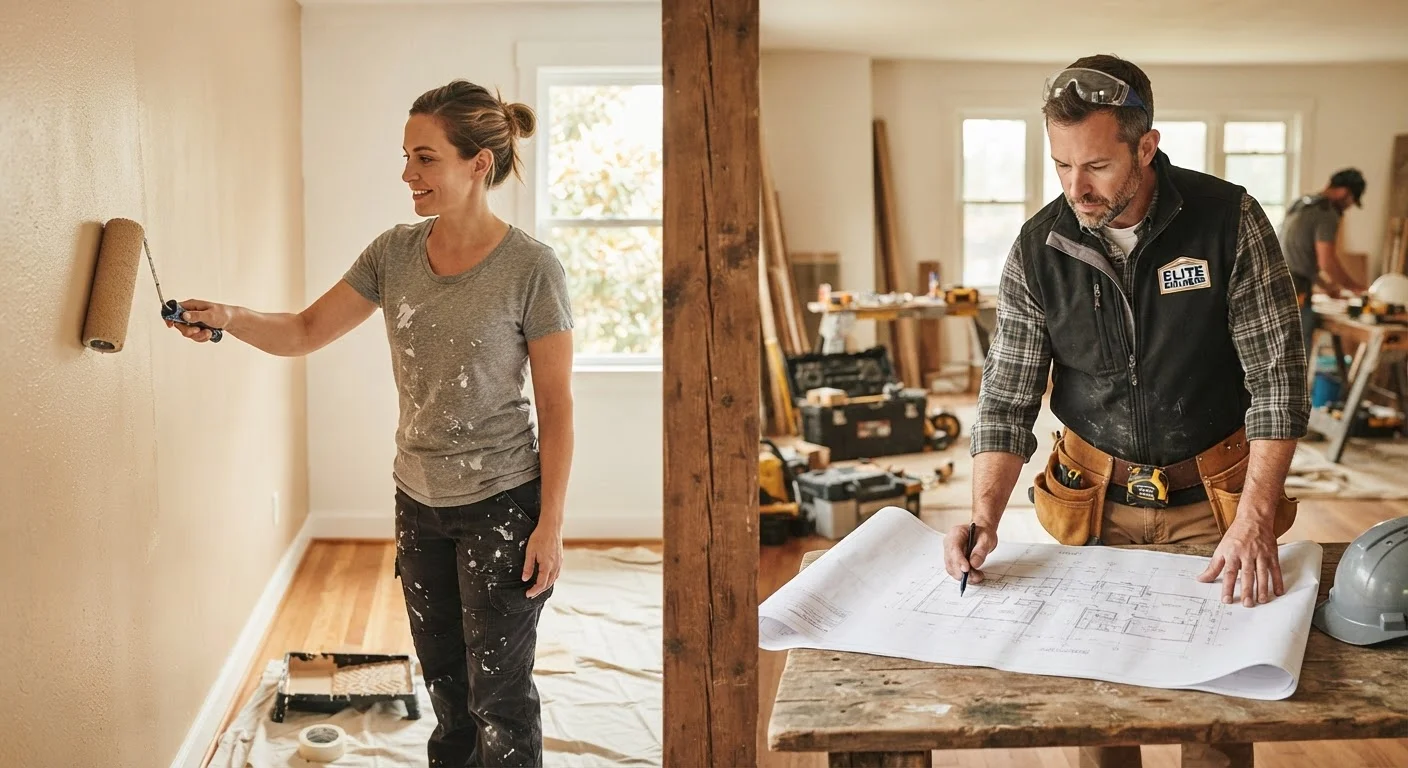
Key Takeaways
Our Verdict
Neither DIY nor hiring a contractor is universally the right answer - the smartest choice depends on the specific project's complexity, safety stakes, and your honest skill assessment. Low-risk cosmetic work is often well-suited to confident homeowners, while anything involving licensed trades, permits, or structural integrity warrants a professional.
| Best for | Recommended |
|---|---|
| Homeowners with hands-on experience tackling cosmetic or low-risk projects | DIY |
| Projects involving electrical, gas, plumbing, roofing, or structural changes | Hiring a Contractor |
| Those working within strict time or cost constraints on complex jobs | Hiring a Contractor |
| Renters or first-time homeowners learning maintenance fundamentals | DIY for simple tasks, contractor for anything permitted |
The Core Question: What's Actually at Stake?
Before you grab a tool belt or start calling contractors, the first step is sizing up the project honestly. Ask yourself three questions: What could go wrong? Who is legally allowed to do this work? And what happens if it's done incorrectly?
Projects fall into two broad risk categories. Low-stakes work - painting, installing shelves, swapping light fixtures on existing circuits, laying peel-and-stick tile - carries limited consequence if you make a small error. High-stakes work - rewiring panels, moving load-bearing walls, replacing a roof, or connecting to gas lines - can endanger lives, void homeowner's insurance, or trigger code violations that must be corrected before selling your home.
The line between DIY and licensed professional is not just about skill - it's often written into local building codes. Many jurisdictions require permits and licensed tradespeople for electrical, plumbing, HVAC, and structural work. Skipping these requirements isn't just risky; it can create legal and financial complications down the road.
Start With Your Local Building Department
Before planning any significant project, call or visit your local building department's website to check whether a permit is required. Many jurisdictions offer free pre-application consultations. Knowing the permit status upfront shapes the entire DIY-vs.-hire decision, and it prevents costly surprises during a future home sale or insurance claim.
Comparing DIY and Hiring a Contractor
Understanding the trade-offs across the most common decision factors makes it easier to reach a clear conclusion for your specific project.
| DIY | Hiring a Contractor | |
|---|---|---|
| Upfront cost | Lower (labor savings) | Higher (includes labor) |
| Risk of costly mistakes | Moderate to high on complex jobs | Lower with vetted professional |
| Time required | Variable; often underestimated | Typically faster for large jobs |
| Permit compliance | Homeowner's responsibility | Contractor typically manages permits |
| Skill requirement | Must be learned or already present | Provided by professional |
| Insurance/warranty coverage | Usually none on workmanship | Work often under contractor warranty |
| Best suited for | Low-risk, cosmetic projects | Complex, regulated, or structural work |
Cost is often the first thing homeowners weigh, but it's rarely the whole picture. Labor typically accounts for 30-50% of a project's total cost, so DIY can generate real savings - but only when you already own the necessary tools and won't need to redo work. Factor in tool rentals, material waste from learning curves, and your hourly time value before assuming DIY is cheaper.
When DIY Makes Sense
Certain projects are genuinely well-matched to a motivated homeowner. Good candidates share a few common traits: the work is reversible if something goes wrong, no permit is required, and the skills involved can be learned from reliable instructional resources in a reasonable timeframe.
- Interior painting and patching drywall - highly learnable, forgiving, and among the highest-value DIY tasks by labor saved.
- Installing or replacing hardware - cabinet pulls, door handles, faucet aerators, and similar swaps require basic tools and minimal risk.
- Basic landscaping and garden work - planting, mulching, and lawn care are well within reach and covered in our seasonal home maintenance guide.
- Caulking and weatherstripping - a straightforward task with measurable energy-saving benefits.
Honest self-assessment matters here. If a project requires skills you don't yet have, consider whether a small practice test (painting a closet before tackling the living room) is feasible before committing to the full scope.
Overconfidence Is the Most Common DIY Pitfall
Many expensive repair calls come from projects that started as DIY and escalated beyond the homeowner's actual skill level. Midway abandonment - a half-tiled bathroom or a partially rewired outlet - often costs more to fix than if a contractor had been hired initially. If you can't clearly describe every step of a project before starting, take that as a signal to either build your knowledge further or bring in a professional.
When to Hire a Contractor
Some projects simply belong in professional hands - not because homeowners aren't capable learners, but because the consequences of errors are too significant to absorb. The general rule: if a mistake could injure someone, destabilize your home's structure, or require a permit you can't legally pull yourself, hire out.
Common categories where a licensed contractor is strongly advisable include:
- Electrical panel work, new circuits, or whole-home rewiring - most states require a licensed electrician, and for good reason.
- Gas line installation or repair - leaks can be catastrophic; this is non-negotiable territory for licensed professionals.
- Structural modifications - removing walls, adding dormers, or altering load-bearing elements requires engineering input and permitted inspections.
- Roofing replacement - improper installation can void manufacturer warranties and create moisture infiltration that damages the entire structure.
When hiring, get at least three written quotes, verify licensing and insurance, and check references. Review our home improvement myths article for common misconceptions that can lead homeowners to make costly hiring decisions based on false assumptions.
It's also worth pausing to think through the financial side before signing a contract. The pre-decision financial self-check is a useful exercise any time a project involves significant expenditure.