
Key Takeaways
Public Library Adult Learning
Public library adult learning refers to the wide range of educational programs, resources, and services that public libraries provide specifically to adults - beyond simply lending books. These offerings include digital literacy workshops, workforce development programs, English language instruction, and access to online learning platforms. They are generally free to anyone with a library card.
In the field of adult education, libraries are classified as non-formal learning environments - structured and purposeful, but outside the traditional credentialing system. This makes them a flexible entry point for adults who face barriers to formal schooling.
More Than Books: What Libraries Actually Offer Adults
When most people picture a public library, they think of shelves of books and quiet reading rooms. That image, while not wrong, captures only a fraction of what today's public libraries do - especially for adult learners.
Across the country, public library systems have deliberately expanded their missions to address real gaps in adult education. The American Library Association (ALA) recognizes workforce development, digital inclusion, and health literacy as core library priorities. In practice, this translates into a remarkable range of programs that adults can access free of charge.
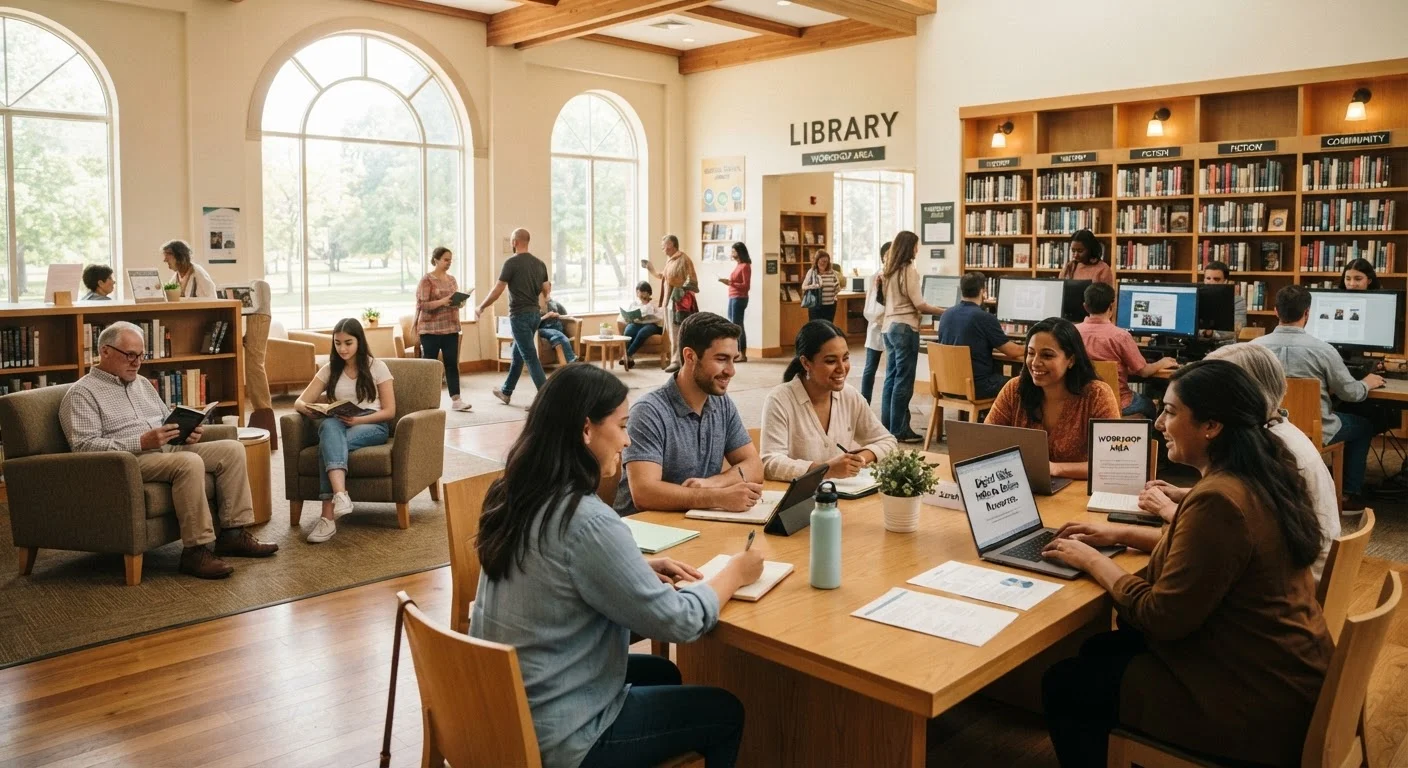
Common adult services at public libraries include:
- Digital literacy classes - covering basic computer use, internet navigation, and online safety
- English language learning (ELL) - structured classes and conversation practice groups
- GED and high school equivalency preparation
- Job-search assistance - résumé help, interview coaching, and access to job databases
- Financial literacy workshops - covering budgeting, credit, and navigating benefits
- Free access to online learning platforms - many libraries subscribe to services like Lynda (LinkedIn Learning) or Kanopy on behalf of cardholders
Understanding what's available to you is the first step. For a broader look at low- or no-cost learning options beyond libraries, see free and low-cost learning resources for American adults.
Services Vary by Library System
Not every library branch offers the same programs. Larger urban systems often have dedicated adult services departments, while smaller rural branches may have fewer staff-led programs but still provide digital access to online learning platforms. Always check your specific library system's website or call your local branch to see what's currently available near you.
Who Library Adult Programs Are Designed to Serve
Library adult learning programs don't target a single type of learner. They are deliberately designed to serve people across a wide range of circumstances - which is part of what makes them genuinely useful in communities where other options may be too expensive or inflexible.
17,000+
Public library locations across the United States
According to the Institute of Museum and Library Services (IMLS), the U.S. public library system includes over 17,000 outlets - branches, bookmobiles, and main libraries combined.
96%
Public libraries offering public internet access
The ALA has consistently reported that the vast majority of U.S. public libraries provide free public internet access, a critical enabler of digital learning for adults.
4.4M
Adults served by library literacy programs annually
IMLS data indicates that millions of American adults participate in library-based literacy and education programs each year, spanning basic literacy, English learning, and workforce skills.
Among the adults most commonly served:
- Working adults with limited time
- Many library programs are offered in evenings or on weekends, and some are available online. Short-format workshops - one to two hours - fit realistically into busy schedules.
- Adults without a high school diploma
- Libraries often partner with school districts or community organizations to offer adult basic education (ABE) and GED prep, frequently with trained instructors.
- Immigrants and non-native English speakers
- English language learning programs are among the most consistently offered adult services at libraries nationwide. Many also provide materials in multiple languages.
- Older adults
- Technology training programs specifically designed for seniors are common, addressing a real gap in digital confidence. For research-based guidance on learning as an older adult, see learning strategies for adults over 50.
- Job seekers and career changers
- Workforce-focused programming - from résumé workshops to small business resources - is a growing area in public library services.
The Library as a Gateway to Lifelong Learning
Libraries occupy a unique position in the American learning landscape: they are free, non-judgmental, and open to everyone regardless of educational background or income. This makes them one of the most equitable entry points into what educators call lifelong learning - the ongoing, self-directed pursuit of knowledge throughout adulthood.
“Libraries are not just about books anymore - they are community learning centers providing access to technology, education, and the skills people need to participate in modern life.”
— Carla Hayden, Librarian of Congress
Importantly, libraries don't ask you to commit to a semester or earn a credential. You can attend a single workshop to gain one specific skill, or you can use library resources as a foundation while pursuing more formal study. That flexibility matters enormously for adults juggling work, caregiving, and other responsibilities.
If you're newer to the concept of lifelong learning and want a grounding in what it actually means, what lifelong learning really means provides a helpful starting point. And for those who want to navigate the vocabulary used in adult education - terms like andragogy, self-directed learning, or non-formal education - a plain-language reference for adult education terms explains them clearly.
Libraries are not a substitute for formal academic pathways - if you're weighing degree options, academic pathways is a better starting point. But for adults who want to build knowledge and skills in a low-barrier, community-based setting, the public library remains one of America's most underused educational resources. The first step is simply finding out what your local branch offers.
Start With Your Library's Website
Most public library systems list their adult programs, upcoming workshops, and digital resource subscriptions on their websites. Search your library system by name or use the American Library Association's library finder at ala.org to locate your nearest branch. Signing up for email newsletters from your library is also a simple way to stay informed about new programs as they're added.