
Why Your Lower Back Keeps Aching After Sitting All Day - And What to Do About It

Key Takeaways
Why Sitting Creates Lower Back Pain
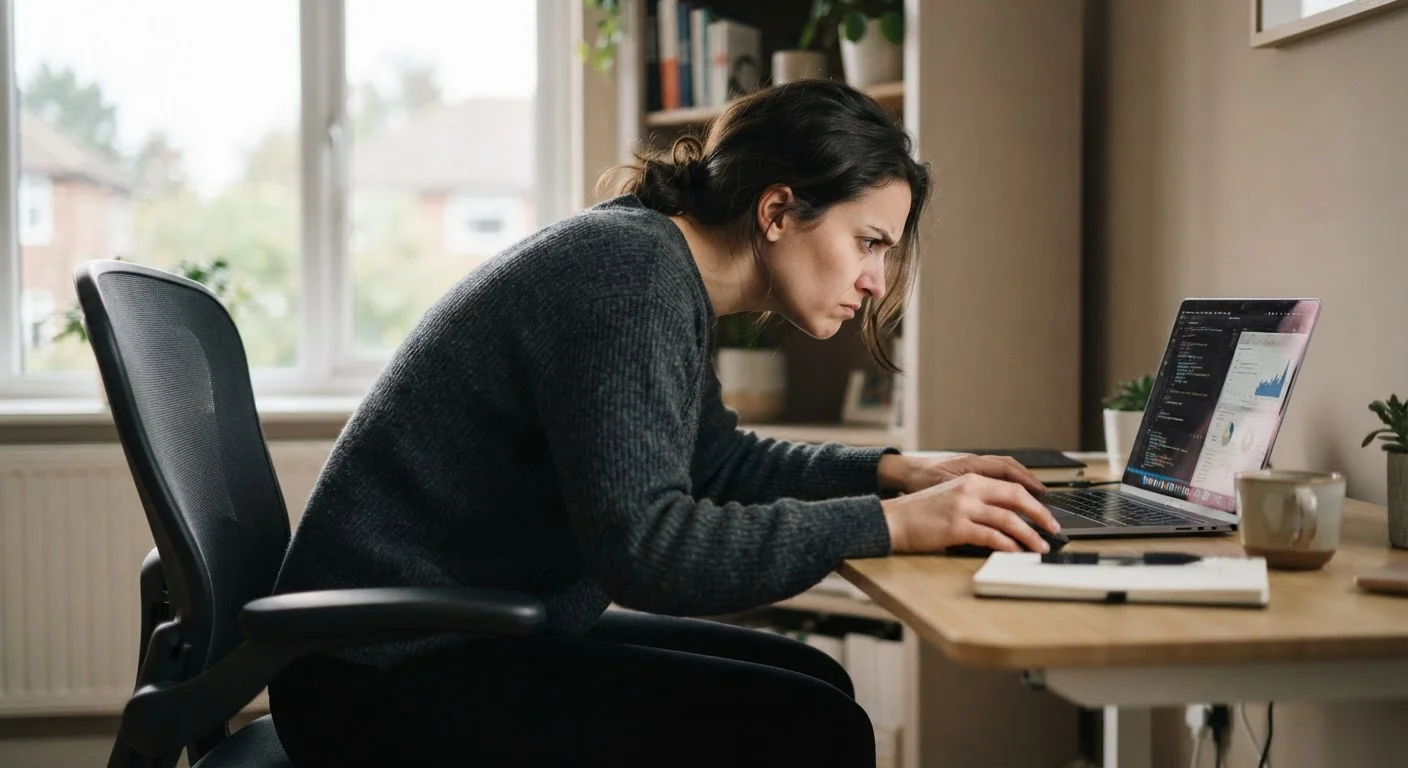
Lower back discomfort after a long day at a desk is not random - it follows a predictable mechanical pattern. The human musculoskeletal system evolved for varied, frequent movement, not hours of static loading in a single position. When you remain seated, several compounding factors work against your lumbar spine simultaneously.
The hip flexors shorten. The glutes disengage. The deep stabilising muscles of the core reduce their activation because the chair provides passive support. Over time, this pulls the pelvis into an anterior tilt, compressing the lumbar facet joints and soft tissues at the back of the spine. The discs between vertebrae, which rely on movement to exchange nutrients and fluid, become dehydrated under sustained static pressure.
The result is a familiar ache - often described as a dull, persistent tension at the base of the spine - that tends to worsen as the afternoon progresses and eases somewhat after walking around.
When to See a Professional
The strategies in this article are general wellness information, not medical advice. If your lower back pain is severe, radiates down your leg, is accompanied by numbness or tingling, or has persisted for more than a few weeks, consult a licensed healthcare provider before attempting any new movement routine.
A Simple Daily Routine to Break the Cycle
The six steps below require no gym membership, no special equipment, and no significant disruption to your workday. They are designed to be performed at or near your desk, targeting the exact muscle imbalances that prolonged sitting creates. Consistency matters far more than intensity here.
What you will need
Supportive chair or lumbar cushion
Provides baseline spinal support while seated, reducing passive strain on the lumbar region.
Timer or phone alarm
Reminds you to take movement breaks at regular intervals throughout the workday.
Yoga mat or folded blanket
Cushions your knees and hands during floor-based stretches.
Understand the root cause before you move
When you sit for extended periods, several mechanical changes accumulate in your body. Your hip flexor muscles - which run from the front of the hip to the lower spine - shorten and tighten. At the same time, the glutes and deep core muscles become underactive because they are not being challenged. This imbalance tilts the pelvis forward (an anterior pelvic tilt), which increases the curve in the lumbar spine and compresses the surrounding tissues.
Spinal discs also absorb more static load without the pumping action that movement normally provides. Knowing this helps you target the right areas rather than simply rubbing where it hurts.
Set a movement break schedule
Research in exercise science consistently suggests that breaking up prolonged sitting is more beneficial than compensating with a single long exercise session. Aim to stand, walk, or move for at least two to three minutes every 30 to 60 minutes. Set a recurring alarm on your phone or use a simple sticky note on your monitor as a visual cue.
Even standing and shifting your weight counts. The goal is to interrupt the static loading pattern before it accumulates into discomfort.
Perform a standing hip flexor stretch
Stand behind your chair and hold the back lightly for balance. Step one foot back into a staggered stance, lower your back knee slightly toward the floor (or keep it straight if the floor is not accessible), and gently tuck your pelvis under - think of bringing your tailbone toward the floor. You should feel a mild stretch at the front of the back hip. Hold for 20-30 seconds per side.
This targets the shortened hip flexors directly responsible for the anterior tilt pattern described in Step 1.
Activate your glutes with a standing squeeze
Still standing, plant both feet hip-width apart. Deliberately squeeze your glute muscles (your buttocks) firmly for five seconds, then release. Repeat 10 times. This reactivates muscles that go dormant during prolonged sitting and helps restore the muscular balance around your pelvis.
This requires zero equipment and takes under two minutes - making it one of the most practical mid-day interventions available.
Do a gentle seated or standing spinal reset
Sit at the edge of your chair with feet flat on the floor. Slowly roll your spine forward - letting your head drop and your lower back round gently - then slowly reverse into an upright, slightly arched position. Move at a controlled pace through five to eight repetitions. This cat-cow variation restores gentle movement to the lumbar vertebrae and helps redistribute fluid in the spinal discs.
If you prefer to stand, perform the same motion with hands resting on your thighs for support.
Review your seated posture - briefly
Ergonomic adjustments cannot replace movement, but they can reduce the rate at which tension accumulates. When you return to your seat, check three things: your hips should be roughly level with or slightly higher than your knees; your feet should rest flat on the floor or a support; and your screen should be at or just below eye level to avoid forward head drift.
Resist the urge to over-engineer your workstation. Small, consistent movement habits provide more long-term benefit than any single piece of furniture.
Stack Habits for Better Results
Tie your movement breaks to existing triggers - standing up every time you finish a video call or refill your water. Habit stacking removes the need for willpower and makes consistency far more achievable over time.
Don't Push Through Sharp Pain
These movements should feel like mild tension or gentle effort - never sharp, stabbing, or shooting pain. If any step produces acute pain, stop immediately and consult a qualified professional before continuing.
This article provides general health and wellness information only and is not a substitute for professional medical advice, diagnosis, or treatment. If you are experiencing significant, persistent, or worsening back pain, please consult a qualified healthcare provider before beginning any new movement or exercise routine.