

Key Takeaways
Spending Categories
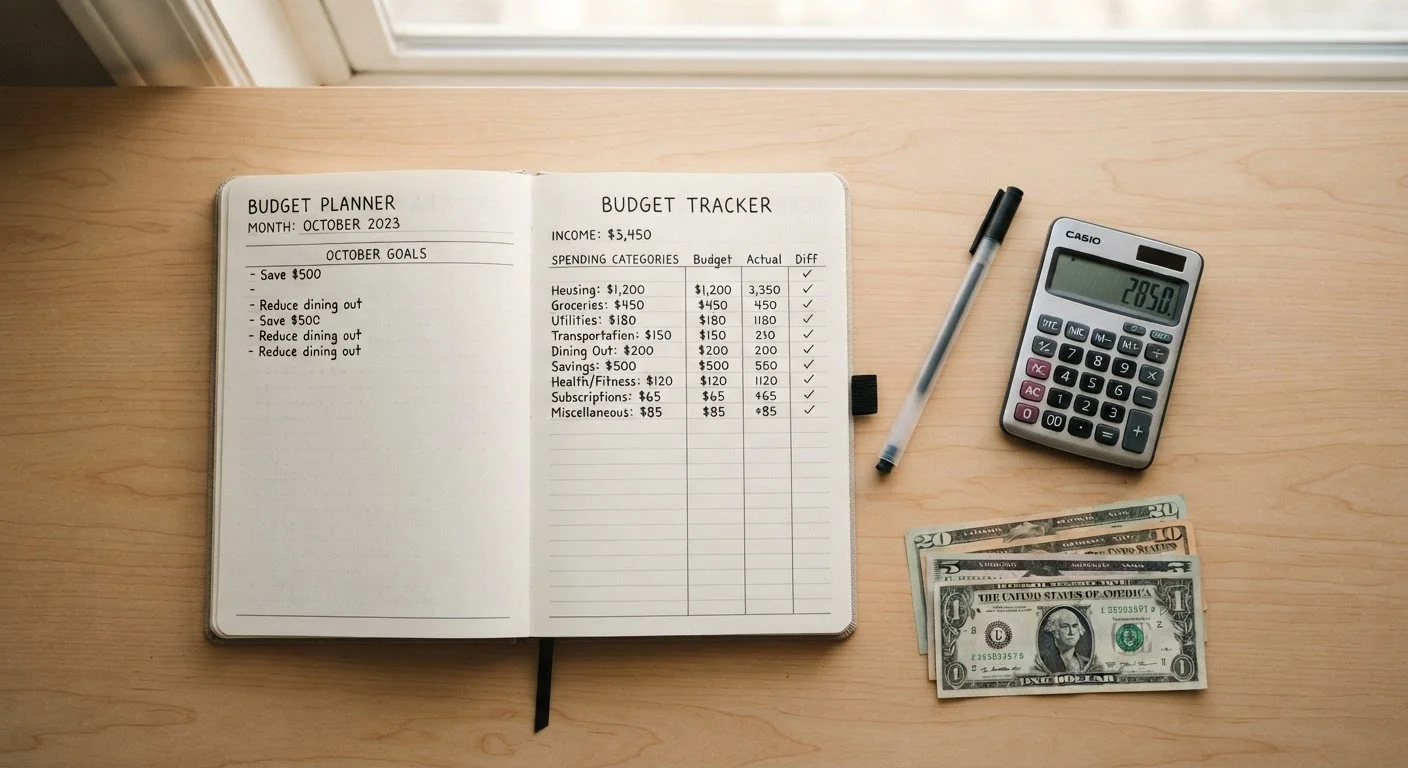
Spending categories are the labels you assign to every dollar you spend - grouping similar expenses together so you can see patterns in your financial behavior. Common categories include housing, transportation, food, healthcare, and entertainment. Organizing expenses this way turns a confusing stream of transactions into a clear picture of your financial life.
In formal budgeting frameworks, spending categories often align with the Bureau of Labor Statistics' Consumer Expenditure Survey groupings, though personal budgets can use any classification system that reflects your actual lifestyle.
Why Categorizing Your Spending Changes Everything
Most people who feel like they "can't figure out where the money goes" aren't spending carelessly - they're spending without structure. A raw bank statement lists hundreds of individual transactions but tells you almost nothing about your financial habits. Spending categories fix that by collapsing individual purchases into meaningful groups you can actually reason about.
When you know that $620 went to food last month, you have something to work with. When you only know you spent money at a dozen different stores, you have noise. Categories convert noise into signal.
This matters beyond awareness. Budgets built on clear categories make it easier to find cuts that don't hurt, set realistic limits, and have honest conversations if you share finances with a partner. For more on that last point, splitting expenses fairly with a partner gets much simpler once both people are working from the same category framework.
33%
Average share of spending on housing
The Bureau of Labor Statistics' Consumer Expenditure Survey consistently finds housing represents about one-third of average American household expenditures.
~$8,000
Average annual food spending per household
BLS Consumer Expenditure data shows average US households spend roughly $8,000 per year on food, split between at-home and away-from-home meals.
1 in 3
Americans with no formal monthly budget
Multiple consumer surveys, including those by the National Foundation for Credit Counseling, have found roughly one-third of US adults do not track their spending with any budget.
The Core Spending Categories Most Budgets Use
While every household is different, these categories cover the majority of American spending:
- Housing: Rent or mortgage, property taxes, renters/homeowners insurance, and regular maintenance costs.
- Transportation: Car payment, auto insurance, fuel, public transit, and parking.
- Food: Groceries and dining out. Many budgeters split these into two subcategories because the spending patterns are very different. Grocery habits alone can quietly absorb hundreds of extra dollars each month.
- Healthcare: Insurance premiums, copays, prescriptions, and out-of-pocket costs.
- Savings and debt repayment: Emergency fund contributions, retirement savings, and extra loan payments.
- Utilities: Electricity, gas, water, internet, and phone.
- Personal and household: Clothing, cleaning supplies, personal care products.
- Entertainment and leisure: Streaming services, hobbies, events, and subscriptions.
Together, these eight categories capture the vast majority of typical household cash flow. You can always add more - childcare, education, pet expenses - based on what's significant in your own life.
Start With Just Five Categories
If a full eight-category budget feels overwhelming, begin with just five: housing, transportation, food, savings, and everything else. Once that becomes routine - usually within a month or two - split 'everything else' into two or three more specific groups. Building the habit matters more than having a perfect structure from day one.
Fixed, Variable, and Discretionary: A Useful Layer on Top
Once you have your categories set, a second layer of classification makes your budget even more actionable. Each expense can also be tagged as fixed (the same every month, like a mortgage payment), variable (fluctuates, like groceries), or discretionary (optional, like a gym membership you rarely use).
This cross-referencing tells you where you have real flexibility. Fixed costs are largely immovable in the short term. Variable and discretionary costs are where most budget adjustments happen. Our full explainer on fixed, variable, and discretionary spending walks through how to apply this framework to your own numbers.
“A budget is telling your money where to go instead of wondering where it went.”
— Dave Ramsey, Personal finance author and radio host
Common Categorization Mistakes - and How to Avoid Them
The biggest mistake isn't using the wrong categories - it's being inconsistent. If you put restaurant charges under "food" in March and "entertainment" in April, your month-to-month comparisons are meaningless. Pick a rule for every edge case and document it.
Other common errors include:
- Lumping too much into "miscellaneous": This category becomes a black hole. If miscellaneous exceeds 5-10% of your budget, it's a sign that real categories are missing.
- Using aspirational categories rather than real ones: Building a category called "fitness" but not including the fast food you actually buy just makes your budget less accurate.
- Forgetting irregular expenses: Annual insurance premiums, car registration, holiday gifts - these feel like surprises only because they aren't categorized and spread across the year.
If you want a structured process for catching these blind spots, a monthly spending audit gives you a repeatable method for reviewing every dollar before patterns become problems.
Strict Categories Aren't for Everyone
Some people find rigid spending categories motivating; others find them stressful and hard to sustain. If strict categories are causing frustration rather than clarity, it may be worth reviewing a more flexible approach. Our article on the pros and cons of strict budget categories lays out the trade-offs honestly.
Building a Category System You'll Actually Maintain
The best spending category system is the one you'll use consistently. A complex spreadsheet with 25 subcategories might look thorough, but if it takes 45 minutes to update, it won't get updated.
Start with broad categories and add granularity only where detail matters to you. If you're trying to cut food costs, splitting groceries from dining out is worth the effort. If healthcare is a small, stable line item, one category is enough.
Match your system to your tracking method. A simple notepad budget needs fewer categories than a dedicated app that auto-imports transactions. For help choosing and setting up a tracking approach, see our guide to spending trackers that actually get used.
Review and adjust categories quarterly, not just when something feels off. Your life changes - a new car loan, a baby, a move - and your category structure should keep pace. The goal is a budget that reflects what living within your means actually requires day to day, not an abstract ideal.
This article is for general informational and educational purposes only and does not constitute personalized financial advice. Consult a qualified financial professional for guidance specific to your situation.