

Key Takeaways
Why Cat Introductions Require a Different Approach
Unlike dogs, cats are not naturally pack animals. In the wild, most cats live solitarily and defend defined territories. Bringing a new cat directly into a resident cat's space - even with the best intentions - registers as an invasion, not a friendly visit. The resulting stress can trigger aggression, hiding, inappropriate elimination, and long-term anxiety in both animals.
The good news is that biology doesn't have to work against you. A slow, phased introduction allows both cats to adjust at their own pace, using scent as the primary communication channel before visual or physical contact ever occurs. This mirrors how cats actually process information about other animals in their environment.
This approach is especially worth understanding if you're bringing home a younger kitten to live with an older resident - senior cats often have lower tolerance for disruption. For a deeper look at how aging cats experience environmental change, see our guide to caring for cats over age 10.
Patience Is the Most Effective Tool
Most failed cat introductions can be traced to moving too fast. A two-to-four week timeline feels long, but it mirrors how cats naturally process territorial change. Cats who are rushed often develop lasting fear or aggression toward each other that takes months to reverse - or never fully resolves.
What You'll Need Before the New Cat Arrives
Preparation reduces the chaos of day one significantly. Before your new cat comes home, set up a dedicated safe room - a spare bedroom or bathroom works well - stocked with everything the newcomer needs independently of your resident cat.
What you will need
Safe room with a solid door
Gives the new cat a secure base and creates the physical boundary needed for scent-based introduction.
Separate litter boxes (one per cat, plus one extra)
Prevents resource competition that can trigger or sustain territorial conflict.
Clean socks or a small cloth for scent swapping
Used to transfer each cat's scent to the other's environment without direct contact.
Interactive wand toy
Facilitates positive, distraction-based interactions during supervised visual meetings.
Baby gate or screen door
Allows visual contact with a physical barrier still in place during the controlled-sight phase.
Plug-in feline pheromone diffuser
May help reduce ambient stress in the home during the introduction period; discuss use with your vet.
The Step-by-Step Introduction Process
Follow these stages in order. Skipping ahead because things seem to be going well is the most common mistake owners make - and the most common reason introductions fail. Move to the next step only when both cats appear calm and unstressed at the current stage.
Confine the New Cat to the Safe Room
When your new cat arrives, bring them directly into the prepared safe room and close the door. Let them explore and decompress without any contact with the resident cat. Provide food, water, a litter box, and a hiding spot such as a box or carrier with the door removed. Spend calm, quiet time in the room daily so the new cat associates your presence with safety.
Your resident cat will immediately detect a new scent under the door - this is the beginning of the introduction, even if nothing visible is happening yet.
Begin Scent Swapping
After two to three days, start exchanging scent between the cats using a clean cloth or sock. Gently rub the cloth on one cat's cheeks and chin - the primary scent gland areas - then place it near (not on) the other cat's food bowl or resting spot. Repeat this daily in both directions. You're teaching each cat that the other's scent predicts neutral or positive experiences.
You can also swap bedding between the two spaces every couple of days to deepen scent familiarity.
Feed Both Cats Near the Closed Door
Once neither cat shows obvious distress at the door (no sustained hissing, growling, or fleeing), begin feeding both cats on opposite sides of the closed door. Start with food bowls a few feet away from the door and gradually move them closer over several days until both cats eat calmly right at the door threshold.
This step is critical - it pairs the other cat's scent with the highly positive experience of eating.
Introduce a Visual Barrier Stage
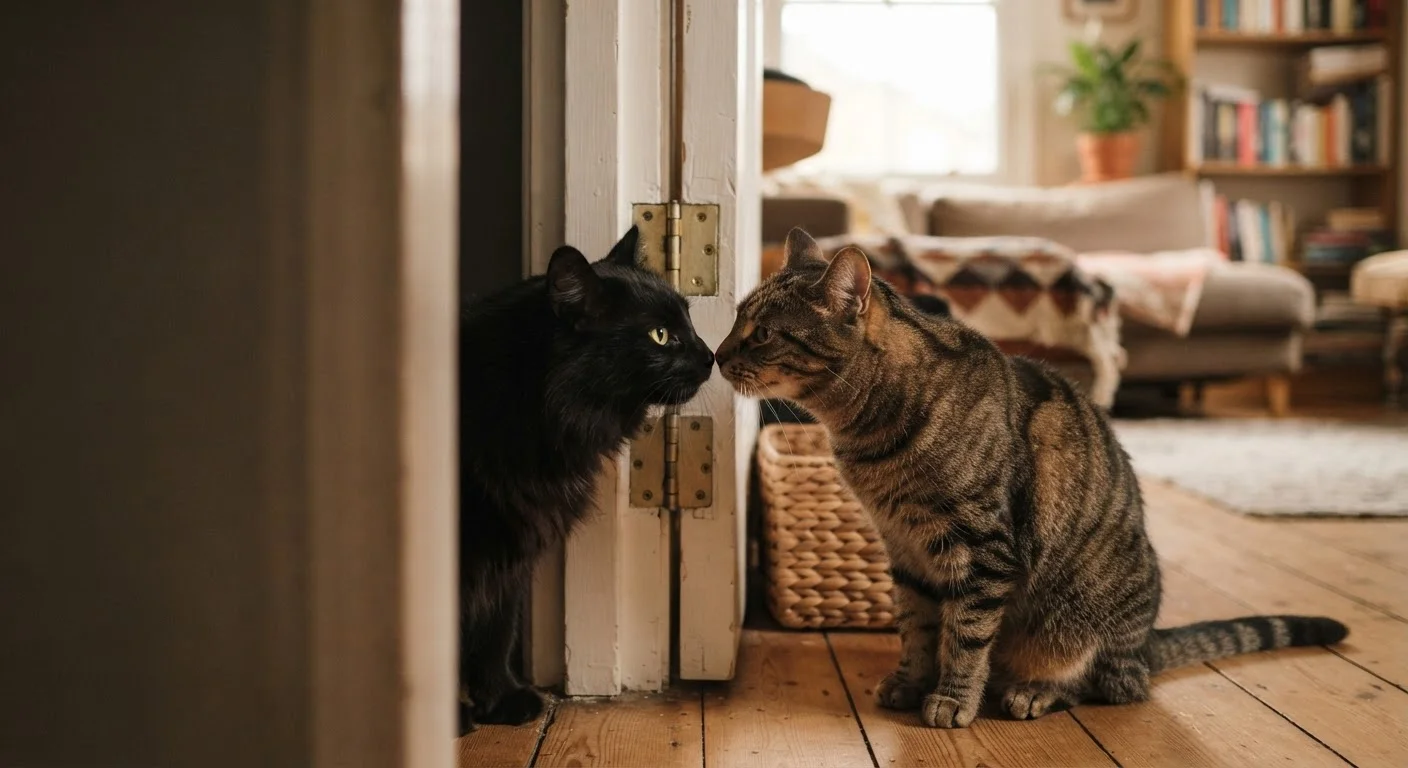
When door-feeding is consistently calm, crack the door slightly, prop it with a door stopper, or install a baby gate or temporary screen so the cats can see each other without full access. Keep initial visual sessions short - five to ten minutes - and stay present to monitor body language.
Look for soft, curious postures: slow blinking, relaxed tails, forward ears. Puffed tails, flat ears, or sustained staring are signs to end the session and return to the previous stage.
Allow Supervised Free Access
Once both cats consistently appear calm during visual sessions, open the safe room door and allow the new cat to explore the wider home - with you present. Keep sessions short at first and ensure the new cat can retreat to the safe room if needed. Do not force interaction. Multiple brief, calm encounters are far more valuable than one prolonged, stressful one.
Continue feeding in separate locations and maintaining separate litter boxes to avoid resource tension during this transitional period.
Transition to Shared Living
Over time, supervised sessions lengthen and the cats begin to coexist without incident. Some cat pairs eventually groom each other and sleep in proximity; others maintain a respectful distance - both outcomes are healthy. Success doesn't require friendship; it requires the absence of chronic stress and conflict.
Continue providing multiple resting spots at various heights so neither cat feels cornered or territorially displaced. This is an ongoing investment in multi-cat household wellbeing, not a one-time fix. For broader context on meeting cats' daily needs in a shared environment, see our complete guide to responsible cat ownership.
Hissing Is Normal - Lunging Is Not
Some hissing and swatting during early visual or physical meetings is expected and doesn't signal failure. However, if either cat lunges aggressively, screams, or draws blood, separate them immediately and return to an earlier introduction stage. Persistent, escalating aggression warrants a conversation with your veterinarian or a certified cat behavior consultant.
Troubleshooting Common Setbacks
Even a carefully managed introduction hits rough patches. Hissing and growling at early stages is normal - it's communication, not a sign of permanent incompatibility. Flat ears, puffed tails, and sustained stalking are more serious signals that warrant slowing the process back to an earlier phase.
If one cat stops eating, grooms excessively, or hides for days at a time, those are meaningful stress indicators. Consult your veterinarian; in some cases, a short-term anti-anxiety support strategy may be worth discussing. Never use punishment to manage conflict - it increases anxiety and damages your relationship with both cats.
Multi-cat harmony is also shaped by how you structure the shared environment long-term. Resource competition - fighting over a single food bowl or one litter box - quietly undermines even successful introductions. The general guideline is one litter box per cat, plus one extra. For a fuller picture of what cats need day to day in a shared home, our responsible cat ownership guide covers the essentials from feeding to enrichment.
Never Force Physical Contact
Holding one cat while allowing the other to approach is a common well-meaning mistake that routinely backfires. A restrained cat cannot escape, which triggers a fight-or-flight response and creates a lasting negative association with the other cat. Always allow both cats to control their own proximity and retreat on their own terms.