

Key Takeaways
Why Dogs Pull in the First Place
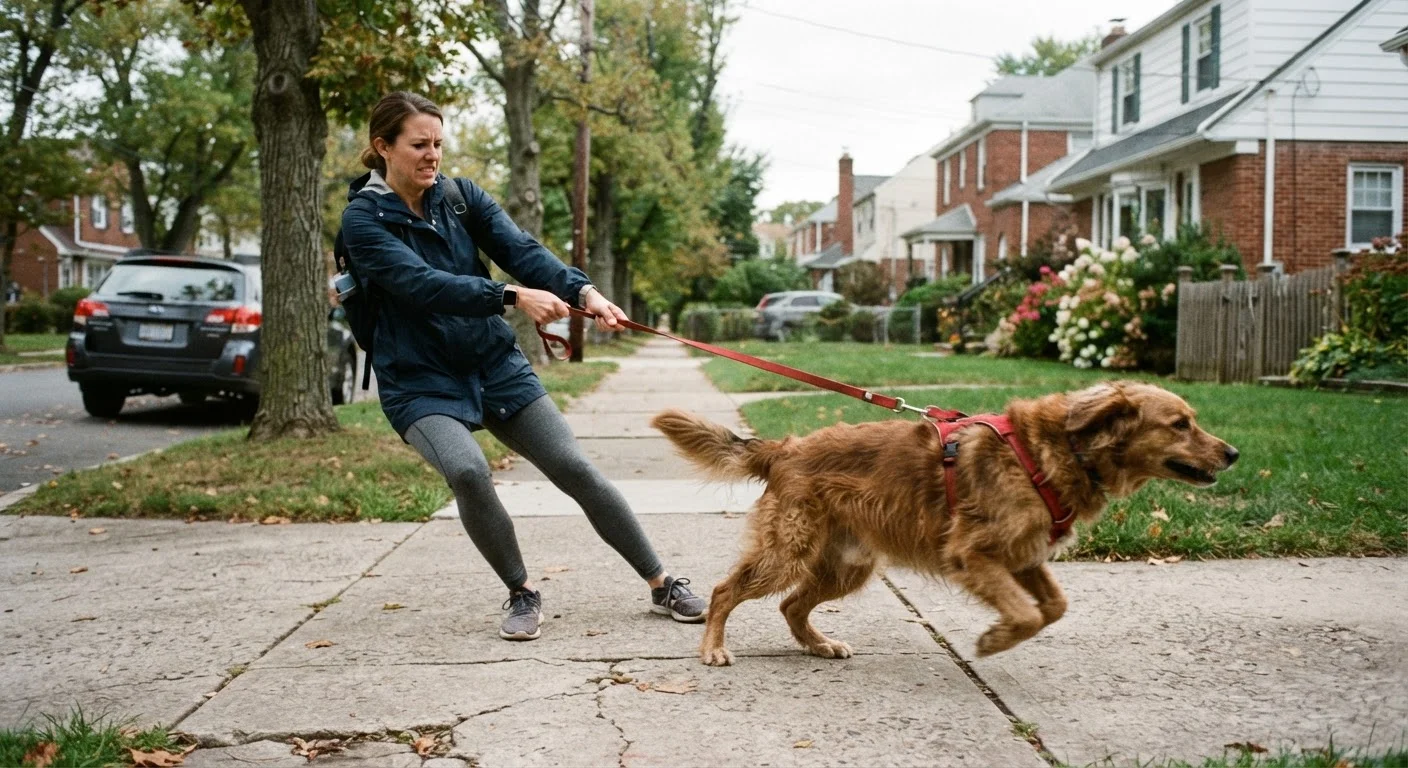
Before you can fix leash pulling, it helps to understand exactly why it happens. Dogs are not pulling to dominate you or test your authority - they pull because pulling works. Every time a dog lunges toward a smell and reaches it, or surges ahead and makes progress down the sidewalk, the behavior is reinforced. Over hundreds of walks, that reinforcement accumulates into a deeply ingrained habit.
Dogs also walk faster than humans by default and experience the outdoors as an overwhelming buffet of stimulation - scents, sounds, other animals, and movement. The leash is essentially asking them to slow down and ignore things that feel urgently interesting. Without specific training, most dogs have no reason to comply.
Understanding this framing matters because it shifts the solution. You are not correcting a personality flaw; you are interrupting a reinforcement history and building a new one. That is a training problem, and training problems have training solutions. For a deeper look at how reinforcement shapes lasting behavior, see our guide to positive reinforcement training.
Common Mistakes That Make Pulling Worse
Continuing to walk when the leash is taut, even briefly.
Why it happens: Stopping every few steps feels inefficient, and owners often hope the dog will self-correct if they just keep moving.
Using intermittent leash corrections without teaching an alternative behavior.
Why it happens: Jerking the leash feels like direct feedback, and owners assume the dog will connect the correction to the pulling.
Relying entirely on equipment without pairing it with training.
Why it happens: No-pull harnesses and head halters work immediately, which creates the impression that the problem is solved.
Training only in familiar, low-stakes environments and then expecting results everywhere.
Why it happens: Dogs learn quickly at home or in the backyard, and owners assume the skill will transfer automatically to busier settings.
Expecting one long training session to produce lasting change.
Why it happens: Owners often tackle leash pulling as a single problem to solve rather than a habit to gradually reshape.
Avoiding these errors is the single fastest way to stop unintentionally prolonging the problem. Most owners are making at least one of them without realizing it.
What Actually Changes the Behavior
The core mechanic of fixing leash pulling is simple: forward movement only happens on a loose leash. The moment the leash goes taut, you stop - completely. No yelling, no corrections, just a full stop. When your dog releases pressure and returns toward you, mark that moment with a word like "yes" and reward it, then continue walking.
This approach, often called loose-leash walking or the "penalty yards" method, directly undermines the reinforcement history your dog has built. Pulling no longer produces forward motion. Staying near you and keeping slack in the leash does.
#1
Most reported dog behavior problem
Leash pulling is consistently cited as the top complaint among dog owners seeking training help, according to surveys by veterinary behaviorists and professional trainer organizations.
4-8 weeks
Typical improvement timeframe with consistent training
Most dogs with no prior leash manners training show meaningful improvement within four to eight weeks when owners apply consistent loose-leash principles during every walk.
Equally important is practicing in low-distraction environments first. Asking a dog to walk politely past a dog park or busy intersection before they can do it in a quiet driveway is like asking someone to take a calculus exam before finishing algebra. Start easy, proof the behavior gradually, and only raise the difficulty once the dog is consistently succeeding at the current level.
Keep sessions short - five to ten minutes is plenty for most dogs. Leash-manners training is mentally demanding, and a tired, frustrated dog will not make meaningful progress. Several brief sessions across a week produce better results than a single exhausting hour.
If your dog is also showing signs of anxiety or physical discomfort during walks, those issues can complicate training. It is worth reviewing signs your dog may be in pain to rule out any underlying contributors before attributing all problems to a training gap.
Managing the Walk While You Train
Realistic training takes weeks, not days. In the meantime, you still have to walk your dog. A front-clip harness or head halter can reduce the mechanical advantage your dog has while pulling, making walks safer and less physically demanding for you. These tools manage the behavior in the moment but do not teach anything on their own - they work best as a bridge while the underlying training takes hold.
Consistency across all handlers in the household is non-negotiable. If one person stops when the dog pulls and another keeps walking, the dog is receiving contradictory information and the training will stall. Everyone walking the dog needs to follow the same rules.
Finally, patience is not optional. Dogs with years of reinforced pulling do not unlearn it in a weekend. Progress is real even when it feels slow, and most owners who apply these principles consistently report significant improvement within four to eight weeks - though individual timelines vary by dog, history, and practice frequency.
This article provides general training education and is not a substitute for working with a certified professional dog trainer, especially for dogs showing reactivity, aggression, or fear responses on leash.