

Key Takeaways
There's a Whole Country Past the Resort Zone
For many American travelers, Mexico begins and ends at an all-inclusive resort along the Caribbean coast. Cancún, Cozumel, and the Riviera Maya are genuinely appealing - but they represent a narrow slice of a country with extraordinary geographic and cultural range. Mexico's mainland stretches from the high-altitude valleys of Oaxaca to the colonial grandeur of the Bajío region, from the Gulf Coast lowlands to the indigenous highlands of Chiapas. Each of these places carries its own history, cuisine, and rhythm that beach resorts simply can't replicate.
This isn't a knock on the coast - it's an argument for going deeper. Many of the destinations below are well-served by domestic Mexican airlines and have established tourism infrastructure, making them more accessible than travelers might assume. Whether you're building a first mainland trip or expanding on previous visits, these destinations are worth understanding on their own terms.
Start with a Hub, Then Branch Out
Mexico City functions as the country's main aviation hub and connects easily to Oaxaca, Mérida, Chiapas, and Guanajuato by short domestic flights. Building your itinerary around a Mexico City arrival - even for just a night or two - gives you flexibility and opens up the broader mainland efficiently. Budget extra time if you're combining multiple regions; distances are greater than they appear on a map.
Standout Mainland Destinations to Know
Oaxaca City and the Central Valleys
Oaxaca is arguably Mexico's most celebrated food destination, and for good reason. The city is the spiritual home of mole negro, tlayudas, and mezcal produced in small village distilleries throughout the surrounding valleys. But the food culture is inseparable from the indigenous Zapotec and Mixtec traditions that underpin it - a context that makes every market visit and restaurant meal more layered.
Beyond the plate, the Central Valleys offer the pre-Columbian ruins of Monte Albán, textile villages like Teotitlán del Valle, and the hierve el agua rock formations. Oaxaca City's centro histórico is compact and walkable, centered on the green-stone Templo de Santo Domingo. The city's arts scene - particularly around Día de Muertos - draws visitors from across the world.
Oaxaca's food culture is inseparable from the indigenous traditions that created it.
Mexico City
Mexico City is one of the largest urban areas on the planet and one of its most culturally dense. The historic center alone contains the Zócalo, the Templo Mayor archaeological site (built over the Aztec capital of Tenochtitlán), and the Palacio Nacional with its Diego Rivera murals. But the city rewards exploration far beyond the centro - neighborhoods like Coyoacán, Roma, and Condesa each have distinct personalities, restaurant scenes, and walkable street life.
The city's museum system is world-class: the Museo Nacional de Antropología houses one of the most significant pre-Columbian collections anywhere. Mexico City is also a practical hub - most mainland destinations are reachable from here by short flight or bus, making it a natural base or stopover point.
Mexico City rewards exploration far beyond the historic center - every neighborhood tells a different story.
Guanajuato and the Bajío Region
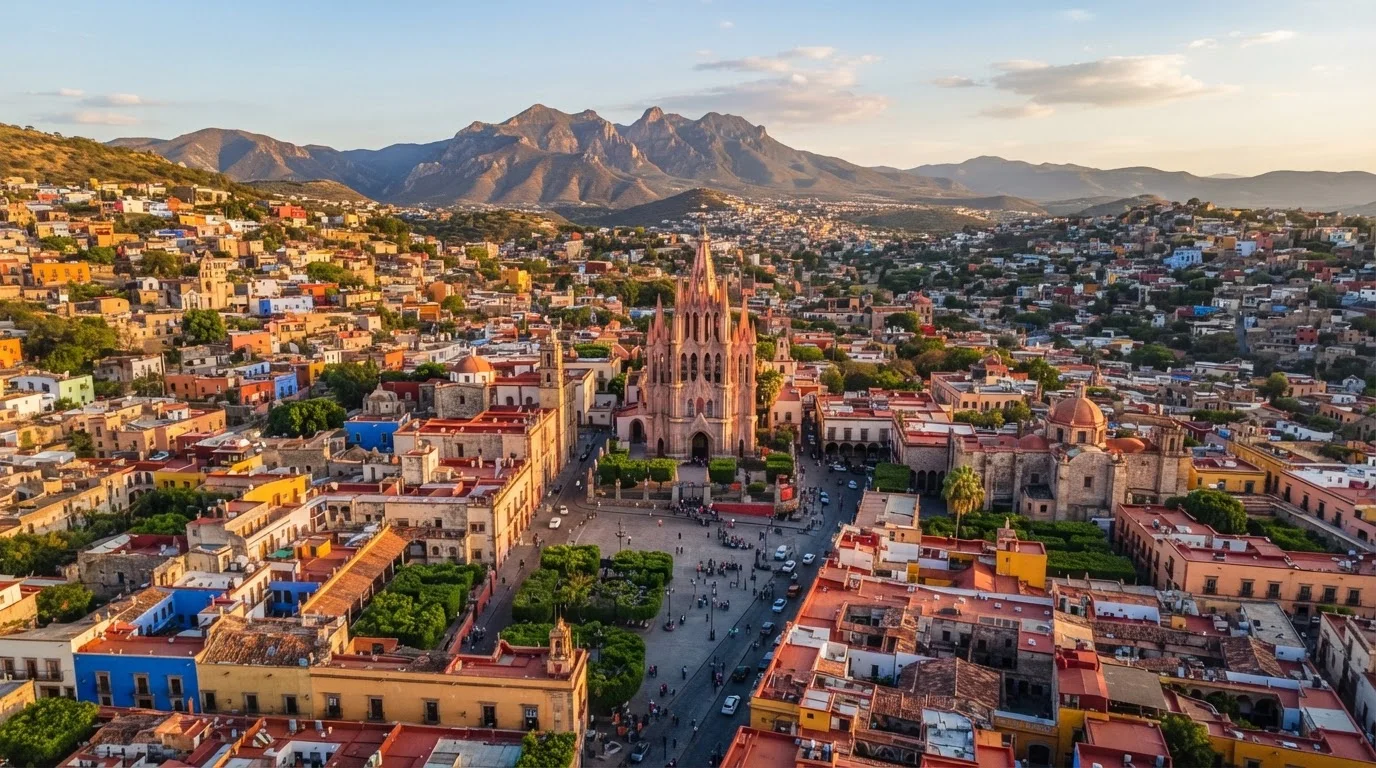
The colonial cities of Mexico's Bajío - Guanajuato, San Miguel de Allende, Querétaro - share an architectural legacy from the silver-mining era that funded New Spain's grandeur. Guanajuato is the most visually arresting of the three: a city built into a ravine, threaded with underground roadways and painted facades that tumble down the hillsides. The city hosts the Festival Internacional Cervantino, one of Latin America's major arts festivals, each October.
San Miguel de Allende has attracted a long-standing expatriate community and carries a reputation for its arts programs and preserved colonial streetscapes. Querétaro, often overlooked, offers a calmer pace and well-preserved historic aqueduct. All three cities are UNESCO World Heritage Sites.
Guanajuato's ravine geography and painted facades make it one of Mexico's most visually distinctive cities.
Mérida and the Yucatán Interior
Mérida is the Yucatán Peninsula's cultural capital - a city distinct from the resort towns on its coasts. It's one of Mexico's oldest continuously inhabited cities, with a strong Maya heritage visible in its markets, cuisine, and outlying archaeological sites. The nearby ruins of Uxmal offer a different architectural tradition from the more-visited Chichén Itzá, with the Puuc style's mosaic stone facades drawing serious archaeology travelers.
The city itself is known for its Sunday market traditions, hammock workshops, and habanero-forward cuisine. The surrounding region includes cenotes - natural freshwater sinkholes formed by the Yucatán's limestone geology - that are accessible as day trips and less crowded than those closer to the coast.
Mérida gives travelers a grounded cultural base for exploring the Yucatán beyond its resort corridors.
San Cristóbal de las Casas, Chiapas
San Cristóbal sits at over 7,000 feet in the highlands of Chiapas, surrounded by forests and indigenous Tzotzil and Tzeltal Maya communities. The city's colonial architecture is well-preserved, but its real draw is cultural - the surrounding villages of San Juan Chamula and Zinacantán maintain traditions in dress, language, and ceremony that remain largely distinct from mestizo Mexican culture.
The Chiapas highlands also connect to nearby natural attractions: the Sumidero Canyon, the Montebello Lakes, and the Agua Azul waterfalls are all reachable as day or overnight trips. The region receives more rainfall than central Mexico, so dry-season timing (roughly November through April) significantly affects what you'll experience on the ground.
San Cristóbal's highland Maya communities offer cultural depth rarely encountered in mainstream Mexican tourism.
On Safety and Travel Advisories
Travel conditions across Mexico vary significantly by state and region. The U.S. State Department issues tiered travel advisories for Mexican states that are updated regularly - these are worth consulting before finalizing your destination list. The cities highlighted in this article generally have established visitor infrastructure, but local conditions can shift. Register with the Smart Traveler Enrollment Program (STEP) before international travel and purchase comprehensive travel insurance.
Planning Your Mainland Trip
Mexico's mainland destinations vary considerably in altitude, climate, and travel logistics. Oaxaca City sits at roughly 5,000 feet above sea level - noticeably cooler than coastal zones. Mexico City, at over 7,300 feet, can affect visitors unaccustomed to elevation. Factor these differences into your packing and activity planning, especially if you're arriving from sea-level cities.
Most major mainland cities are reachable via Aeropuerto Internacional Benito Juárez in Mexico City or through expanding regional airports. Overnight buses, while slower, connect many cities comfortably and affordably. Always check current entry requirements, travel advisories from the U.S. State Department, and any local health or safety guidance before your trip - conditions can change, and official sources are your most reliable reference point.