

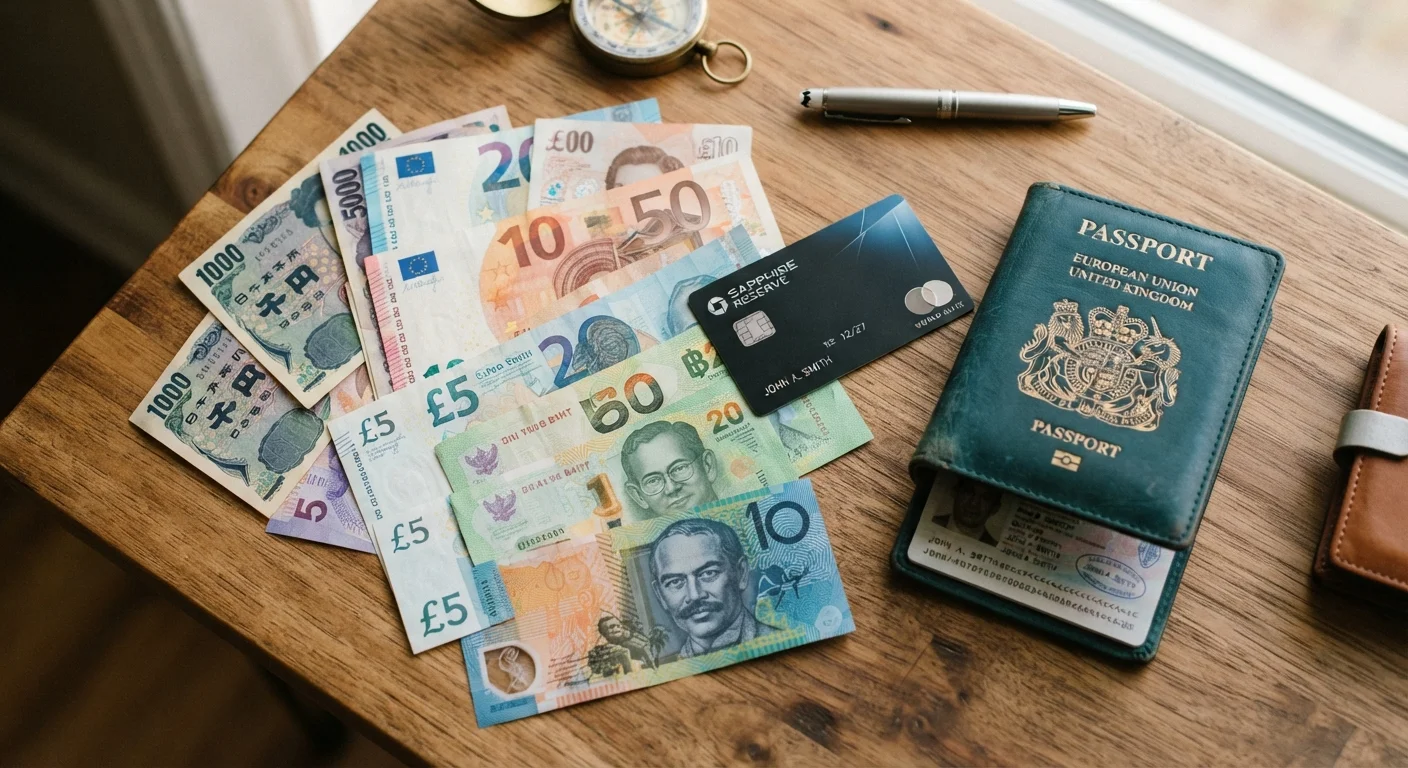
The Hidden Costs of Spending Money Abroad
Every international trip involves a version of the same puzzle: how do you turn U.S. dollars into euros, pesos, or baht without losing a significant chunk to fees and unfavorable exchange rates? The answer isn't obvious, because the costs are scattered across multiple systems - card networks, ATM operators, banks, and merchants - and rarely appear as a single line item.
For a deeper look at how these expenses contribute to trips going over budget, see why so many trips go over budget. This reference guide focuses specifically on the mechanics of currency, cards, and cash so you can make informed choices before and during your trip.
Key Terms Every Traveler Should Know
International money flow comes with its own vocabulary. Getting familiar with these terms before you travel helps you spot where costs are building up - and ask the right questions at the right moment.
If you're new to managing multiple payment methods, how cash, debit, and credit differ in practice is a useful companion read before your trip.
ATMs, Airport Kiosks, and Where Exchange Happens
Not all currency access points are equal. Here's what to know about each one:
- Airport currency exchange kiosks typically offer the least favorable rates - convenient, but often 10-15% worse than interbank rates. They are best used for small amounts when you truly need local cash on arrival.
- Local bank ATMs in your destination country generally offer rates close to the interbank (wholesale) rate, because they draw on network rates from Visa, Mastercard, or similar. The catch: your home bank and the foreign ATM operator may each charge fees.
- Hotel front desks and private exchange bureaus vary widely. Some are competitive; others add wide spreads. Always ask for the rate and any commission before handing over money.
For the same reason you'd review automated financial tools with a human eye, it's worth manually checking your card statement after each international purchase. See what benefits from manual review for the broader principle.
Dynamic Currency Conversion: Decline It
Dynamic currency conversion (DCC) is one of the most consistently unfavorable options a traveler will encounter. When a card terminal or ATM offers to charge you in U.S. dollars instead of the local currency, it sounds convenient - but the merchant or ATM operator sets that exchange rate, not your card network. The markup is typically 3-8% above the interbank rate, on top of any foreign transaction fee your card already charges.
The correct move is almost always to choose the local currency and let your card network handle the conversion. Your card network's rate is usually more transparent and more competitive. If you're unsure, ask the cashier to process the charge in local currency before completing the transaction.
Practical Checklist Before You Travel
Being prepared before departure is the most effective way to reduce foreign money friction. Consider these steps:
- Notify your bank and card issuers of your travel dates and destinations to prevent fraud blocks on legitimate purchases.
- Know your card's foreign transaction fee - typically 1-3% per purchase - and whether your card waives it entirely.
- Identify in-network or partner ATMs at your destination, if your bank has them, to reduce or eliminate ATM fees.
- Carry some local cash for small vendors, transit, and places that don't accept cards. A reasonable starting amount varies by destination.
- Have a backup card from a different network (e.g., one Visa and one Mastercard) in case a card is blocked or not accepted.
Managing money abroad is one piece of a larger international travel picture. Understanding all the moving parts of international travel - from visas to customs - helps everything fit together. And don't overlook digital security: keeping your devices and data safe while traveling is equally important when you're accessing banking apps on unfamiliar networks.
This article provides general travel and financial information for educational purposes only. It is not personalized financial advice. Consult your bank, card issuer, or a qualified financial professional for guidance specific to your situation. Verify fees, rates, and terms directly with your financial institution before traveling.