

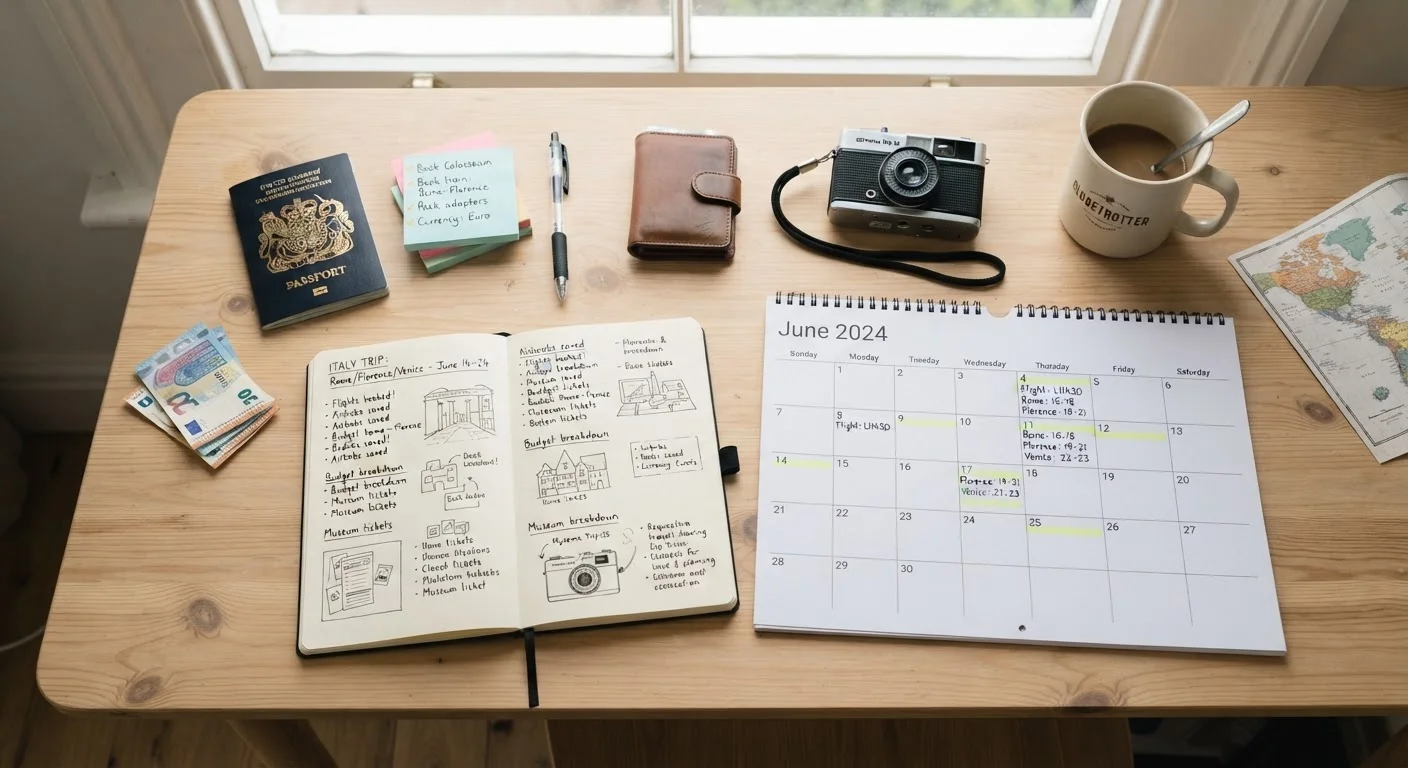
Why Booking Windows Matter More Than You Think
Timing your bookings isn't just about price - it's about availability. Popular national park campsites, permit-only trails, and peak-season hotel blocks can sell out months before opening day. Miss the window and your trip changes fundamentally, not just financially.
This guide breaks down realistic advance booking ranges for the major elements of a U.S. trip: flights, lodging, permits, and guided tours. Use it as a planning anchor, not a guarantee - conditions vary by destination, season, and year. Always verify details directly with airlines, lodging providers, and park agencies before booking.
For a fuller picture of the tradeoffs between early and last-minute planning, see our breakdown of spontaneous vs. planned trips.
Booking Windows by Trip Element
Domestic Flights: For major U.S. routes, many travel industry analysts suggest a booking window of roughly 1-3 months ahead for the best combination of seat selection and reasonable fares. Holiday travel (Thanksgiving, July 4th, winter break) often warrants booking 3-5 months out due to extremely high demand. That said, pricing algorithms are complex - booking earlier isn't always cheaper. See the real story behind 'book early and save' for context.
Hotels and Vacation Rentals: Urban hotels in major cities typically have availability within 2-4 weeks, though peak season and events compress that window significantly. Lodges inside or near national parks - think Yellowstone, Grand Canyon, or Glacier - routinely book out 6-12 months in advance and often open reservations on a fixed calendar date. Mark those dates.
Campsite Reservations: Recreation.gov and state park systems generally open reservations 6 months ahead to the day for high-demand sites. For iconic sites like Yosemite Valley or the Appalachian Trail shelters, expect the window to fill within minutes of opening.
Permits: Permit-only experiences - Half Dome cables, the Enchantments, Havasupai Falls - use lottery or timed reservation systems with their own specific application windows, often 4-6 months ahead or determined by annual lottery. Check each site's official agency page for exact rules, as systems change.
Guided Tours and Experiences: Small-group or specialty tours (rafting, wildlife, culinary) in popular regions often book 2-4 months out in peak season. One-of-a-kind or highly rated operators may fill even faster.
Reservation Systems Change - Always Verify
National parks and federal lands regularly update their permit lottery rules, reservation platform partners, and booking calendars. What was true last year may not apply this season. Before any high-stakes booking, go directly to the official agency website (NPS.gov, Recreation.gov, or the relevant state park authority) to confirm current rules and dates. Relying on third-party summaries for permit details specifically can lead to missed windows.
A Practical Planning Timeline at a Glance
While every trip is different, a general planning sequence helps you avoid the most common booking gaps. Start with the hardest-to-secure element first - often a permit, a peak-season flight, or an in-park lodge - and work outward from there.
Booking Window
The span of time between when reservations open and when the travel date occurs. Different trip elements have very different windows - permits may open via lottery months before the season, while urban hotels may have rolling availability.
Permit Lottery
A randomized system used by land-management agencies to allocate access to high-demand trails or campsites. Applicants submit entries during a defined period and are selected by random draw, not first-come-first-served.
Peak Season
The period of highest demand for a destination, typically defined by weather, school calendars, and holidays. Booking windows compress significantly during peak season due to higher competition for limited inventory.
Recreation.gov
The official U.S. federal government reservation platform for campsites, day-use passes, and permits on federal lands managed by agencies like the National Park Service and the U.S. Forest Service.
Timed Entry Reservation
A system requiring visitors to reserve a specific entry time slot for a park or attraction, independent of lodging or camping. Many national parks use these to manage crowding during peak season.
For road-trippers, overnight stops and lodging sequencing deserve their own framework. Our road trip planning guide walks through the full stage-by-stage process. And before you confirm anything, run through this pre-trip checklist to make sure nothing critical slips through the cracks - from documents to contingency plans.
Also worth knowing: some planning details have nothing to do with bookings but everything to do with trip success. Overlooked planning details covers the small-but-critical steps that travelers frequently skip, from park reservation systems to state-specific entry nuances.