

Key Takeaways
Option A
Brake Pads
The consumable friction material designed to wear down over time.
Best for: Routine replacement on a predictable schedule - typically every 25,000 to 65,000 miles depending on driving style and pad material.
Option B
Brake Rotors
The durable metal disc that pads clamp against to slow the vehicle.
Best for: Longer service intervals, but susceptible to warping, grooving, and minimum-thickness violations that require resurfacing or replacement.
If your brakes squeal persistently but stop cleanly without vibration
Brake Pads
A high-pitched squeal at the end of braking is the classic sign of wear indicators contacting the rotor. Pad replacement is likely all that's needed.
If the brake pedal pulses or the steering wheel shudders when stopping
Brake Rotors
Pedal pulsation and steering shimmy under braking typically indicate warped or unevenly worn rotor surfaces that pads alone cannot fix.
If you hear grinding metal-on-metal contact
Brake Pads
Grinding means pads are fully depleted and the metal backing plate is contacting the rotor - at this stage, rotor damage is likely too, so expect both to need attention.
If you're replacing pads for the second or third time on the same rotors
Brake Rotors
Rotors have a minimum allowable thickness; a mechanic should measure them at each pad change to confirm they remain within safe operating limits.
How Brake Pads and Rotors Work Together
Every time you press the brake pedal, hydraulic pressure forces the brake caliper to squeeze two brake pads against a spinning metal disc - the rotor. Friction between the pad's composite material and the rotor surface converts kinetic energy into heat, slowing the vehicle. It's a straightforward system, but it involves two distinct components that wear differently and fail in different ways.
Brake pads are intentionally sacrificial. They're engineered from friction material - ceramic, semi-metallic, or organic compounds - bonded to a steel backing plate. As pads press against the rotor thousands of times, their friction layer gradually thins. Most pads include a small metal wear indicator that produces a squealing sound when the pad reaches a critical thinness, alerting drivers before metal contacts metal.
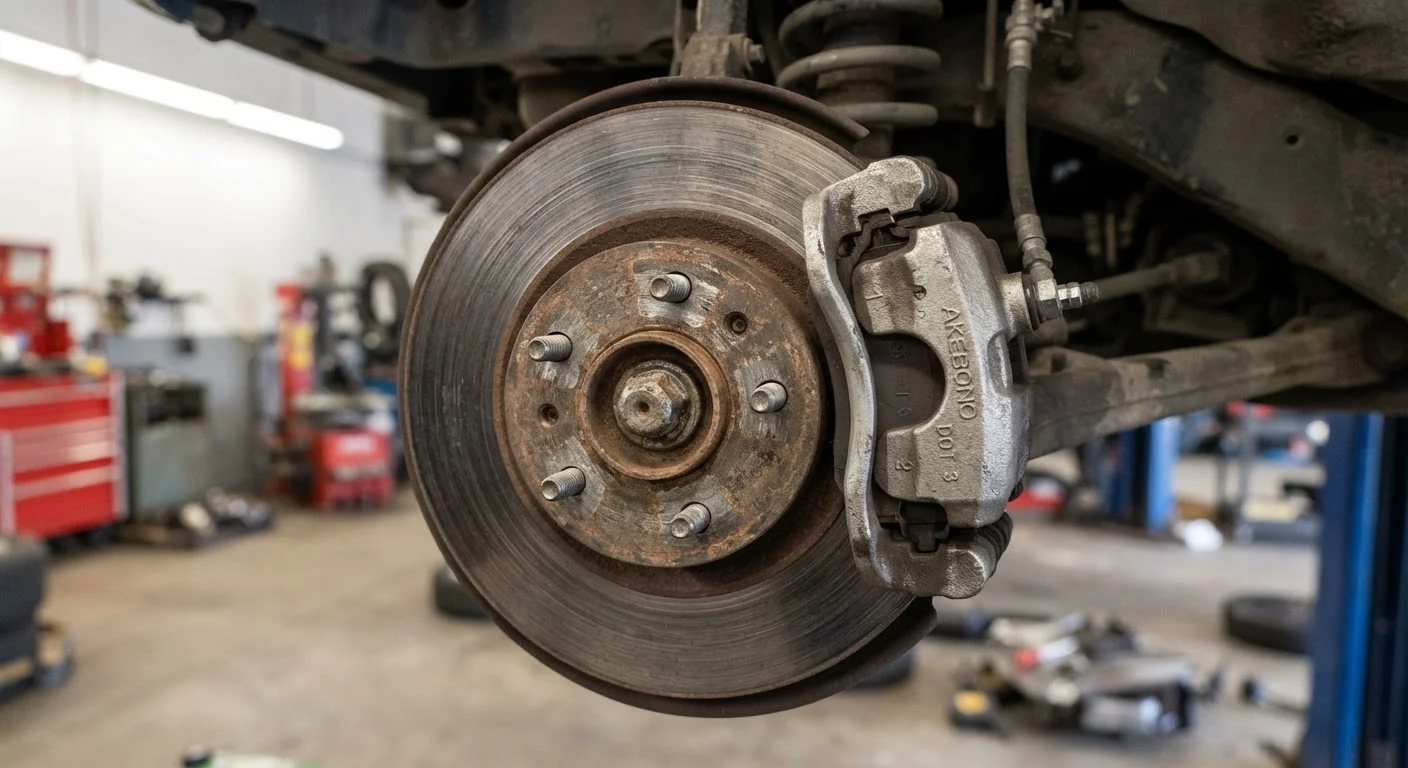
Brake rotors are cast-iron or composite discs built for durability. They don't disappear the way pads do, but they're not immune to wear. Each braking event removes microscopic amounts of rotor material, and over time, grooves, scoring, or thickness variations can develop. Heat cycles - especially aggressive braking on long descents - can also cause rotors to warp, creating an uneven surface that pads can't fully compensate for.
Understanding which component is struggling helps you avoid over-replacing parts you don't need and, more importantly, ensures you don't under-react to a safety concern. For a deeper look at what different brake sounds mean, see our guide to brake noises.
Side-by-Side: Key Differences at a Glance
The table below compares brake pads and rotors across the criteria that matter most to everyday drivers.
| Criterion | Brake Pads | Brake Rotors |
|---|---|---|
| Primary function | Friction material that clamps rotor | Metal disc that pads press against |
| Typical service life | 25,000-65,000 miles | 50,000-70,000+ miles |
| How wear is detected | Wear indicator squeal; visual thickness | Micrometer measurement; groove inspection |
| Most common failure mode | Friction material worn too thin | Warping, scoring, or below-minimum thickness |
| Typical warning sound | Squealing or grinding | Grinding; no sound until pads also fail |
| Replacement frequency | More frequent | Less frequent; survives multiple pad changes |
| Can be resurfaced? | No - always replaced | Sometimes - if above minimum thickness |
Warning Signs for Each Component
Signs your brake pads need attention
- Squealing or squeaking during normal braking - the wear indicator doing its job
- Reduced responsiveness - needing more pedal pressure for the same stopping power
- Visible thinness - through the wheel spokes, pads thinner than about ¼ inch warrant inspection
- Grinding - friction material is gone; metal backing is now contacting the rotor
Signs your rotors need attention
- Pedal pulsation - a rhythmic push-back through the brake pedal when stopping
- Steering wheel vibration under braking - often points to front rotor warping
- Deep grooves or scoring visible on the rotor face
- Rust beyond surface oxidation - light surface rust is normal after rain, but deep pitting is not
25%
Drivers with dangerously thin brake pads
A vehicle inspection study by the Car Care Council found roughly one in four vehicles inspected had brake issues requiring attention.
~3mm
Minimum safe brake pad thickness
Most manufacturers recommend inspection when pads reach 3-4mm; replacement is generally advised at or below 2mm of friction material remaining.
Driving habits play a significant role in how quickly both components degrade. Riding the brakes on long downhill stretches, for instance, generates sustained heat that accelerates rotor warping and pad glazing. Everyday habits can quietly accelerate brake wear in ways most drivers never connect to their maintenance bills.
When to Replace One, the Other, or Both
A common misconception is that brake pads and rotors must always be replaced together. That's not necessarily true - but the decision requires an informed assessment, not a guess.
Pads only: If rotors are within manufacturer thickness specifications (measured with a micrometer), have no deep grooves, and show no warping, new pads can go on existing rotors. This is a legitimate and cost-appropriate repair when rotors are genuinely in good condition.
Rotors only: Rare, but it can happen if a rotor is physically damaged - for example, cracked from thermal stress - while pads retain adequate thickness. In practice, if a rotor is damaged enough to replace, the pads are usually inspected closely and often replaced at the same time to ensure even break-in.
Both together: When pads are worn to the wear indicator or beyond, and rotors are at or near minimum thickness, or show visible damage, replacing both makes mechanical and economic sense. New pads bed in more effectively on new or freshly resurfaced rotor surfaces.
Rotor Resurfacing: A Middle-Ground Option
If a rotor has light scoring but remains above minimum thickness, a machinist can resurface (or 'turn') it to restore a flat, smooth braking surface. This extends rotor life at a lower cost than full replacement. However, resurfacing removes material, so it's only viable when enough thickness remains after machining to meet the manufacturer's specification. Ask your mechanic to check the post-resurface measurement before proceeding.
A qualified mechanic should physically measure rotor thickness and inspect pad depth at each service interval. Visual checks through wheel spokes give a rough indication, but precise measurement is the only reliable way to assess rotor serviceability.