
How Often Should You Really Replace Wiper Blades, Air Filters, and Spark Plugs?

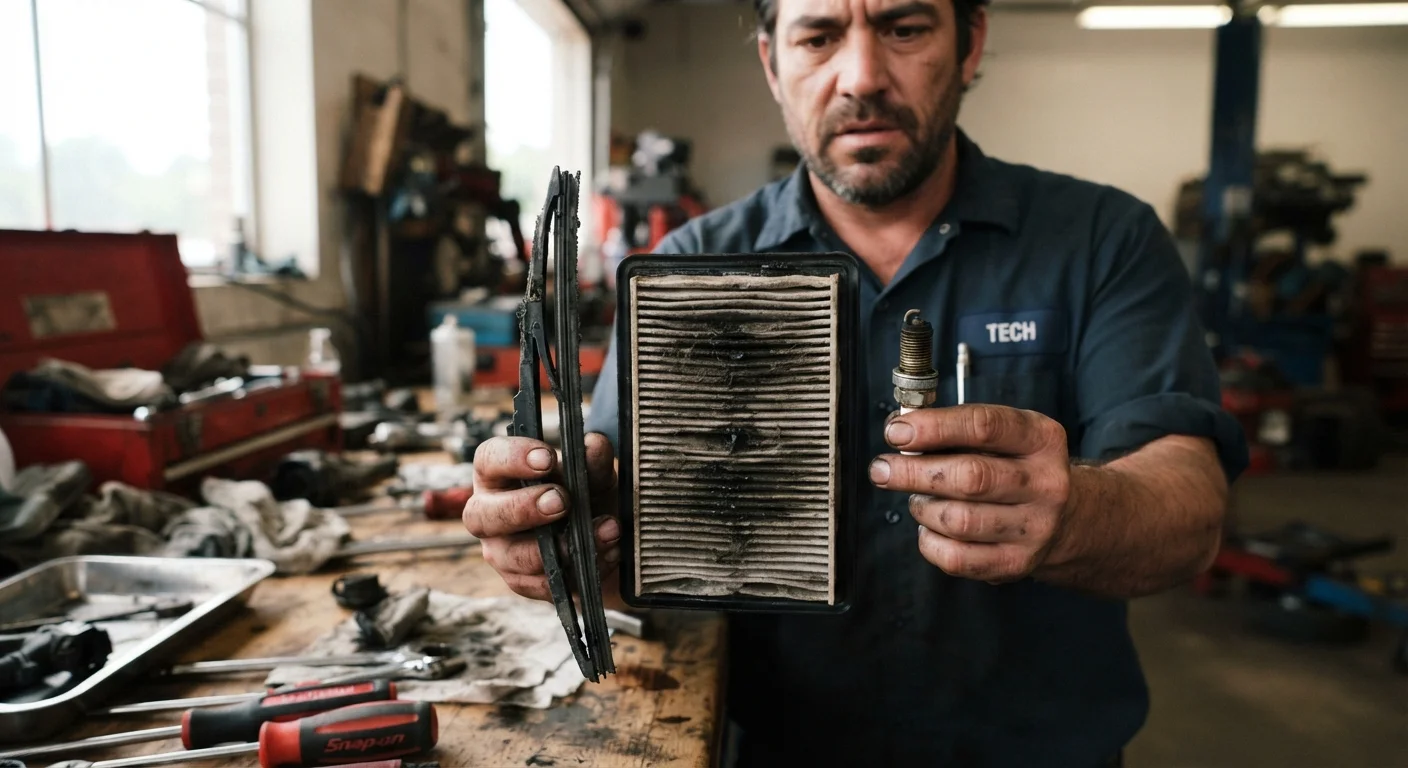
| Wiper blade replacement interval | Every 6-12 months (General manufacturer guidance) |
| Engine air filter interval | Every 15,000-30,000 miles (Varies by driving environment) |
| Copper spark plug interval | Every 30,000 miles (Typical for older or economy vehicles) |
| Iridium/platinum spark plug interval | Every 60,000-100,000 miles (Common in modern vehicles) |
| Cabin air filter interval | Every 15,000-25,000 miles (Separate from engine air filter) |
Why Replacement Intervals Aren't One-Size-Fits-All
Manufacturer maintenance schedules provide reliable baselines, but real-world intervals depend on how and where you drive. A commuter in dusty Phoenix, Arizona replaces an engine air filter far more frequently than someone logging highway miles in coastal Maine. Climate, driving patterns, and vehicle age all shift the timeline. The goal of this reference guide is to give you a grounded starting point - then help you read the signals your vehicle actually sends.
Always treat your owner's manual as the primary authority. What follows reflects generally accepted industry guidance, not a substitute for your specific vehicle's recommendations.
| Wiper blade replacement interval | Every 6-12 months (General manufacturer guidance) |
| Engine air filter interval | Every 15,000-30,000 miles (Varies by driving environment) |
| Copper spark plug interval | Every 30,000 miles (Typical for older or economy vehicles) |
| Iridium/platinum spark plug interval | Every 60,000-100,000 miles (Common in modern vehicles) |
| Cabin air filter interval | Every 15,000-25,000 miles (Separate from engine air filter) |
Wiper Blades: More Often Than Most Drivers Think
Most wiper blade manufacturers and automotive organizations recommend replacing blades every 6 to 12 months, or roughly once or twice a year. Rubber degrades from UV exposure, heat cycles, and road grime - even when the blades sit unused. A blade that streaks, skips, or squeaks has already passed its service life.
Signs it's time to replace wiper blades include streaking or smearing across the windshield, chattering or skipping during a sweep, visible cracking or splitting in the rubber edge, and lifted sections that fail to maintain contact with the glass.
Drivers in hot, sunny climates such as the Southwest may see blades deteriorate closer to the 6-month mark. Those in heavy-rain regions need blades that perform reliably - inspect them before wet-weather seasons. See our seasonal car maintenance guide for a full checklist of what to inspect before each season changes.
Check Both Blades - and the Rear Wiper
Both front wiper blades typically wear at the same rate, so replace them as a pair when one shows signs of degradation. If your vehicle has a rear wiper, that blade is often overlooked - inspect it on the same schedule. Rear wipers are especially important for SUVs, hatchbacks, and minivans where rear visibility matters most.
Engine Air Filters: Follow Miles and Environment
A clean engine air filter allows proper airflow to the combustion chamber, supporting fuel efficiency and engine longevity. Most manufacturers suggest replacing the engine air filter every 15,000 to 30,000 miles, but that range widens considerably based on conditions.
Driving frequently on unpaved roads, in high-dust areas, or through heavy stop-and-go traffic can cut the interval roughly in half. Conversely, a vehicle driven primarily on clean highway roads may stay within spec at the longer end. Many filters are visible after removing a simple housing - a darkened, clogged filter is a clear visual indicator.
Don't confuse the engine air filter with the cabin air filter, which cleans air entering the passenger compartment. Cabin filters typically need replacement every 15,000 to 25,000 miles but are a separate service. For a broader look at often-overlooked maintenance, our article on car maintenance myths addresses common misconceptions that lead drivers to over-service or under-service their vehicles.
30,000
Miles between copper spark plug changes
Standard interval cited by most copper-plug manufacturers and OEM schedules.
Up to 2×
Faster air filter wear in dusty conditions
Driving on unpaved or high-dust roads can cut a filter's service life roughly in half versus highway driving.
6 months
Minimum wiper blade life in hot climates
UV exposure and high heat in regions like the American Southwest accelerate rubber degradation significantly.
Spark Plugs: Conventional vs. Extended-Life
Spark plug replacement intervals have changed dramatically with modern engine design. Copper spark plugs - common in older vehicles - typically need replacement every 30,000 miles. Iridium and platinum plugs used in most modern engines are rated for 60,000 to 100,000 miles or more, depending on the manufacturer.
Symptoms of worn spark plugs include rough idling, difficulty starting, noticeable drops in fuel economy, engine misfires (often felt as a shudder under acceleration), and a check-engine light linked to misfire codes. A qualified mechanic can confirm spark plug condition during a routine inspection.
Never assume that because a plug is rated for 100,000 miles it requires zero attention before then. Inspect per your owner's manual schedule, especially if you notice any of the above symptoms. New drivers building good maintenance habits will find our guide car maintenance for new drivers a useful companion to this reference.
OEM interval
The replacement schedule specified by the original equipment manufacturer in your vehicle's owner's manual. It's the most reliable baseline for your specific engine and components.
Engine air filter
A pleated filter that removes dust, pollen, and debris from air before it enters the engine's combustion chamber. A clogged filter restricts airflow and can affect performance and efficiency.
Spark plug
A small electrical device that ignites the air-fuel mixture inside each engine cylinder. Worn plugs cause misfires, rough idling, and reduced fuel economy.
Wiper blade refill
The rubber insert portion of a wiper blade assembly. Some blades allow only the rubber to be replaced rather than the full blade frame, which can reduce cost.