

Key Takeaways
Engine Oil Degradation
Motor oil doesn't just lubricate - it also cleans, cools, and protects internal engine parts. Over time and miles, it breaks down chemically, accumulates contaminants, and loses its protective properties. An oil change removes this degraded fluid and replaces it with fresh oil capable of doing its job properly.
Oil degradation involves oxidation of base oil molecules, depletion of additive packages (including detergents, anti-wear agents, and viscosity modifiers), and suspended combustion byproducts that thicken the fluid into sludge.
What Oil Actually Does Inside Your Engine
Motor oil performs several functions simultaneously, and understanding them makes the consequences of skipping a change far clearer. Its primary job is lubrication - it forms a thin film between moving metal surfaces like crankshaft bearings, camshafts, and cylinder walls, preventing direct contact that would rapidly destroy those parts.
Beyond lubrication, oil serves as a coolant for internal components that the water-based cooling system cannot reach. It also suspends combustion byproducts - carbon particles, acids, and moisture - keeping them from depositing on engine surfaces. Detergent additives in the oil carry this debris to the oil filter, which traps it.
For a deeper look at how oil fits into your engine's broader fluid ecosystem, see how each under-the-hood fluid works.
5,000-10,000 mi
Typical modern synthetic oil change interval
Most automakers now specify extended intervals for full synthetic oil; always verify in your owner's manual.
~40%
Engine wear occurring at cold start
Industry engineering sources estimate a significant share of internal engine wear happens in the first seconds after ignition before oil fully circulates.
$5,000+
Typical engine replacement cost
Repair cost estimates from automotive industry sources indicate a replacement engine or major rebuild can run several thousand dollars or more, depending on vehicle make and model.
The Timeline of Damage When Oil Goes Unchanged
The deterioration isn't a switch that flips at a specific mileage - it's a gradual process with escalating consequences.
Stage 1: Additive Depletion
Viscosity modifiers, anti-wear agents, and detergents are consumed first. The oil becomes less effective at maintaining the film between moving parts, especially under heat and load. You may not notice anything at this stage, but wear rates inside the engine increase.
Stage 2: Oxidation and Thickening
As oil oxidizes, it thickens and loses its ability to flow quickly to critical components on cold starts - the period when most engine wear actually occurs. Thicker, degraded oil takes longer to reach overhead camshafts after ignition, leaving metal surfaces briefly unprotected.
Stage 3: Sludge Formation
In cases of severe or repeated neglect, oxidized oil mixed with combustion byproducts solidifies into sludge. This material can block oil passages and starve bearings and valve train components of lubrication entirely - a condition that can cause irreversible engine damage requiring a full rebuild or replacement.
These are some of the habits that quietly shorten a car's lifespan - damage that accumulates invisibly before becoming undeniable.
Check Your Oil Between Changes
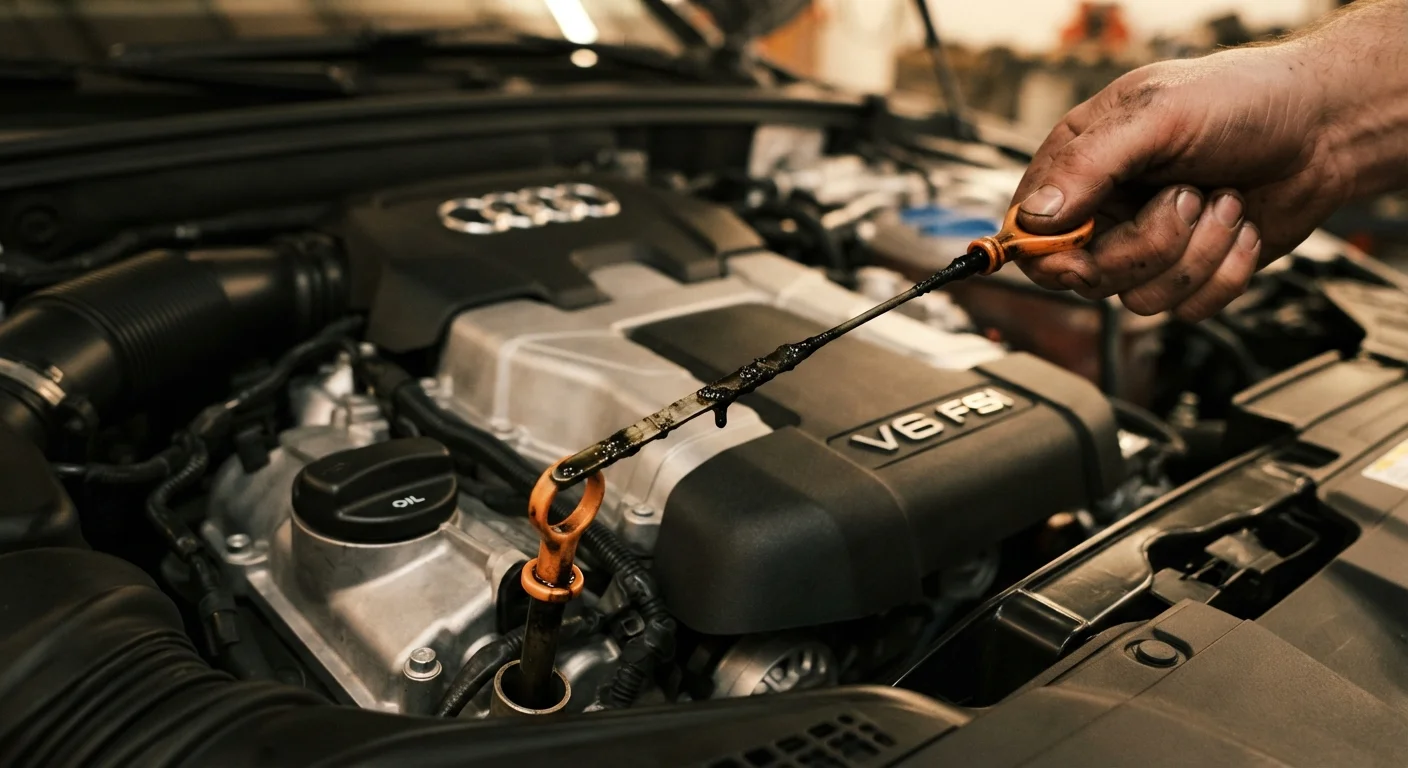
Pull the dipstick every month or every few fill-ups, especially in older vehicles. Look for oil that's on the low end of the safe range or has turned black and gritty. Catching either problem early is far less expensive than discovering it after damage occurs.
Synthetic vs. Conventional Oil: Does the Type Change the Stakes?
Full synthetic motor oil is chemically engineered for greater stability at temperature extremes and resists oxidation and breakdown longer than conventional oil. That's why many modern vehicles specify extended oil change intervals with synthetic. However, synthetic oil still degrades, still accumulates contaminants, and still requires periodic replacement.
The practical difference is in the interval, not in the consequence of neglect. Conventional oil in a 5,000-mile vehicle that hasn't been changed in 10,000 miles is in worse shape than synthetic in the same scenario - but neither is acceptable.
Synthetic vs. conventional motor oil - understanding which is specified for your engine - matters because it determines your legitimate change interval in the first place.
What Your Owner's Manual Actually Says
The single most reliable guide to your oil change interval is your vehicle's owner's manual. Manufacturer intervals are determined through engineering testing of that specific engine under defined conditions. They account for oil type, engine design, and operating parameters.
Many drivers still follow the outdated 3,000-mile rule, which applied to older engine technology and conventional oil formulations. Car maintenance myths like this one persist in the culture despite being largely obsolete for vehicles built in the last two decades.
If your vehicle has an oil life monitoring system, understand that it doesn't measure oil condition directly - it uses algorithms based on engine revolutions, temperature cycles, and drive patterns to estimate when a change is appropriate. It's a useful tool, but the owner's manual interval is the authoritative baseline.
This article is for general informational purposes. Always consult your vehicle's owner's manual and a qualified mechanic for guidance specific to your car and driving conditions.