

Key Takeaways
Tire Pressure and Fuel Economy
Tire pressure refers to the amount of air inside your tires, measured in pounds per square inch (PSI). When tires are underinflated, more of the tire's surface contacts the road, creating extra rolling resistance - meaning the engine has to work harder to move the vehicle forward. This added effort burns more fuel. Keeping tires at the manufacturer's recommended PSI reduces that resistance and helps maintain the fuel efficiency your vehicle was designed to deliver.
Rolling resistance increases roughly proportionally with the degree of underinflation; even modest shortfalls of 5-8 PSI can measurably reduce miles per gallon over time.
Why Tire Pressure Is a Fuel Economy Factor
Most drivers think about fuel economy in terms of driving style - how hard they accelerate, how often they idle, whether they use cruise control on the highway. Fewer consider what's happening at the point where the vehicle actually meets the road. Tire pressure has a direct, measurable effect on how much energy it takes to move your car, and it's one of the easiest variables a driver can control.
When a tire is properly inflated, it maintains a firm, rounded shape that rolls efficiently. An underinflated tire flattens slightly under the vehicle's weight, spreading the contact patch wider. That wider contact creates more friction against the road surface - what engineers call rolling resistance. The engine must produce more power to overcome it, and that means burning more fuel even at constant speeds.
The U.S. Department of Energy has noted that underinflation by even 1 PSI per tire can reduce fuel economy by approximately 0.2%. Run all four tires 5 PSI low - a condition that's more common than most drivers realize - and the impact becomes tangible at the pump over time. As part of long-term vehicle cost management, tire inflation is among the simplest and lowest-effort habits available.
~0.2%
Fuel economy lost per 1 PSI underinflation
Estimated by the U.S. Department of Energy based on rolling resistance effects of underinflated tires.
1 PSI
Pressure drop per 10°F temperature decrease
A widely cited rule of thumb used by tire manufacturers and automotive engineers for seasonal planning.
25%
Underinflation level that triggers TPMS warning
Per federal TPMS regulations (FMVSS 138), the warning light must activate at or before this threshold.
Finding the Right PSI - and Why the Tire Sidewall Isn't the Answer
One of the most persistent misconceptions among drivers is that the PSI number stamped on the sidewall of a tire is the target inflation level. It isn't. That number represents the maximum pressure the tire is structurally rated to hold - inflating to that level can actually harm ride quality, handling, and tread wear.
The correct operating pressure for your vehicle is determined by the automaker based on the car's weight, suspension design, and intended load. You'll find it printed on a sticker inside the driver's door jamb, or occasionally inside the fuel filler door. Some vehicles specify different pressures for front and rear tires, so check both figures. This is a detail worth knowing when you're getting to grips with routine car maintenance fundamentals.
Check the Door Jamb, Not the Tire
The PSI figure on the tire sidewall is a structural maximum, not a recommended operating pressure. Always use the inflation specification printed on your driver's door jamb sticker. If that sticker is damaged or missing, the vehicle owner's manual will carry the same information.
It's also worth noting that temperature significantly affects tire pressure. For every 10°F drop in ambient temperature, tire pressure falls by roughly 1 PSI. This means a set of tires that was correctly inflated in summer may be noticeably underinflated by midwinter without any air loss from a puncture or leak.
The Secondary Costs: Tire Wear and Safety
Fuel economy is the efficiency story, but it's not the only one. Underinflated tires wear unevenly - typically faster along the outer edges of the tread - because the sidewalls flex more than intended. This uneven wear pattern shortens the lifespan of the tire and, in more serious cases, increases the risk of a blowout at highway speeds. Both outcomes carry real financial and safety consequences.
Overinflation presents its own problems. A tire inflated significantly above the recommended PSI rides on a reduced contact area in the center of the tread, causing faster wear there and reducing traction, particularly on wet roads.
These are exactly the kinds of gradual habits that quietly accelerate vehicle wear - the costs don't announce themselves immediately, but compound steadily. Consistent attention to tire pressure is one of the few maintenance actions that simultaneously protects safety, preserves tire life, and reduces operating costs. It's also frequently overlooked in the list of ownership costs that catch new drivers off guard.
TPMS Is a Warning System, Not a Gauge
Your vehicle's Tire Pressure Monitoring System is designed to alert you to a significant pressure problem, but it activates only when tires are already meaningfully underinflated. Relying solely on the TPMS means your tires may be operating below optimal pressure for extended periods without triggering any warning. A monthly manual check with a gauge is a more proactive approach.
Building a Simple Pressure-Check Habit
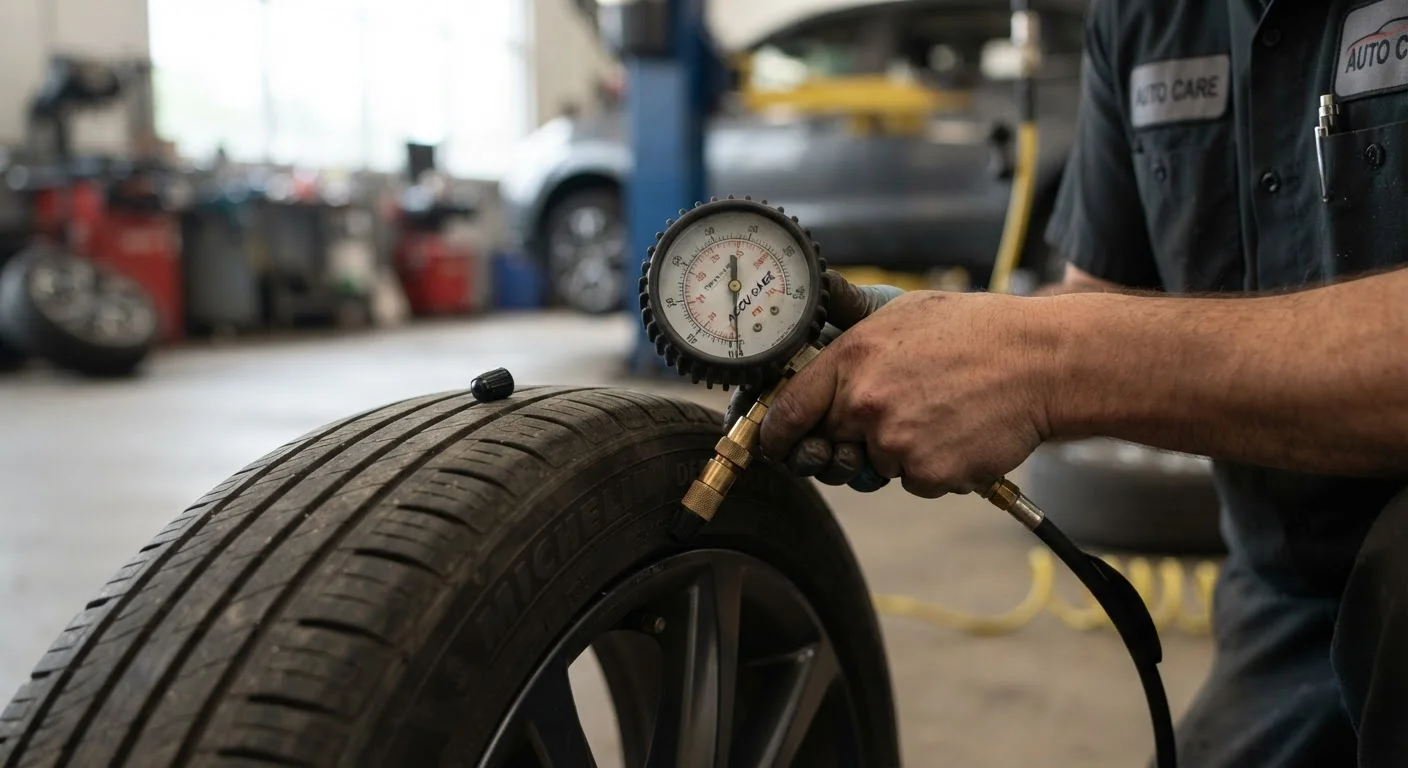
Checking tire pressure requires only a tire pressure gauge - an inexpensive tool available at any auto parts store - and about five minutes. Most gas stations also have air compressors available, often for free or a nominal fee. Check all four tires when they are cold, compare the readings to the door jamb sticker, and add or release air as needed.
Once a month is a reasonable cadence for most drivers, with additional checks before long trips and after significant weather changes. Vehicles manufactured after 2008 are required by federal law to include a Tire Pressure Monitoring System (TPMS), which illuminates a dashboard warning when pressure drops 25% below the recommended level. Treat that warning as a minimum threshold, not a substitute for proactive monthly checks - tires can be meaningfully underinflated long before the TPMS triggers. For a broader picture of how small maintenance habits shape a vehicle's operating costs, see common car maintenance myths that cost drivers money.
This article provides general informational guidance about vehicle maintenance and is not a substitute for advice from a qualified mechanic. Always consult your vehicle's owner's manual and a certified professional for guidance specific to your car.