

Key Takeaways
Option A
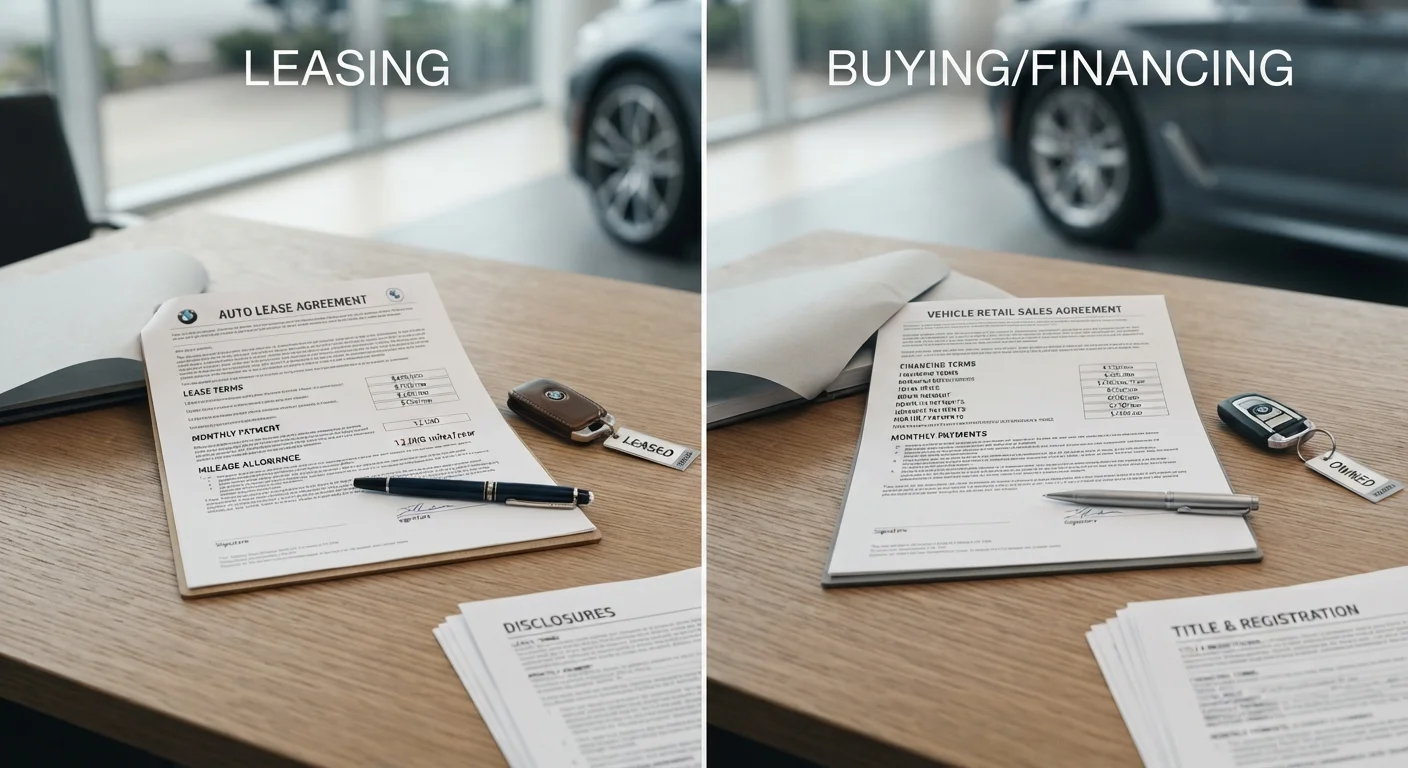
Leasing a Car
The lower-commitment, lower-upfront-cost option for drivers who prefer flexibility.
Best for: Drivers who want a new vehicle every few years, prefer lower monthly payments, and drive predictable, limited annual mileage.
Option B
Buying a Car
The path to full ownership, equity building, and long-term cost savings.
Best for: Drivers who plan to keep a vehicle long-term, drive high mileage, or want the freedom to modify and sell at will.
If you want the lowest possible monthly payment on a new vehicle
Leasing a Car
Lease payments are typically lower than loan payments for the same vehicle because you're only financing the depreciation during the lease term, not the full purchase price.
If you drive more than 15,000 miles per year
Buying a Car
Mileage overage fees on leases can add up quickly. Ownership places no mileage restrictions on how much you drive.
If you want to build long-term financial value from your vehicle
Buying a Car
Once a loan is paid off, you own an asset you can sell or trade. Leasing perpetually returns value to the dealer with nothing to show for the payments made.
If you prefer always driving a recent model with the latest safety tech
Leasing a Car
Lease terms typically run two to three years, allowing drivers to cycle into newer vehicles with updated features on a regular basis.
If you want maximum flexibility to sell or modify your vehicle
Buying a Car
Owners can sell, trade, or customize their vehicle freely. Lessees are bound by contract terms that restrict modifications and exit options.
How Leasing and Buying Actually Work
When you lease a car, you're essentially renting it from a dealership or financing company for a fixed term - typically 24 to 36 months. You pay for the vehicle's depreciation during that period, plus interest (called the money factor) and fees. At lease-end, you return the car. Some leases offer a buyout option at a pre-set residual value.
When you buy a car - whether with cash or through an auto loan - you're acquiring ownership. If financing, you make monthly loan payments that reduce principal and interest until the balance is paid off. The title is in your name (or jointly held with the lender until the loan is satisfied). For more on how lien arrangements work with vehicle titles, see our guide on vehicle registration, titles, and liens.
The core distinction is simple: leasing is temporary use; buying is permanent ownership. Every other difference flows from that fundamental split.
| Criterion | Leasing | Buying |
|---|---|---|
| Monthly Payment | Generally lower | Generally higher |
| Ownership at End of Term | None (return the vehicle) | Full ownership |
| Mileage Limits | Yes - typically 10,000-15,000/yr | No limits |
| Ability to Modify Vehicle | Not permitted | Unrestricted |
| Early Exit Flexibility | Costly early termination fees | Can sell or trade anytime |
| Equity Built | None | Yes, as loan is paid down |
| Long-Term Cost (10+ years) | Higher - continuous payments | Lower - payments end after payoff |
| Maintenance Responsibility | Often covered early; return rules apply | Owner's full responsibility |
The Cost Breakdown: Monthly Payments, Fees, and Long-Term Spending
Lease payments are almost always lower than loan payments for the same vehicle - sometimes significantly so. That's because you're only financing the depreciation, not the full price. However, lower monthly costs don't automatically mean leasing is cheaper over time.
Consider a driver who leases a vehicle every three years for a decade. They make payments continuously and end each cycle with no asset. A buyer who finances the same vehicle and keeps it for ten years eventually eliminates the monthly payment entirely. Over that horizon, buyers typically spend less overall - though they absorb maintenance and repair costs as the vehicle ages.
~$586
Average monthly new car loan payment (2024)
According to Experian's State of the Automotive Finance Market report, the average new vehicle loan payment in the U.S. reached approximately $586 in late 2023 to early 2024.
~$597
Average monthly new car lease payment (2024)
Experian data indicates average lease payments have converged closer to loan payments in recent years as vehicle prices and interest rates rose, narrowing the traditional gap.
~30%
Share of new vehicles leased in the U.S.
Historically, roughly a quarter to a third of new vehicle transactions in the U.S. have been leases, though the share fluctuates with interest rate environments and manufacturer incentives.
Additional lease costs to watch for include acquisition fees at signing, disposition fees at return, and excess mileage or wear-and-tear charges. Buyers face their own one-time costs: down payment, sales tax on the full purchase price (in most states), and registration. Understanding the full picture is essential - our article on the true cost of owning a car in America breaks down every layer of vehicle expense.
Mileage Limits, Wear Rules, and Lifestyle Fit
One of the most practical constraints of leasing is the mileage cap. Standard leases allow between 10,000 and 15,000 miles per year. Overage charges typically run $0.15 to $0.30 per mile - costs that can total hundreds of dollars at lease return if you're not careful. Higher mileage allowances can be negotiated upfront, but they raise the monthly payment.
Lease agreements also define acceptable wear and tear. Minor scuffs may be overlooked; dents, interior stains, or tire damage typically are not. Buyers face no such return inspection - though they do bear the cost of repairs themselves if they plan to sell.
Mileage Overages Add Up Fast
If a lease caps you at 12,000 miles per year and you drive 15,000, you'd owe overage charges on 9,000 miles over a 3-year term. At $0.25 per mile, that's $2,250 due at lease return. Drivers who regularly exceed standard mileage caps should negotiate higher allowances at signing - or seriously weigh buying instead. Overages cannot be spread across monthly payments; they're typically due in full at the end of the lease.
Lifestyle factors matter here. City dwellers with short commutes or access to public transit may rarely exceed mileage caps. Drivers in rural areas, or those who travel frequently for work, often find ownership less restrictive. Building a realistic usage profile before signing is critical - see our realistic car budget guide for a framework that accounts for how you actually use your vehicle.
Flexibility, Equity, and What Happens When Life Changes
Owners enjoy maximum flexibility. You can sell, trade, or refinance at almost any point. If your financial situation changes, you have options - including selling a financed car before the loan is fully paid off. You can also customize the vehicle freely, from window tint to aftermarket wheels.
Lessees, by contrast, are bound by contract. Breaking a lease early almost always triggers substantial early termination fees - sometimes equivalent to the remaining payments owed. Transferring a lease to another party is possible with some lenders but not universal, and it adds administrative complexity.
On the credit side, both leasing and financing appear on your credit report and can build payment history. Your credit score is affected by auto financing in similar ways regardless of whether you lease or buy. The key variable is how consistently you make on-time payments.
For those evaluating financing options across loan sources, our guide on financing a car through loans, dealerships, and credit unions offers a useful comparison of where to obtain funding and what terms to scrutinize.
This article is for general informational purposes only and does not constitute financial or legal advice. Readers should consult a qualified financial professional before making vehicle financing decisions based on their individual circumstances.