

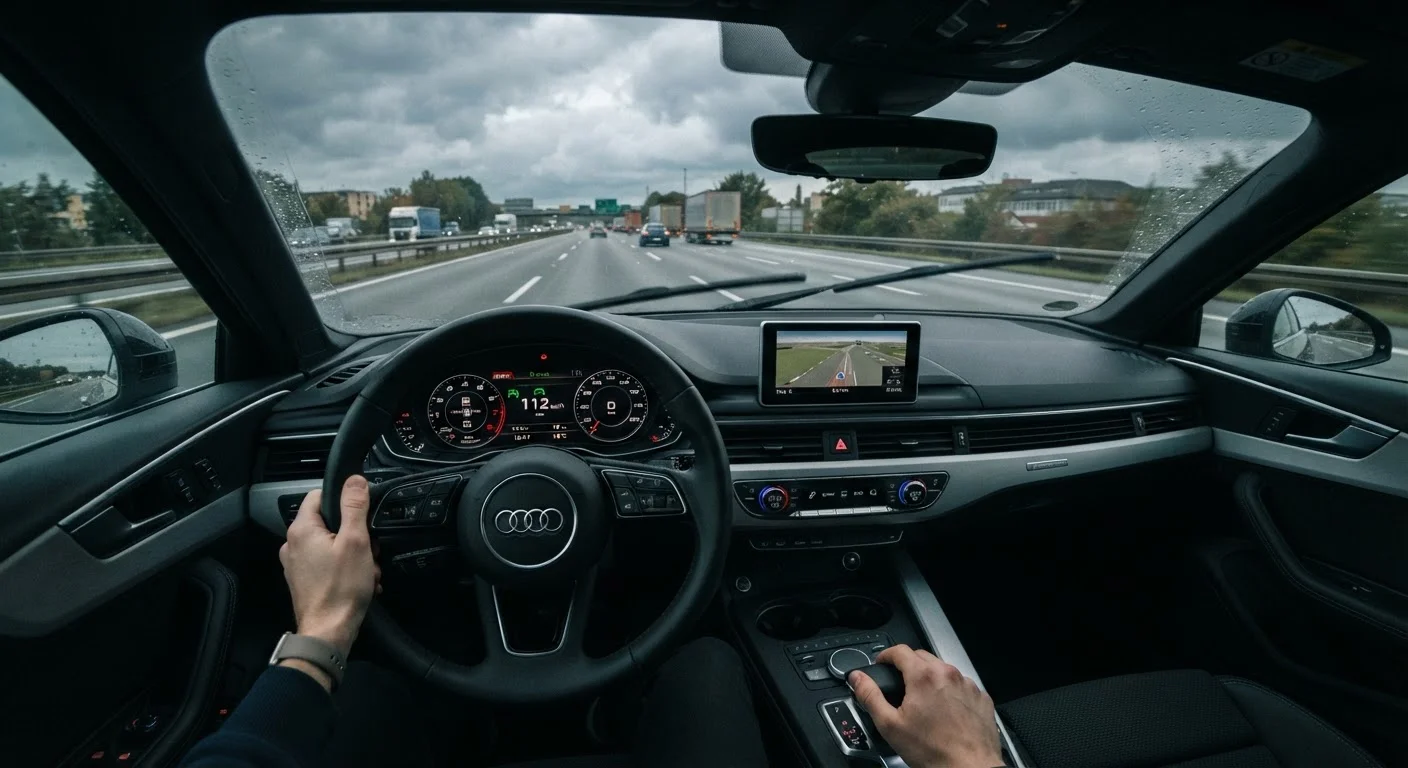
Key Takeaways
Improves fuel efficiency on flat highway stretches
Maintaining a steady speed avoids the fuel cost of repeated acceleration. On long interstate segments, this consistent throttle input can meaningfully reduce consumption compared to manual speed management.
Reduces lower-limb fatigue on long drives
Holding an accelerator pedal at a fixed position for hours creates muscle fatigue in the right leg and foot. Cruise control removes that sustained physical demand, which can improve alertness on extended trips.
Helps drivers avoid unintentional speed creep
On open roads, drivers often accelerate gradually without noticing. A set cruise speed acts as a reliable governor, reducing the likelihood of unintentional speeding.
Adaptive systems maintain safe following distance automatically
ACC-equipped vehicles actively adjust to the speed of the vehicle ahead, reducing the cognitive load of gap management in light, steady highway traffic.
Dangerous on wet or slippery road surfaces
When tires lose grip, cruise control may add throttle to restore speed - worsening a slide. The system has no awareness of surface traction conditions.
Encourages reduced driver alertness
Automation relieves the driver of one active task, which research links to slower reaction times. On cruise control, drivers may be less prepared to respond to sudden hazards.
Poorly suited to hilly or winding terrain
Cruise control may carry excessive speed into curves or cause the engine to over-rev or hunt through gears on grades, reducing both safety and drivetrain efficiency.
Standard systems provide no collision protection
Non-adaptive cruise control will not brake for a slowing vehicle ahead. A momentary lapse of attention can close the gap to a dangerous level before the driver reacts.
Inappropriate for heavy or stop-and-go traffic
Frequent braking interrupts the system and requires constant re-engagement, negating any convenience benefit while keeping the driver in a passive mental state between interruptions.
Our Verdict
Cruise control earns its place on long, clear, lightly trafficked highway stretches where it reduces fatigue and smooths out speed. In wet weather, tight curves, heavy traffic, or on hilly terrain, the feature introduces risk rather than reducing it. Knowing the boundary between helpful and hazardous is what separates confident, safe drivers from complacent ones.
Drivers covering long interstate distances in fair weather who want to reduce fatigue and maintain consistent speed will benefit most from cruise control used correctly.
What Cruise Control Actually Does
Cruise control maintains a set vehicle speed without the driver holding the accelerator pedal. The system adjusts throttle input automatically to hold the chosen speed, typically activated by a stalk or button on the steering wheel. Adaptive cruise control (ACC) - a more advanced variant found on many newer vehicles - adds radar or camera sensors that detect the vehicle ahead and automatically slow or accelerate to maintain a safe following distance.
Standard cruise control offers no collision avoidance; it simply locks speed. ACC provides limited automation of the speed-and-gap equation but is not a substitute for driver attention. Neither system steers, and neither monitors surrounding traffic beyond the vehicle directly ahead.
Adaptive vs. Standard Cruise Control
Standard cruise control simply holds a set speed and does nothing if the vehicle ahead slows. Adaptive cruise control (ACC) uses sensors to maintain a following distance gap and will decelerate automatically - but it still requires the driver to steer and to monitor conditions beyond the vehicle directly ahead. Neither system is a self-driving feature, and both require full driver attention at all times.
The Real Advantages: Where Cruise Control Delivers
When road conditions are right, cruise control is a genuinely useful driving tool rather than a convenience gimmick.
Improves fuel efficiency on flat highway stretches
Maintaining a steady speed avoids the fuel cost of repeated acceleration. On long interstate segments, this consistent throttle input can meaningfully reduce consumption compared to manual speed management.
Reduces lower-limb fatigue on long drives
Holding an accelerator pedal at a fixed position for hours creates muscle fatigue in the right leg and foot. Cruise control removes that sustained physical demand, which can improve alertness on extended trips.
Helps drivers avoid unintentional speed creep
On open roads, drivers often accelerate gradually without noticing. A set cruise speed acts as a reliable governor, reducing the likelihood of unintentional speeding.
Adaptive systems maintain safe following distance automatically
ACC-equipped vehicles actively adjust to the speed of the vehicle ahead, reducing the cognitive load of gap management in light, steady highway traffic.
~7%
Potential fuel savings from steady-speed highway driving
The U.S. Department of Energy notes that avoiding aggressive acceleration and maintaining steady speeds can improve highway fuel economy by roughly 7-14% depending on driving style.
35 mph
Speed at which hydroplaning can begin
Safety researchers note that hydroplaning - where tires lose contact with the road surface - can occur at speeds as low as 35 mph on standing water, making cruise control engagement in rain particularly hazardous.
Consistent speed also reduces wear-and-tear cycles on the drivetrain caused by repeated acceleration and deceleration. For drivers covering hundreds of highway miles regularly, that consistency can contribute to lower long-term operating costs. See our guide to managing vehicle costs for more on how driving habits affect lifetime ownership expenses.
The Risks: When Cruise Control Works Against You
The same automation that reduces fatigue on a flat, dry interstate becomes a liability the moment conditions change.
Dangerous on wet or slippery road surfaces
When tires lose grip, cruise control may add throttle to restore speed - worsening a slide. The system has no awareness of surface traction conditions.
Encourages reduced driver alertness
Automation relieves the driver of one active task, which research links to slower reaction times. On cruise control, drivers may be less prepared to respond to sudden hazards.
Poorly suited to hilly or winding terrain
Cruise control may carry excessive speed into curves or cause the engine to over-rev or hunt through gears on grades, reducing both safety and drivetrain efficiency.
Standard systems provide no collision protection
Non-adaptive cruise control will not brake for a slowing vehicle ahead. A momentary lapse of attention can close the gap to a dangerous level before the driver reacts.
Inappropriate for heavy or stop-and-go traffic
Frequent braking interrupts the system and requires constant re-engagement, negating any convenience benefit while keeping the driver in a passive mental state between interruptions.
Rain deserves particular attention. When cruise control is engaged on a wet road and the tires lose contact with the surface - a condition called hydroplaning - the system may respond by adding throttle to maintain speed, which can amplify the skid. Hydroplaning can begin at speeds as low as 35 mph, often without obvious warning signs. Disengaging cruise control in rain is a basic but critical safety step.
Complacency is a subtler danger. Research consistently links automation to reduced driver vigilance - a phenomenon sometimes called "automation complacency" - meaning drivers on cruise control may react more slowly to unexpected events than those actively managing speed. For night driving, where reaction time already matters more, this complacency risk is amplified further.
Conditions That Should Keep Cruise Control Off
A practical rule: if you would hesitate to take your eyes off the road for even two seconds, cruise control should not be engaged. Specific conditions that warrant leaving it off include:
- Rain, snow, or ice - reduced traction makes speed automation dangerous. See our full overview of driving in bad weather for condition-specific guidance.
- Heavy or unpredictable traffic - frequent braking and merging require constant speed management.
- Winding or hilly roads - cruise control holds speed through curves, which can push drivers to enter bends faster than is safe, and may engine-brake aggressively or accelerate unexpectedly on grades.
- Drowsiness - if fatigue is already a concern, cruise control removes one of the last physical prompts keeping you engaged. Pull over and rest instead.
- Construction zones - variable speed limits and sudden lane shifts demand active throttle control.
Habits that add stress to your vehicle's mechanical systems - including relying on cruise control on hilly terrain where the transmission cycles repeatedly - are covered in our article on habits that quietly shorten a car's lifespan.