

Key Takeaways
Why Weather Conditions Change Everything
Each year, the Federal Highway Administration attributes roughly 21 percent of all vehicle crashes in the United States to adverse weather conditions - including rain, snow, fog, ice, and high winds. That figure reflects not just occasional storms but the routine, everyday risk that American drivers accept when they travel in anything other than clear, dry conditions.
Weather degrades driving in three primary ways: it reduces traction between your tires and the road, it limits visibility ahead and around you, and it lengthens the time and distance your vehicle needs to stop. Managing these three factors - sometimes all at once - is the core challenge of bad-weather driving. The techniques covered here build on defensive driving principles that apply across all road conditions.
21%
U.S. crashes attributed to adverse weather
According to the Federal Highway Administration's Road Weather Management Program data.
1.2M+
Weather-related crashes annually
The FHWA estimates over 1.2 million crashes per year in the U.S. involve adverse weather or road conditions.
35 mph
Speed at which hydroplaning can begin
Research indicates hydroplaning can occur at speeds as low as 35 mph on tires with worn tread.
Driving in Rain: Traction, Speed, and Hydroplaning
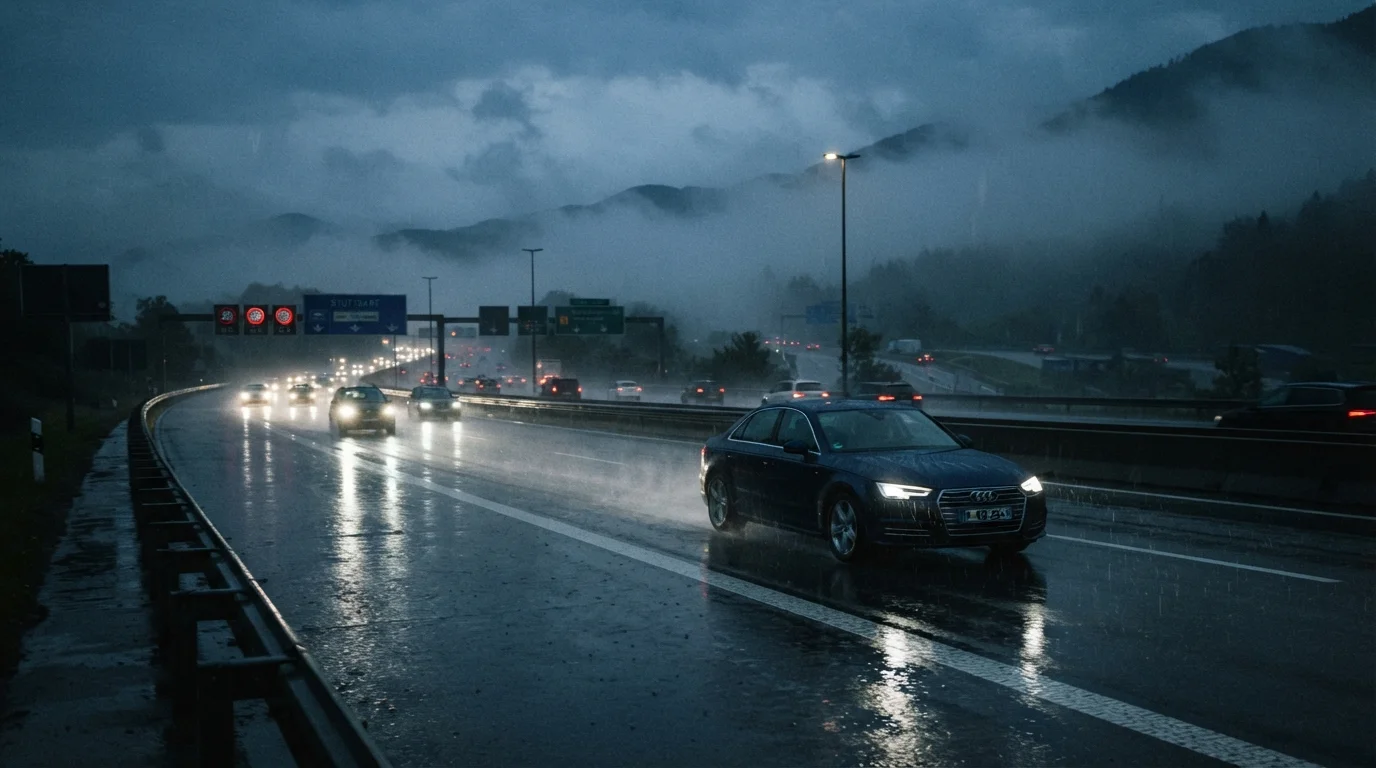
Rain is the most common adverse condition American drivers face. A light drizzle may seem harmless, but the first 30 minutes of rainfall are statistically among the most dangerous - oil, rubber residue, and debris on dry pavement mix with water to create a slick surface before runoff clears it away.
Speed and Following Distance
Reduce your speed by at least 10 mph below the posted limit in moderate rain, and further in heavy downpours. Double your normal following distance - in dry conditions, three seconds is standard; in rain, extend that to six seconds or more. This gives you room to brake gradually, which is far safer on a wet surface than a sudden stop.
Hydroplaning Risk
Hydroplaning occurs when a layer of water builds faster between your tire and the road than the tire can displace, lifting the vehicle off the surface entirely. It can happen at speeds as low as 35 mph on worn tires. If your steering suddenly feels light and unresponsive, ease off the accelerator smoothly - do not brake hard or steer sharply. For a deeper look at this hazard, see our article on wet roads and hydroplaning.
Turn On Your Headlights in Rain
Many states legally require headlights whenever windshield wipers are in use - but beyond the legal requirement, running lights make you visible to other drivers in reduced-contrast rain conditions. Daytime running lights alone are often not sufficient; ensure your full headlights are activated so your taillights are also illuminated.
Also disable cruise control in rain. As explained in our guide on when cruise control creates risk, maintaining a locked speed on wet roads removes your ability to respond quickly to sudden changes in traction.
Snow and Ice: The Lowest-Friction Challenge
Snow and ice reduce road friction to a fraction of what dry pavement offers. Black ice - a nearly invisible glaze of ice that forms on bridges, overpasses, and shaded sections of roadway - is particularly dangerous because most drivers don't detect it until they've already lost control.
Smooth, Gradual Inputs
On snow or ice, every action - accelerating, braking, and steering - must be slow and deliberate. Abrupt inputs overwhelm limited traction and trigger skids. When braking with ABS, press the pedal firmly and hold it; the system will pulse automatically to prevent wheel lockup. Without ABS, apply gentle, steady pressure rather than stomping.
Skid Recovery
In a rear-wheel skid, steer gently in the direction the rear is sliding - this is called counter-steering - and release the accelerator. In a front-wheel skid (understeer), ease off the gas and allow the front wheels to regain grip before attempting to steer. Do not overcorrect in either case.
Bridges and Overpasses Freeze First
Bridge decks and overpasses are exposed to cold air on all sides, causing them to freeze well before adjacent road surfaces. Even when road sensors or forecasts suggest temperatures near freezing, treat bridges as already icy and reduce speed before reaching them - not on them.
Four-Wheel Drive Is Not Ice-Proof
4WD and AWD systems improve traction during acceleration but offer no meaningful advantage when braking or cornering on ice. Drivers of SUVs and trucks with 4WD should not assume they can stop or corner faster than other vehicles on icy roads.
Fog: When Visibility Nearly Disappears
Dense fog can reduce visibility to under a quarter-mile - sometimes to just a few car lengths. The instinct to use high-beam headlights is counterproductive: the light reflects off suspended water droplets and bounces back, actually worsening your view. Use low-beam headlights instead, and activate front fog lights if your vehicle is equipped with them.
In fog, crack your window slightly so you can hear approaching traffic or road sounds that your eyes can't detect - this is especially useful at intersections.
Fog eliminates one of your primary hazard-detection senses; supplementing vision with hearing gives you an additional fraction of reaction time.
Before driving on potentially icy roads, test your brakes gently at low speed in a clear area to get a real sense of current grip levels before you need them in an emergency.
Ice conditions vary enormously by temperature and road treatment; a brief test stop gives you calibrated, current feedback rather than assumptions.
Speed and Spacing in Fog
Reduce speed significantly - your stopping distance must always fit within what you can see ahead of you. In very dense fog, that may mean traveling at 20-25 mph on a road normally posted at 55 mph. Increase your following distance substantially, because the vehicle ahead may brake without warning and you'll have little time to react.
Using Road Markings as a Guide
In zero-visibility fog, focus on the right-side edge line or fog line rather than the center of the road. This helps you stay in your lane without fixating on oncoming headlights. If conditions deteriorate further, use hazard lights and pull well off the roadway - not just onto the shoulder - to wait out the fog.
Preparing Your Vehicle Before Bad Weather Arrives
Good vehicle condition is the foundation of bad-weather safety. No amount of technique compensates for bald tires or failed wiper blades. A thorough pre-trip safety check before any significant drive is always worthwhile, but these items are especially critical in adverse weather:
- Tires: Check tread depth and inflation. Tread below 2/32 of an inch provides insufficient grip in wet or snowy conditions. In regions with regular snowfall, dedicated winter tires outperform all-season tires significantly. Also see our car maintenance hub for ongoing tire care guidance.
- Wipers: Replace blades that streak, skip, or leave large dry arcs. Consider winter-specific wiper blades in snow-prone climates.
- Lights: Confirm all headlights, taillights, and turn signals are functional. In rain or fog, visibility from other drivers matters as much as your own sight lines. For related guidance, see road signs every driver should know.
- Defrost systems: Test both front and rear defrost before winter driving season to ensure they clear quickly.
- Brakes: Any grinding, pulling, or sponginess warrants inspection by a qualified mechanic before driving in conditions that demand strong braking performance.
When to Pull Over or Stay Home
Experienced drivers recognize there are conditions where no amount of skill or preparation makes travel acceptably safe. White-out snowstorms, dense radiation fog at night, or freezing rain on untreated roads can reach a point where the risk of continuing to drive outweighs any destination. That calculus applies equally on highways and city roads - both carry serious hazards in extreme weather.
Do Not Drive Into Flooded Roads
Just six inches of moving water can knock an adult off their feet, and twelve inches can float a small vehicle. Flooded roadways are one of the leading weather-related causes of vehicle fatalities in the United States. If you cannot clearly see the road surface through the water, do not enter. Turn around and find an alternate route.
If you must pull over, move as far off the roadway as possible - ideally past guardrails or into a parking area - and turn off your headlights while keeping hazard lights on. Leaving headlights on while parked can confuse approaching drivers into following your lights off the road.
Before any trip in questionable weather, check the National Weather Service and your state's department of transportation for road condition updates and travel advisories. For a broader view of regional weather patterns that affect driving, the article on planning around weather by season provides useful regional context.
Bad-weather driving is a skill developed over time and improved by deliberate awareness - not just experience. Knowing your vehicle, knowing the road, and being willing to slow down or stop when conditions demand it are the habits that separate drivers who stay safe from those who don't.