

Why Regional Weather Matters More Than the Calendar
When Americans plan a trip, the first instinct is often to pick a season - summer for warmth, winter for skiing - without considering how wildly conditions vary across the country's regions. A July trip to Phoenix and a July trip to Seattle deliver entirely different experiences, even though both are peak summer travel periods. Building your trip around regional weather patterns, not just months, is the single most practical shift you can make as a planner.
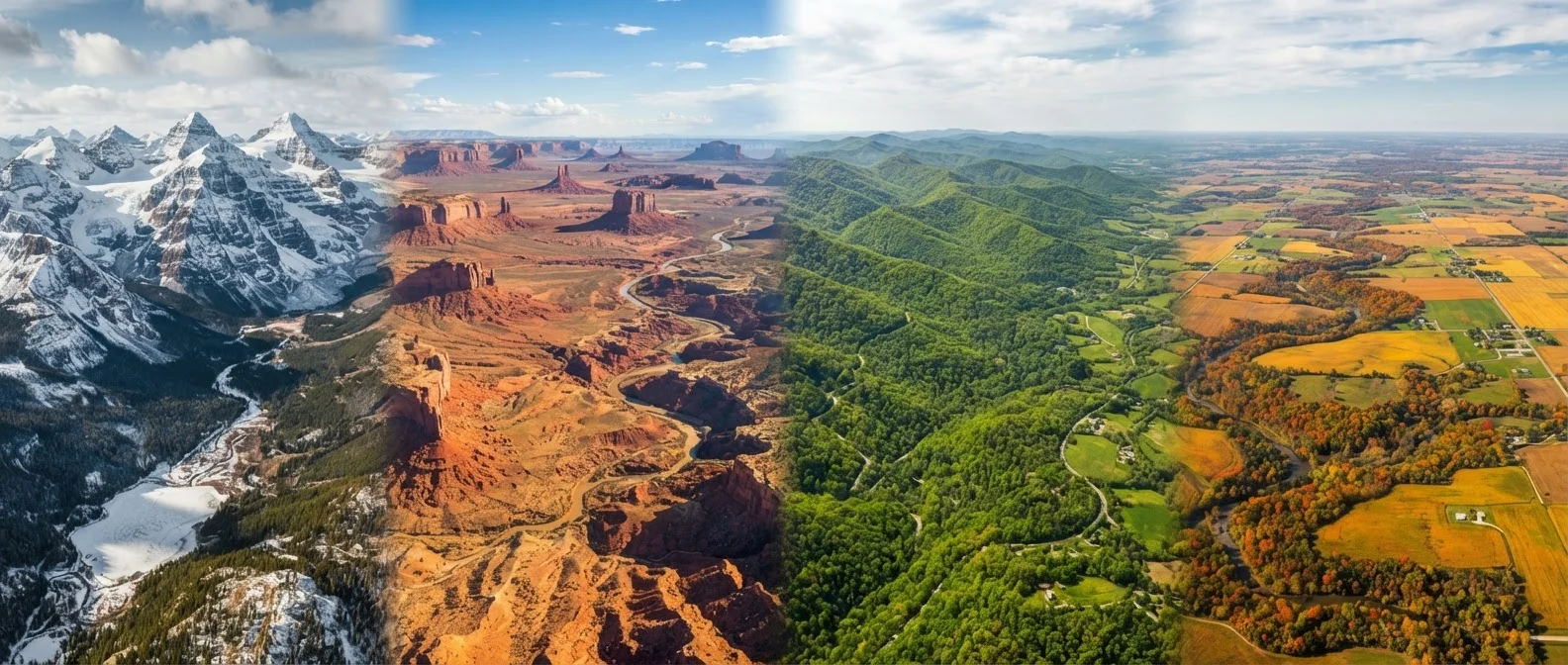
This guide breaks down the U.S. into five broad climatic regions - the Pacific Coast, the Mountain West, the Southwest, the Midwest and Great Plains, and the Southeast and Mid-Atlantic - and maps what each looks like across the four seasons. Use it as a quick-reference starting point, then layer in destination-specific research before you book.
And if timing flexibility is your goal, see our guide on shoulder season travel in the United States - it pairs directly with this regional overview.
Region-by-Region Seasonal Breakdown
Pacific Coast (California, Oregon, Washington)
The Pacific Coast runs on a Mediterranean rhythm in California - dry, sunny summers and mild, rainy winters. Summer fog (especially in San Francisco) can surprise visitors expecting relentless sunshine. Oregon and Washington flip the script: summers are glorious and relatively dry, while fall through spring brings persistent overcast skies and rainfall. Wildfire smoke has become a recurring late-summer concern across all three states - always check air quality forecasts.
Mountain West (Colorado, Utah, Idaho, Montana, Wyoming)
High altitude dominates everything here. Winters are long and snowy, with skiing conditions typically running December through March. Summers are short but spectacular - warm days, cool nights, and dramatic afternoon thunderstorms at elevation are the norm from late June through August. Spring and fall are transitional and unpredictable, with late snowstorms possible well into May. Visiting top destinations like Yellowstone or Rocky Mountain National Park requires knowing that roads can be closed by snow as late as Memorial Day weekend.
Southwest (Arizona, New Mexico, Nevada, southern Utah)
The American Southwest has a split personality. Winters are mild and sunny at lower elevations - prime hiking season in places like Sedona and Zion. But summers bring extreme heat (Phoenix regularly exceeds 110°F) and a monsoon season from roughly July through September that delivers intense but brief afternoon thunderstorms. Spring and fall represent the sweet spot for most visitors.
Midwest and Great Plains (Illinois, Kansas, Nebraska, the Dakotas)
This region runs to extremes. Winters are bitterly cold with significant snowfall across the northern tier; summers are hot and humid. Tornado season peaks in spring and early summer across the central plains - a real planning consideration. Fall foliage arrives earlier here than in the East and can be striking across wooded pockets of the region.
Southeast and Mid-Atlantic (Florida, Georgia, the Carolinas, Virginia, DC)
The Southeast is warm and accessible much of the year, but summer heat and humidity can be oppressive, and the Atlantic and Gulf coasts face hurricane risk from June through November. Florida's winter months are its most comfortable. The Mid-Atlantic (DC, coastal Virginia, the Carolinas) gets four full seasons, with hot humid summers and occasional winter ice and snowstorms. Always verify current conditions and any travel advisories before visiting coastal areas during hurricane season.
Monsoon season
A seasonal shift in wind patterns that brings periods of heavy rainfall to specific regions, most notably the American Southwest from mid-June through September. Storms are typically intense, brief, and occur in the afternoon or evening.
Shoulder season
The period just before or after a destination's peak travel season. Conditions are often still favorable, with fewer crowds and more flexible availability - though weather variability increases.
Orographic lift
The process by which air is forced upward as it meets a mountain range, cooling and often producing precipitation on the windward side. This explains why Mountain West regions receive heavy snowfall while adjacent lowlands stay dry.
Heat index
A measure of how hot it actually feels when humidity is factored into the air temperature. Particularly relevant in the Southeast and Gulf Coast during summer, where high humidity makes temperatures feel significantly hotter than the thermometer reads.
Turning This Into a Real Planning Tool
Regional weather patterns give you a framework, but smart travel planning means understanding how they interact with your specific destination, your travel dates, and your booking timeline. For most popular American destinations, conditions in the shoulder months - just before or after peak season - can offer meaningful advantages without dramatic weather trade-offs.
Once you have a regional window in mind, timing your bookings appropriately is just as important. Our guide to U.S. travel planning timelines walks through when to lock in flights, lodging, and permits for different trip types. And don't overlook the small-but-critical steps covered in our article on overlooked planning details - from park reservation systems to road closures, these often trip up well-intentioned travelers.
If your trip involves driving through challenging conditions, particularly in the Mountain West or Midwest in winter, brush up on driving in bad weather before you hit the road.
Always Verify Before You Go
Regional patterns provide useful planning guidance, but actual conditions vary year to year and can shift rapidly. Before traveling - especially to coastal, high-altitude, or desert destinations - check current forecasts from the National Weather Service and review any active travel advisories from official government sources. This article offers general education and is not a substitute for up-to-date, destination-specific information.