

Key Takeaways
Start here
What Is a Trade School?
Explore options
Fields and Programs Typically Offered
Understand structure
How Trade School Programs Are Structured
Plan your next step
Licensure, Apprenticeships, and What Comes After
Handle the finances
Paying for Trade School
What Is a Trade School?
A trade school - also called a vocational school or career and technical school - is a post-secondary institution that trains students for a specific occupation rather than offering a broad liberal-arts curriculum. The core idea is direct preparation: you learn the skills a particular job requires and, in most cases, earn a certificate or diploma that signals that readiness to employers.
Trade schools are distinct from four-year colleges in scope and intent. They are also different from standalone professional certifications, which are typically shorter and awarded by industry bodies rather than educational institutions. If you want to understand how all three paths stack up side by side, our guide to mapping the right path covers the comparison in detail.
Accreditation
A formal recognition by an approved agency that a school meets established quality standards. Accreditation affects whether your credits transfer and whether you qualify for federal financial aid.
Certificate program
A short, focused training program that awards a certificate upon completion rather than a degree. Most trade school certificates take six months to a year.
Apprenticeship
A paid, on-the-job training arrangement where a beginner learns a trade by working alongside experienced workers, often for one to five years depending on the field.
Journeyman
A skilled worker who has completed an apprenticeship and holds a license to work independently in their trade, but has not yet reached master-level status.
State license
A government-issued credential required to legally practice certain trades. Requirements - including exams and work-hour minimums - vary by state and occupation.
FAFSA
The Free Application for Federal Student Aid - a form that determines your eligibility for federal grants, loans, and work-study programs, including for trade school.
Fields and Programs Typically Offered
Trade schools cover a wide range of industries. Common program categories include:
- Construction and skilled trades: Electrical work, plumbing, HVAC, welding, and carpentry
- Healthcare support: Medical assisting, dental assisting, practical nursing (LPN), and phlebotomy
- Transportation and automotive: Diesel mechanics, auto collision repair, and commercial truck driving (CDL training)
- Cosmetology and personal services: Cosmetology, esthetics, barbering, and nail technology
- Information technology: Networking, cybersecurity, and computer repair - though these overlap with certification paths
The depth of each program varies. A CDL training course may run eight weeks; an HVAC program might take a year. Healthcare programs often require clinical hours in addition to classroom instruction. It is worth noting that IT training through trade schools competes with bootcamps and community colleges - our overview of technical training options explains the tradeoffs.
Check Accreditation Before You Apply
Not every school that calls itself a trade school is accredited. Attending an unaccredited program can disqualify you from federal financial aid and may limit how employers view your credential. Look for accreditation from a recognized agency listed by the U.S. Department of Education before submitting any application.
How Trade School Programs Are Structured
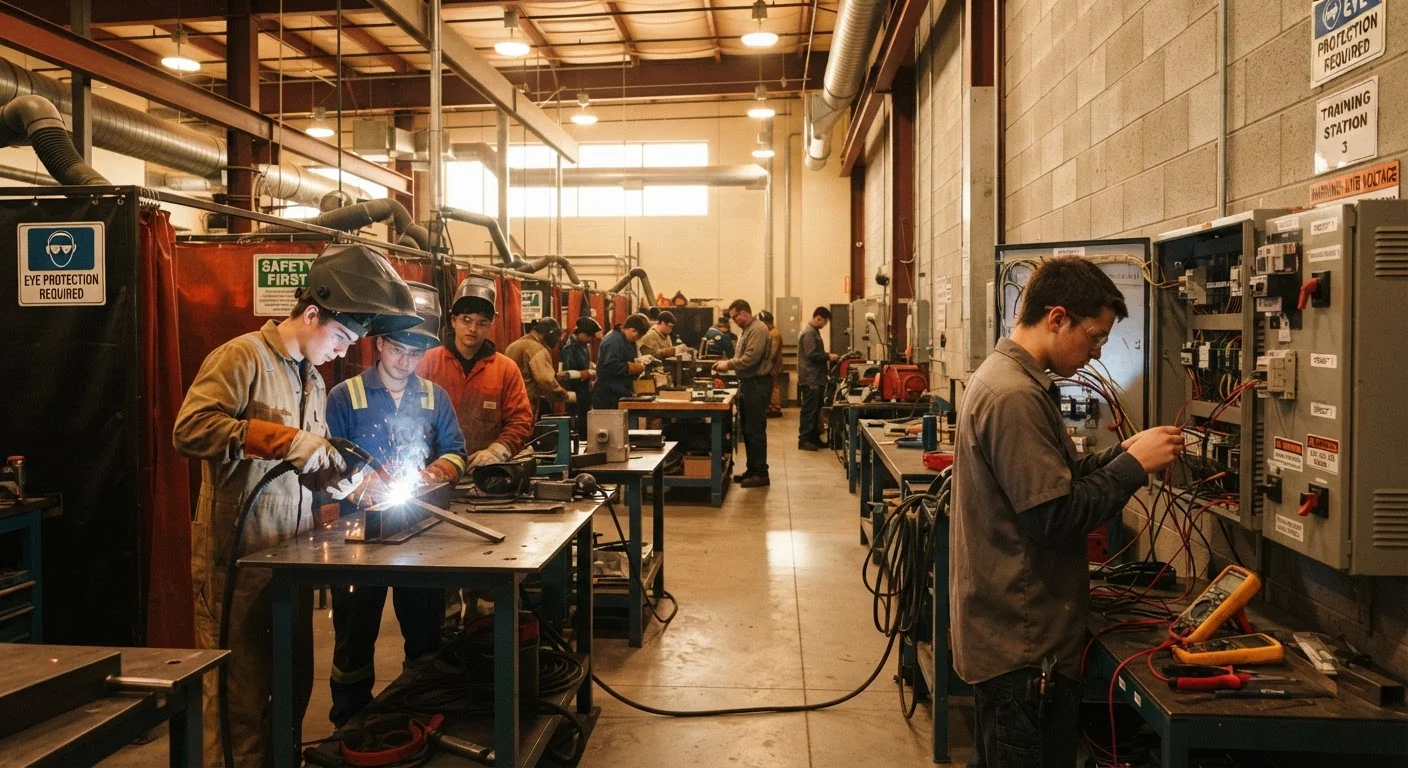
Most trade programs combine classroom instruction with hands-on lab work. Students practice real tasks - wiring circuits, performing medical procedures on mannequins, cutting hair on live clients - before entering the workforce. This applied focus is the central advantage of the format.
Programs are offered at several types of institutions:
- Private vocational schools: For-profit and nonprofit schools focused entirely on career training
- Community colleges: Public two-year institutions that offer both academic and vocational programs, often at lower tuition rates
- Technical colleges: State-supported schools focused on technical and trades education
Schedules are often flexible - many programs offer evening and weekend classes to accommodate working adults. Full-time attendance is common for shorter programs, while part-time options extend the timeline but reduce daily commitment.
Community Colleges Offer Many Vocational Programs
If cost is a primary concern, public community colleges frequently offer the same vocational certificates as private trade schools - often at lower tuition. Some also provide pathways to associate degrees if you decide to continue your education later. Comparing institutional costs for the same program type can reveal meaningful differences.
Licensure, Apprenticeships, and What Comes After
Graduating from a trade program is not always the final step. Many skilled trades require a state license before you can legally work independently. Electricians, plumbers, HVAC technicians, and cosmetologists each face licensing requirements that vary by state. Licensing typically involves a written exam and, in some fields, documented hours of supervised work.
An apprenticeship is a parallel path - and sometimes a required one. Apprentices work under a licensed journeyman while completing related classroom instruction. Some trades expect you to graduate trade school first and then enter an apprenticeship; others let you enter an apprenticeship directly. Apprenticeships are commonly organized through trade unions or employer associations.
After licensing, many tradespeople advance through a tiered structure: apprentice → journeyman → master. Each tier may require additional hours, exams, or training. If you are considering a career change into the trades, our guide for career changers offers a realistic look at what that transition involves.
Paying for Trade School
Trade school tuition varies considerably. Community college programs often cost several thousand dollars total; private vocational schools may charge significantly more. Before enrolling anywhere, confirm the school holds recognized accreditation - this affects both program quality and your eligibility for federal financial aid.
Accredited trade schools are eligible for federal student aid programs. Filing the FAFSA is the starting point. Pell Grants, which do not require repayment, can offset costs for eligible students. Subsidized and unsubsidized federal loans are also available, though borrowing adds long-term cost regardless of program type.
Additional funding sources worth researching include:
- State workforce development grants
- Union apprenticeship programs (where you earn wages while training)
- Employer tuition assistance if you are already employed
- Scholarships from trade associations in specific fields
Common misconceptions about trade school - including assumptions about earning potential and job security - are addressed in our article on trade school myths. Understanding the real picture before you commit is always worthwhile.
U.S. Department of Education College Navigator
A free federal tool that lets you search for accredited trade and vocational schools, compare tuition, graduation rates, and financial aid data by program and location.
CareerOneStop (U.S. Department of Labor)
A government resource covering occupational requirements, licensing rules by state, apprenticeship programs, and wage data for hundreds of trades and technical careers.
FAFSA Application
The official Free Application for Federal Student Aid portal. Completing the FAFSA is the required first step to determine your eligibility for Pell Grants and federal loans at eligible trade schools.