

Key Takeaways
Why Movement at Work Matters More Than You Think
Most American adults spend the majority of their waking hours seated - at a desk, in a car, or on a couch. Public health research consistently links prolonged uninterrupted sitting with elevated risks for cardiovascular concerns, metabolic issues, and musculoskeletal discomfort. The good news is that you don't need to carve out a dedicated gym hour to counteract these effects.
Movement built into your existing workday - brief, intentional, and low-barrier - can make a genuine difference. For a deeper look at the science behind this approach, our article on exercise snacking and shorter workouts explores what current research actually says. The strategies below are designed to fit around meetings, deadlines, and the unpredictable rhythms of a typical 9-to-5.
Start With One Change, Not Seven
It's tempting to overhaul everything at once, but research on habit formation consistently shows that starting with a single small behavior and building from there leads to more durable change. Pick the one habit on this list that requires the least disruption to your current routine and practice it for two weeks before adding another.
Seven Movement Habits Worth Building Into Your Schedule
Take walking meetings whenever possible
If a meeting doesn't require a screen share or note-taking, suggest moving it outside or around the building. Walking while talking is one of the lowest-barrier ways to accumulate steps without rearranging your schedule. Even a 10-minute walk during a one-on-one call adds meaningful movement to an otherwise sedentary morning.
Walking meetings replace idle sitting with movement while keeping your workday fully on track.
Set a recurring reminder to stand and stretch hourly
Your body isn't designed to stay in one position for hours. Setting a phone or computer reminder to stand up for two to three minutes every hour costs almost nothing in time but interrupts the compounding effects of long static sitting. Simple moves - a brief standing hip flexor stretch, shoulder rolls, or calf raises - help restore circulation and ease tension that builds through the day.
Two to three minutes of movement each hour can meaningfully interrupt the effects of prolonged sitting.
Use the stairs as your default
Defaulting to stairs instead of the elevator is one of the most effortlessly integrated movement habits available in an office environment. Stair climbing engages large muscle groups and briefly elevates your heart rate, providing a functional cardiovascular stimulus in just a minute or two. It requires no preparation, no clothing change, and no scheduling.
Choosing stairs over the elevator is a simple default that delivers real cardiovascular benefit.
Try a standing or walking desk setup
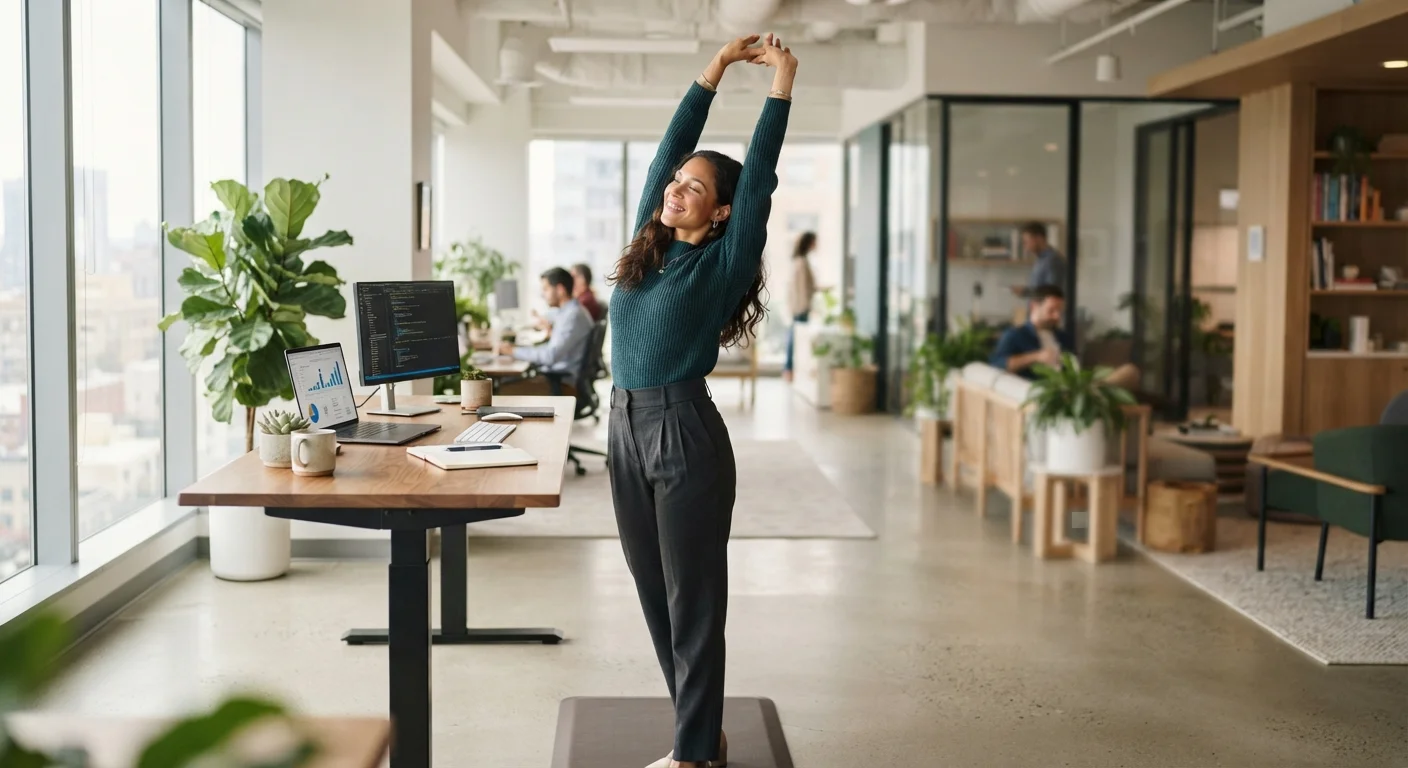
Adjustable standing desks have become increasingly common in American workplaces, and for good reason - alternating between sitting and standing throughout the day reduces the amount of time your body spends completely static. You don't need expensive equipment to experiment: a monitor riser or a countertop at the right height can serve a similar purpose. The key is alternating positions rather than standing for hours straight, which brings its own discomforts.
Alternating between sitting and standing throughout the day reduces prolonged static posture significantly.
Walk during your lunch break
A 10- to 20-minute walk at midday serves double duty: it adds to your daily movement total and provides a genuine mental reset that can improve afternoon focus. Research on walking and cognitive function suggests even short outdoor walks may support mood and reduce mental fatigue. You don't need to push the pace - the goal is simply to move away from your desk and let your mind decompress. Pair this with the mental wellness habits you're already building for compounding benefit.
A short midday walk supports both physical movement goals and afternoon cognitive performance.
Do bodyweight exercises during natural work breaks
Waiting for a file to upload, a meeting to start, or the coffee to brew? These micro-gaps in the day are ideal for a few bodyweight squats, wall push-ups, or standing calf raises. Individually, these moments seem trivial - but accumulated across a workday, they contribute meaningfully to overall muscle engagement. This is the core concept behind exercise snacking, which you can explore further in our piece on shorter workouts and exercise snacking.
Micro-bursts of bodyweight movement during idle moments accumulate into genuine daily activity.
Focus on mobility during screen downtime
If you're watching a recorded meeting playback, listening to a podcast for work, or reading a long document, you don't have to be seated. Gentle mobility work - hip circles, thoracic rotations, or ankle mobility drills - can be done standing with minimal space. Understanding the difference between mobility and flexibility can sharpen your approach here; our guide on mobility versus flexibility explains why both matter for long-term movement health.
Screen-based tasks are a hidden opportunity to improve mobility without sacrificing productivity.
Movement Goals Vary by Age and Fitness Level
The U.S. Department of Health and Human Services recommends that most adults aim for at least 150 minutes of moderate-intensity aerobic activity per week, plus muscle-strengthening activity on two or more days. However, individual needs differ - particularly for adults with chronic conditions, those recovering from injury, or older adults. If you're unsure what level of activity is appropriate for you, a qualified healthcare provider or certified fitness professional can offer personalized guidance.
Making These Habits Stick Over Time
The habits most likely to last are the ones that require the least friction. Choose one or two strategies from the list above and attach them to something you already do - a morning standup meeting, a lunch break, or your afternoon coffee. Once those feel automatic, layer in more.
If you're thinking about how movement fits into your overall wellness picture, exercise needs shift across every decade of life, so it's worth understanding what your body benefits from most at your current life stage. And for a practical tool to set yourself up each week, our weekly movement readiness checklist covers sleep, recovery, and scheduling to help you stay consistent without overdoing it.
This article is for general informational purposes only and is not a substitute for personalized medical or fitness advice. Consult a qualified healthcare professional before beginning any new exercise routine, especially if you have an existing health condition.