

Key Takeaways
Added Sugars
Added sugars are any sugars or sweeteners incorporated into a food or beverage during manufacturing or preparation - as opposed to sugars that occur naturally in whole fruits, vegetables, or dairy. They contribute calories but typically provide little nutritional value beyond energy. Common examples include table sugar, high-fructose corn syrup, honey added to processed foods, and dozens of other sweetening agents.
The FDA requires "Added Sugars" to be declared in grams and as a percentage of the Daily Value on the Nutrition Facts label, a distinction introduced in updated labeling rules that took full effect for most manufacturers by 2020.
Why the Distinction Between Added and Natural Sugars Matters
Sugar is sugar at a chemical level, yet the distinction between added and naturally occurring sugars carries real nutritional weight. When you eat a whole apple, its fructose comes paired with dietary fiber, water, vitamins, and phytonutrients. When that same sugar is extracted, refined, and stirred into a bottled drink, those accompanying nutrients disappear - leaving concentrated sweetness and calories without much else.
This is why nutrition researchers and public health bodies treat the two categories differently. The overall dietary package matters, not just the sugar molecule itself. Understanding that distinction is the starting point for making sense of what food labels are actually telling you.
How the Nutrition Facts Label Can Help
Since updated FDA labeling rules took full effect, the Nutrition Facts panel includes a dedicated "Added Sugars" line showing grams and a percentage of the Daily Value. This makes it easier to distinguish added from naturally occurring sugars at a glance - without needing to decode every ingredient name. Pairing label-reading with ingredient-list scanning gives the most complete picture.
For a deeper look at how to navigate the full Nutrition Facts panel, see our guide to reading a nutrition facts label.
The Many Names for Added Sugars on Ingredient Lists
One of the most consistent challenges consumers face is recognizing added sugars when they don't appear as the word "sugar." Food manufacturers use a wide variety of sweetening agents, each with its own name on an ingredient list. Nutritionists and researchers have catalogued more than 60 such terms. Some of the most commonly encountered include:
- High-fructose corn syrup (HFCS) - a liquid sweetener derived from corn starch, widely used in soft drinks and packaged snacks
- Cane sugar, cane juice, evaporated cane juice - less processed forms of sucrose, often marketed with a health halo
- Dextrose, maltose, lactose (when added) - individual sugar molecules with distinct chemical structures but similar caloric profiles
- Honey, agave nectar, maple syrup - naturally sourced but still classified as added sugars when incorporated into processed products
- Fruit juice concentrate - a common vehicle for sweetening that can significantly raise a product's sugar content
- Molasses, treacle, turbinado sugar - less refined sugar forms that retain some minerals but remain added sugars nutritionally
Because ingredients are listed in descending order by weight, a product can carry multiple sugar varieties - each listed separately - while collectively making sugar the dominant ingredient. Scanning for any word ending in -ose or containing "syrup," "juice concentrate," or "sweetener" is a practical starting habit.
17 tsp
Average daily added sugar intake for U.S. adults
According to CDC data, American adults consume roughly 17 teaspoons of added sugar per day on average, well above most dietary guidance thresholds.
~47%
Share of added sugars coming from beverages
Research published in nutrition journals estimates that nearly half of added sugar intake in the U.S. comes from sweetened drinks, including sodas, energy drinks, and fruit-flavored beverages.
60+
Names for added sugars on ingredient lists
Nutrition researchers have identified more than 60 distinct terms used to describe added sugars across food and beverage ingredient labels.
Surprising Places Added Sugars Show Up
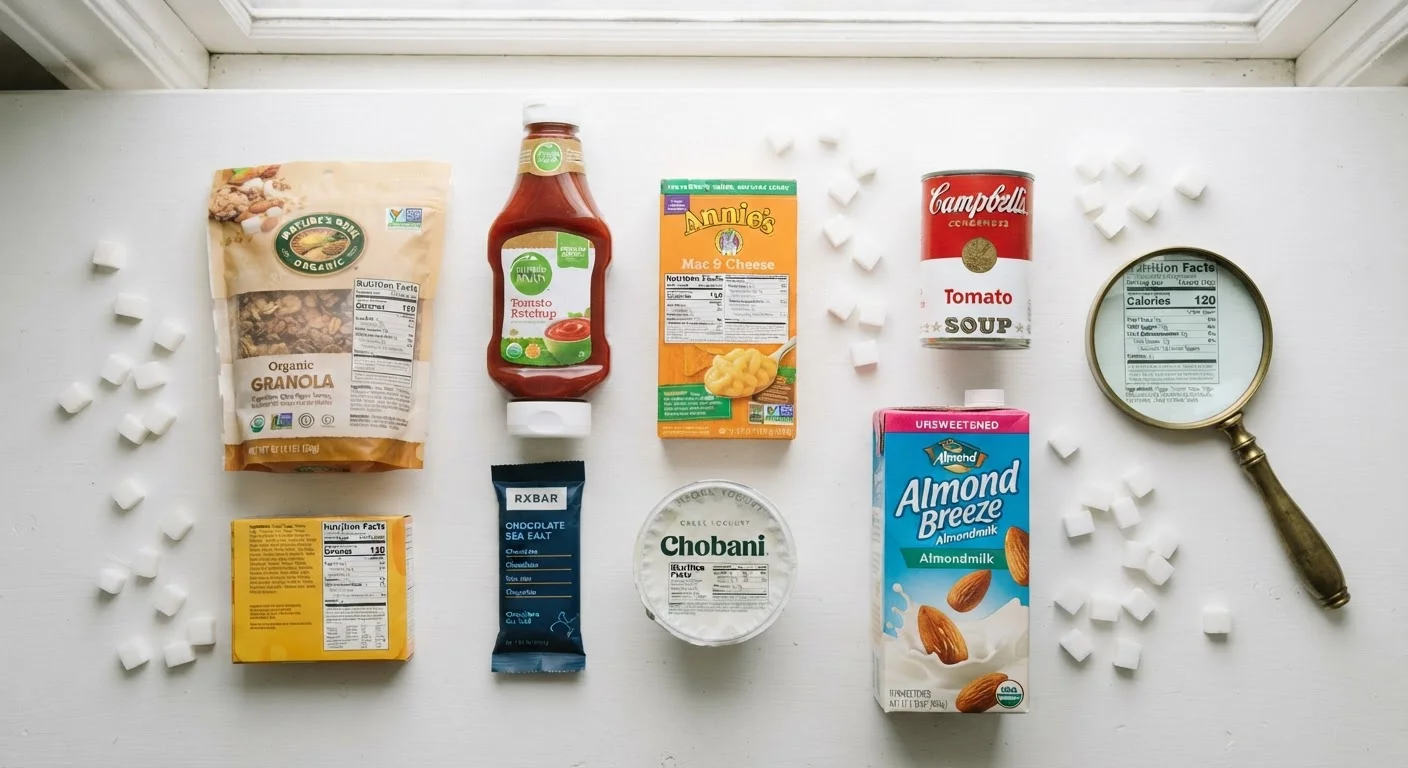
Candy and soft drinks are the obvious targets, but added sugars routinely appear in foods people don't associate with sweetness. Bread, pasta sauce, salad dressings, flavored yogurt, granola bars, and even some savory crackers commonly contain added sweeteners. Condiments - ketchup, barbecue sauce, and many marinades - can contribute several grams per serving.
Breakfast cereals marketed toward children can carry 10-15 grams of added sugars per serving, while "healthy" alternatives marketed to adults sometimes aren't dramatically lower. Flavored instant oatmeal packets, protein bars, and plant-based milks are other categories worth scrutinizing.
The pattern is consistent: anywhere a manufacturer wants to enhance flavor, extend shelf life, or offset bitterness, added sugars often step in. This is also worth keeping in mind when evaluating grocery spending habits - heavily processed foods with long ingredient lists tend to cost more per nutritional unit than whole-food alternatives.
What Research Says About Added Sugars and Health
A substantial body of research has examined the relationship between high added-sugar intake and various health markers. Associations have been observed between consistently elevated added-sugar consumption and outcomes including weight gain, dental caries, and markers of metabolic health - though association does not equal direct causation, and dietary research is inherently complex to conduct and interpret.
Sweetened beverages have received particular scientific attention because liquid calories appear to satisfy hunger less effectively than solid food calories, making overconsumption easier. The glycemic index concept intersects here: rapidly absorbed sugars can produce sharper blood glucose responses compared to sugars embedded in fiber-rich whole foods, though the full picture is more nuanced than any single metric captures.
A Practical Ingredient-List Scanning Habit
When reviewing an ingredient list, scan for any word ending in -ose (glucose, maltose, dextrose), any word containing "syrup" or "sweetener," and common whole-food sweeteners like honey, molasses, or fruit juice concentrate. If several of these appear within the first five ingredients, the product likely has a notable added-sugar load. This habit works alongside - not as a replacement for - the dedicated Added Sugars line on the Nutrition Facts panel.
This article is for general informational purposes only and does not constitute medical or dietary advice. Consult a registered dietitian or qualified healthcare provider for guidance specific to your health needs.