

Key Takeaways
Why Nutrition Labels Feel Confusing
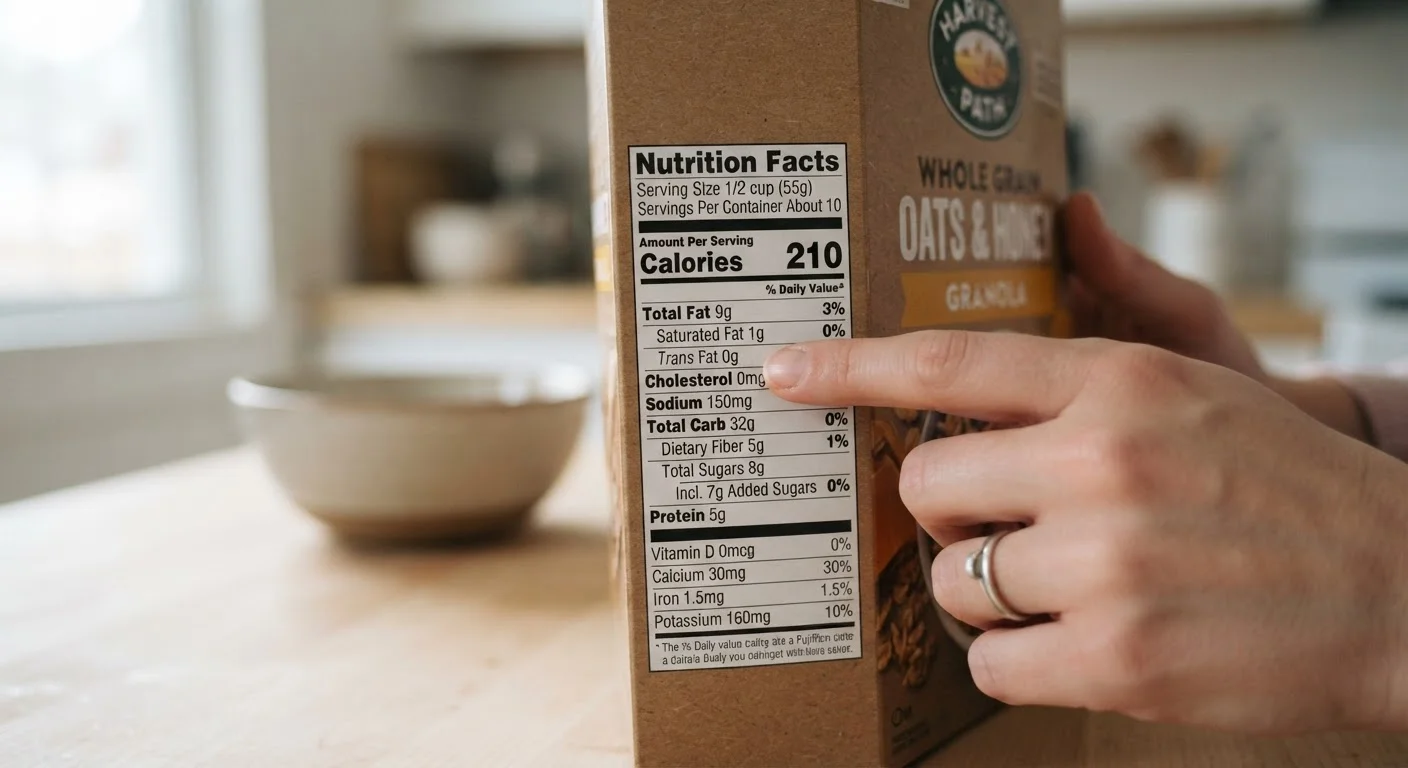
A standard Nutrition Facts label packs serving data, calorie counts, eleven or more nutrients, and percentage figures into a few square inches. That density is what trips most readers up - not any single number, but the sheer volume of them stacked together.
The good news is that the label follows a predictable, top-to-bottom structure. Once you understand what each layer is communicating, you can scan a label in seconds and pull out the information that matters most to you. This guide walks through that structure step by step.
If you're newer to nutrition concepts in general, the foundational nutrition guide covers calories, nutrients, and dietary balance in accessible terms before you dive into label reading.
The Label Layout Is Federally Standardized
The Nutrition Facts panel format is regulated by the U.S. Food and Drug Administration (FDA), which means every packaged food follows the same structure. Once you learn the layout once, you can apply it to any product you pick up.
How to Read the Label: Step by Step
Work from the top of the panel downward. Each section builds on the one above it.
Check the serving size first
Every number on the label - calories, fat, sodium, everything - refers to one serving, not the entire package. The serving size is printed at the very top of the panel and is given in both a common household measure (e.g., "1 cup") and grams.
Also note the servings per container line directly below. If a bag contains 3.5 servings and you eat the whole bag, multiply every number by 3.5.
Note the calorie count
Calories are displayed in large type directly below the serving information. This number represents total energy per serving. It's a useful reference, but calorie counts alone don't tell you whether a food is nutritionally rich or poor - a handful of almonds and a handful of candy may have similar calorie counts but very different nutrient profiles.
Scan the nutrient rows and % Daily Values
Below calories, the label lists nutrients in two groups:
- Limit these: Saturated fat, trans fat, cholesterol, sodium, and added sugars appear first. These are nutrients most Americans consume in excess relative to general dietary guidance.
- Get enough of these: Dietary fiber, vitamins D, calcium, iron, and potassium follow. Many Americans under-consume these.
The % Daily Value (%DV) column on the right is based on a 2,000-calorie reference diet. As a general guide: 5% DV or less is considered low for a nutrient; 20% DV or more is considered high. This scale is the same regardless of whether you personally eat 2,000 calories per day - it's a relative benchmark, not a personal prescription.
Read the ingredient list
The ingredient list appears below the Nutrition Facts panel. Ingredients are listed in descending order by weight - whatever appears first makes up the largest proportion of the product.
A short ingredient list isn't automatically better, and a long one isn't automatically worse. What's useful is identifying whether the first few ingredients align with what you think you're eating. If a "whole wheat" bread lists enriched flour before whole wheat flour, refined flour dominates the product despite the front-of-package claim.
Front-of-package phrases like "natural," "low-fat," or "made with whole grains" are not governed by the same rules as the Nutrition Facts panel. For a plain-language breakdown of what those terms do and don't mean, see food label health claims explained.
Nutrients Worth a Closer Look
While the steps above give you the full picture, two nutrient rows deserve specific attention for most Americans.
Added sugars: Distinct from naturally occurring sugars (like those in fruit or dairy), added sugars are incorporated during processing and offer no additional nutritional benefit. The label separates them as a sub-line under Total Sugars. Added sugars appear under dozens of names in ingredient lists, making the label row a cleaner way to gauge your intake.
Dietary fiber: Most Americans consume well below recommended fiber intake levels. The fiber row on the label - also listed under Total Carbohydrate - gives you a quick read on whether a food contributes meaningfully to that daily total. For more context on why fiber intake matters, see why most Americans fall short on dietary fiber.
High %DV Sodium Adds Up Quickly
Sodium is one of the easier nutrients to over-consume because it's present in high amounts in many processed, packaged, and restaurant foods - often in products that don't taste particularly salty. Checking the %DV for sodium on individual products can help you stay aware of cumulative intake across the day. If you have a health condition that requires close sodium monitoring, consult your healthcare provider for personalized guidance.
Understanding the macronutrient rows - carbohydrates, protein, and fat - is easier once you know what each one actually does in the body. The macronutrients explainer covers that clearly.
Putting the Label in Context
Labels report on a single product in isolation, but eating patterns matter more than any individual food choice. A serving of chips with a high sodium count isn't automatically a problem if the rest of your day is low in sodium. Context is everything.
Common traps - like eating directly from the package and losing track of servings, or choosing a product based on front-of-package language rather than the actual panel - are worth recognizing. The eating patterns that derail good intentions guide examines why these habits happen and how to catch them.
Label reading is a skill, not a test. The goal is to give yourself useful information, not to grade every food you eat.
This article is for general informational purposes only and does not constitute medical or dietary advice. For guidance tailored to your health needs, consult a qualified healthcare professional or registered dietitian.