

Key Takeaways
Option A
Organic Fertilizer
The slow-release, soil-building approach.
Best for: Gardeners focused on long-term soil health, microbial activity, and reduced chemical dependency.
Option B
Synthetic Fertilizer
The fast-acting, precision-nutrient option.
Best for: Situations requiring rapid nutrient correction or predictable, targeted feeding on a set schedule.
If you want to improve poor, compacted, or depleted soil over multiple seasons
Organic Fertilizer
Organic matter rebuilds microbial communities and improves soil structure in ways synthetic formulas cannot replicate on their own.
If your soil test reveals a specific, acute nutrient deficiency needing quick correction
Synthetic Fertilizer
Synthetic formulas deliver precise, immediately available nutrients that address deficiencies faster than slow-release organic sources.
If you're starting a new lawn or garden bed from scratch
Organic Fertilizer
Building soil biology from the beginning creates a stronger foundation and reduces long-term fertilizer dependency.
If you manage a high-traffic lawn that needs consistent, measurable feeding results
Synthetic Fertilizer
Predictable nutrient ratios and release timing make synthetic fertilizers easier to program into a seasonal maintenance plan.
If environmental concerns like watershed runoff or pollinator health are priorities
Organic Fertilizer
Organic fertilizers generally carry lower risk of nutrient runoff into waterways and support broader soil ecosystem health.
How Each Type Delivers Nutrients to Plants
The N-P-K numbers printed on fertilizer bags - nitrogen, phosphorus, and potassium - look the same whether you're holding an organic or synthetic product. But the path those nutrients take to reach plant roots is fundamentally different, and that difference reshapes what's happening in your soil over time.
Synthetic fertilizers are manufactured from inorganic compounds, typically derived from industrial chemical processes. Their nutrients are already in mineral salt form, which means they dissolve in soil water quickly and become available to plant roots within days. This is why synthetic products can green up a lawn noticeably fast - the plant doesn't have to wait for anything to break down.
Organic fertilizers - made from materials like composted manure, feather meal, bone meal, kelp, or worm castings - contain nutrients locked inside complex organic compounds. Before a plant can absorb them, soil microorganisms must first decompose that organic matter. Bacteria and fungi do the heavy lifting, gradually mineralizing nutrients into plant-available forms. This process is slower, but it's also what makes organic fertilizing a soil-improvement strategy, not just a plant-feeding one.
| Criterion | Organic Fertilizer | Synthetic Fertilizer |
|---|---|---|
| Nutrient release speed | Slow (weeks to months) | Fast (days) |
| Soil biology impact | Feeds and builds microbial life | Bypasses soil biology |
| Leaching risk | Lower | Higher in wet conditions |
| Salt buildup risk | Very low | Possible with overuse |
| Nutrient precision | Variable by source | Highly predictable |
| Soil structure improvement | Yes, over time | Minimal |
| Cost per application | Often higher | Often lower |
| Best use case | Long-term soil building | Rapid deficiency correction |
The Underground Ecosystem: What Each Approach Does to Soil Biology
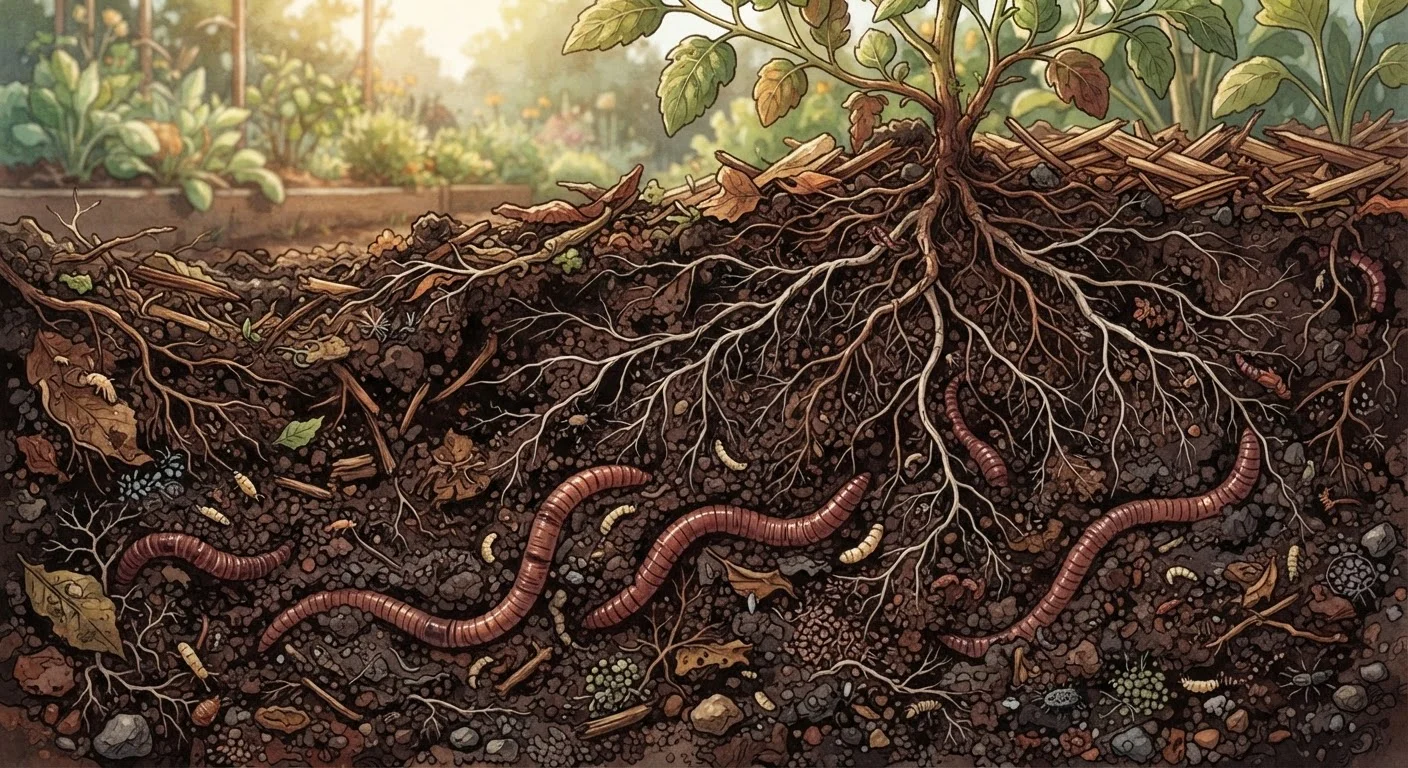
Healthy soil isn't just dirt - it's a living system. A single tablespoon of productive garden soil can contain billions of bacteria, miles of fungal threads, nematodes, protozoa, and macroorganisms like earthworms. This community drives nutrient cycling, improves soil structure, and helps suppress certain plant diseases.
When you apply organic fertilizers, you're essentially feeding this community. The organic matter provides both nutrients and carbon energy that microbes consume. Over seasons, this builds microbial biomass, improves soil aggregation (how soil particles clump together), and increases the soil's water-holding capacity.
Synthetic fertilizers work differently. Because they bypass microbial decomposition, they don't directly feed the soil food web. Some research suggests that certain high-nitrogen synthetic inputs can alter microbial community composition - favoring bacteria that thrive in high-nutrient conditions while potentially reducing fungal diversity. However, the evidence is nuanced: the impact depends heavily on application rate, soil type, and whether organic matter is also being added to the soil.
Organic Doesn't Always Mean Low-Nutrient
Some organic fertilizers - such as blood meal or feather meal - carry relatively high nitrogen concentrations and can cause plant burn if over-applied, similar to synthetics. Always follow label rates and factor in existing soil nutrient levels. The 'organic' label describes the source of nutrients, not necessarily their concentration or application safety.
For gardeners wanting to understand their current soil biology and nutrient baseline, a soil test is a practical starting point before committing to either fertilizer approach.
Nutrient Availability, Runoff Risk, and Practical Tradeoffs
The same property that makes synthetic fertilizers fast - their high solubility - also makes them more prone to leaching. When heavy rain or overwatering occurs shortly after application, dissolved nutrients can move through soil and into groundwater or local waterways before plants absorb them. This is one reason watering timing and depth matter alongside your fertilization plan.
Organic nutrients, being released through microbial activity rather than water solubility, tend to leach less readily. The tradeoff is that they're dependent on soil temperature and moisture conditions - microbial activity slows significantly in cold or very dry soils, meaning nutrient release slows too. Early spring applications of organic fertilizer may not show results until soil temperatures warm.
~1 billion
Bacteria per teaspoon of healthy garden soil
USDA Natural Resources Conservation Service estimates highlight how densely populated productive soil ecosystems are.
50-80%
Synthetic nitrogen potentially lost to leaching or volatilization
Environmental research suggests that a significant share of applied synthetic nitrogen may not reach plant roots under typical field conditions.
Salt buildup is another practical concern with synthetic fertilizers. Repeated heavy applications can raise soil salt concentration, which draws water out of plant roots through osmotic pressure - a phenomenon sometimes called fertilizer burn. Organic fertilizers rarely cause this issue at typical application rates.
Many experienced gardeners use a combined approach: organic matter as the baseline for soil health, with targeted synthetic applications when a soil test confirms a specific deficiency that needs faster correction. See long-term lawn practices for how fertilization fits into a broader seasonal maintenance rhythm.