

| Most common lawn weed type | Broadleaf weeds (e.g., dandelion, clover) (University cooperative extension services, general guidance) |
| Crabgrass germination trigger | Soil temperature above 55°F for several consecutive days (Widely cited in cooperative extension literature) |
| Recommended mulch depth for weed suppression | 2-3 inches (General horticultural best practice) |
| Dandelion taproot depth | Can exceed 10 inches in established plants (General botanical reference) |
| Weed seeds viable in soil | Some species viable for 5-10+ years (Soil seed bank research, general literature) |
Why Identification Comes Before Control
Pulling weeds without knowing what they are is one of the most common garden mistakes. Some weeds spread by root fragments - so digging them up incorrectly can multiply the problem. Others self-seed prolifically and need to be removed before they flower. And a few that look like weeds are actually native wildflowers worth keeping. Correct identification tells you how a weed reproduces, when to act, and which removal method is most effective.
Weeds generally fall into three life-cycle categories: annual, biennial, and perennial. Annuals complete their life cycle in one season and spread almost entirely by seed. Biennials take two years, producing seeds in year two. Perennials return year after year from roots, rhizomes, or bulbs. Controlling each type requires a different strategy.
Annual weed
A weed that completes its entire life cycle - germination, growth, flowering, and seeding - within a single growing season. Control is most effective before the plant sets seed.
Perennial weed
A weed that lives for more than two years and typically regrows from roots, rhizomes, or bulbs each season. These require persistent removal strategies targeting the root system.
Pre-emergent herbicide
A herbicide applied to soil before weed seeds germinate. It creates a chemical barrier that prevents seedling establishment but does not affect already-sprouted plants.
Post-emergent herbicide
A herbicide applied directly to actively growing weeds. Products may be selective (targeting specific plant types) or non-selective (effective on most vegetation).
Rhizome
A horizontal underground stem that allows some weeds to spread laterally and regenerate new shoots. Cutting or tilling rhizomatous weeds can inadvertently spread them.
Broadleaf weed
A category of weed distinguished by wide, flat leaves with branching veins, as opposed to the narrow blades of grass or sedge weeds. Dandelions and bindweed are common examples.
Common lawn care myths often lead homeowners to apply herbicides at the wrong time or skip hand-pulling when it would actually be more effective. Understanding the basics cuts through that noise.
Common Lawn and Garden Weeds at a Glance
The following are among the most frequently encountered weeds across American yards and gardens. Characteristics and typical control approaches are summarized for quick reference.
| Most common lawn weed type | Broadleaf weeds (e.g., dandelion, clover) (University cooperative extension services, general guidance) |
| Crabgrass germination trigger | Soil temperature above 55°F for several consecutive days (Widely cited in cooperative extension literature) |
| Recommended mulch depth for weed suppression | 2-3 inches (General horticultural best practice) |
| Dandelion taproot depth | Can exceed 10 inches in established plants (General botanical reference) |
| Weed seeds viable in soil | Some species viable for 5-10+ years (Soil seed bank research, general literature) |
- Crabgrass (Digitaria spp.): A warm-season annual grass that germinates in late spring when soil warms above 55°F. It thrives in thin, compacted turf. Pre-emergent herbicides applied in early spring are the most reliable preventive tool; hand-pulling works when plants are young and isolated.
- Dandelion (Taraxacum officinale): A broadleaf perennial with a deep taproot that must be fully removed to prevent regrowth. Broadleaf post-emergent herbicides are effective, but a long, narrow weeding tool that extracts the full root is often the cleanest solution in garden beds.
- Bindweed (Convolvulus arvensis): A deep-rooted perennial vine that spreads by both seed and extensive underground roots. Repeated removal - cutting stems at soil level several times per season over multiple years - gradually depletes root energy. Avoid tilling, which spreads root pieces.
- Nutsedge (Cyperus spp.): Often mistaken for grass, nutsedge is a sedge that thrives in wet, poorly drained soil. It spreads via underground nutlets that are difficult to remove manually. Addressing drainage issues reduces its competitive advantage.
- Hairy bittercress (Cardamine hirsuta): A cool-season annual that sets seed explosively when touched at maturity. Remove plants before they flower to prevent widespread seeding.
For lawns specifically, dense, healthy turf is the most durable long-term defense. Consistent lawn care practices - proper mowing height, aeration, and overseeding - reduce bare spots where weeds establish most easily.
Control Methods: Matching the Tool to the Weed
No single method eliminates all weeds. Effective control usually combines two or more approaches over time.
Manual Removal
Best for isolated plants, young weeds, and situations where chemical options are undesirable. Always remove as much of the root system as possible. Moist soil makes extraction easier and more complete. Dispose of seed-bearing plants in the trash rather than composting them to prevent reintroduction.
Mulching
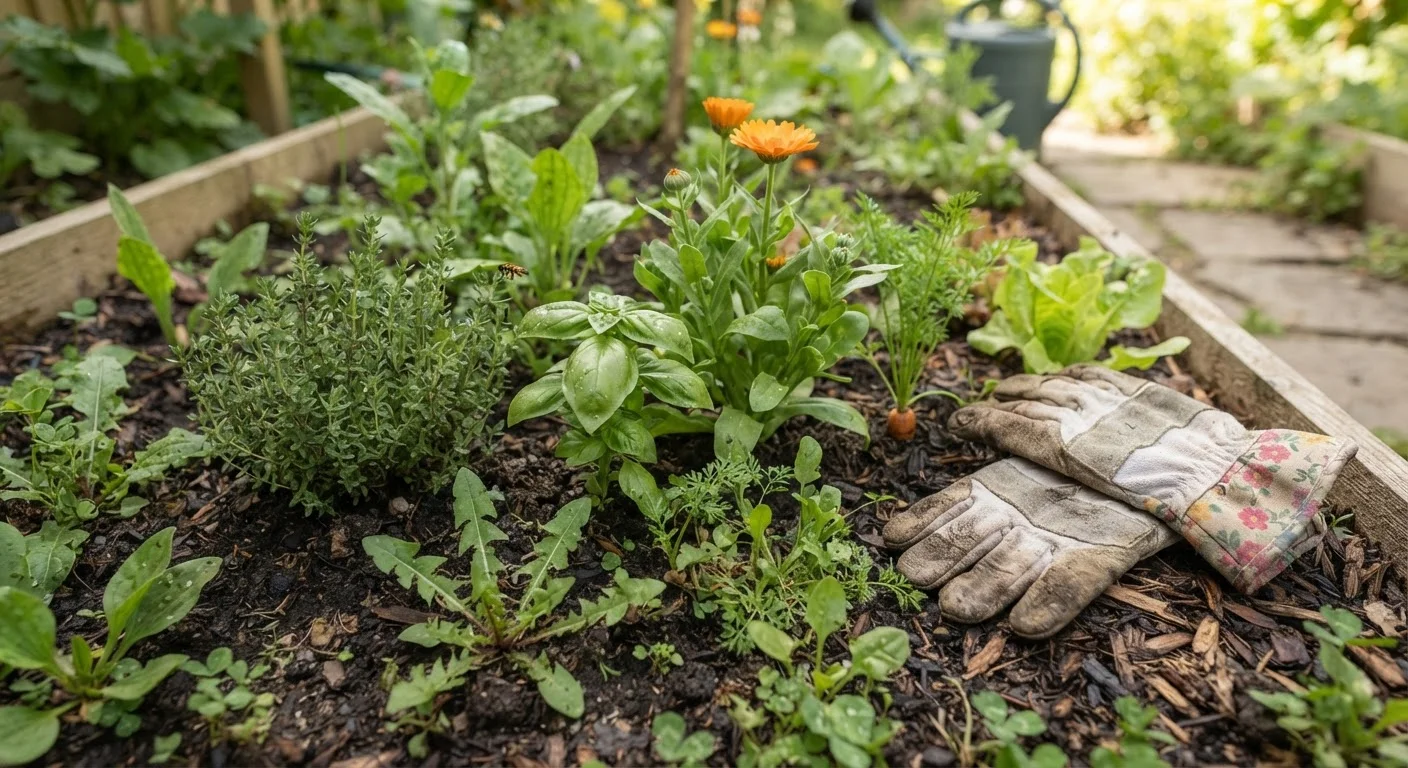
A 2-3 inch layer of organic mulch (wood chips, straw, shredded leaves) blocks sunlight from reaching weed seeds and suppresses germination significantly. Mulch also retains soil moisture and moderates temperature - benefits that extend well beyond weed control. Refresh mulch annually as it decomposes. Raised bed gardens benefit especially from consistent mulching between plants.
Pre-Emergent Herbicides
These prevent weed seeds from germinating and are most effective when applied before soil temperatures trigger germination - typically early spring for warm-season weeds. They will not kill existing plants. Read product labels carefully; some pre-emergents can also inhibit desired grass or vegetable seeds.
Post-Emergent Herbicides
Applied to actively growing weeds, these are categorized as selective (targeting specific plant types) or non-selective (killing most vegetation contacted). Selective broadleaf herbicides can treat dandelions and clover in lawns without harming grass. Non-selective herbicides are suited to paths, driveways, or areas being fully cleared.
When to Consider a Licensed Applicator
For large-scale or persistent infestations - particularly with invasive species like field bindweed or Japanese knotweed - a licensed pesticide applicator may be the most effective and safest option. Many states require applicator licensing for commercial herbicide use. Check with your local cooperative extension office for guidance specific to your region and the species involved.
Proper lawn watering practices also influence weed pressure - shallow, frequent watering encourages weedy shallow-rooted species rather than the deep root systems that make desirable turf competitive.