
Savings and Debt Repayment: A Complete Guide to Taking Control of Your Finances

Key Takeaways
Why Both Goals Matter at the Same Time
Most personal finance advice treats saving and debt repayment as a binary choice - pay off debt first, then save. Real life rarely works that neatly. An unexpected car repair or medical bill can wipe out months of debt progress if you have no cushion to fall back on, forcing you right back into borrowing.
The smarter framing is to treat savings and debt repayment as two levers on the same machine. Pulling both - even modestly - creates a more stable financial foundation than sprinting toward one goal at the expense of the other. Start with a clear monthly budget so you know exactly how much you have to work with before dividing it between these two priorities.
~37%
Americans with no emergency savings
A Bankrate survey found that roughly 37% of U.S. adults would not be able to cover an unexpected $400 expense with cash or savings.
$6,000+
Average U.S. credit card balance per holder
Federal Reserve and industry data consistently show average revolving credit card balances exceeding $6,000 per cardholder in recent years.
20%+
Typical credit card APR
Federal Reserve data shows average credit card interest rates have exceeded 20% annually in recent rate environments.
Building Your Emergency Fund First
Before directing significant money toward debt beyond minimum payments, most financial educators recommend establishing a small emergency fund - commonly cited as $500 to $1,000. This buffer is not about comfort; it is about preventing new debt. Without it, any disruption pulls you back to your credit card.
Where you keep this fund matters less than keeping it accessible and separate from your checking account. A basic savings account works. The goal at this stage is stability, not yield.
Automate Your Starter Fund Contributions
Set up an automatic transfer of even $25-$50 per paycheck to a separate savings account. Automation removes the decision from your plate each month, and small amounts accumulate faster than most people expect. Treat it like a non-negotiable bill until you hit your starter target.
Once you have a starter cushion and your high-interest debt is eliminated, the longer-term target is generally three to six months of essential living expenses - though the right amount depends on factors like job stability and household income variability.
Understanding Your Debt: What You Owe and What It Costs
Not all debt is equal. A federal student loan at 5% interest is fundamentally different from a credit card charging 24%. To make smart repayment decisions, list every balance you carry along with its interest rate, minimum payment, and remaining term.
This inventory reveals where your money is actually going. High-interest revolving debt - primarily credit cards - typically costs far more over time than the balance suggests because interest compounds monthly. Understanding this is the foundation of any effective payoff plan. For a deeper look at how the broader rate environment shapes your strategy, see how interest rate environments affect your approach.
High-Interest Debt Erodes Wealth Quickly
If your credit card charges 22% APR and your savings account earns 4-5%, you are losing roughly 17 cents on every dollar you save instead of using it to pay down that card. This does not mean saving is wrong - it means high-interest debt deserves urgent, focused attention. Understand the cost of each balance before deciding where extra dollars go.
Choosing a Debt Repayment Strategy
Two frameworks dominate personal finance guidance on debt payoff:
- Debt Avalanche: Pay minimums on all balances, then direct every extra dollar to the account with the highest interest rate. This method minimizes total interest paid over time and is mathematically optimal.
- Debt Snowball: Pay minimums everywhere, then attack the smallest balance first regardless of rate. Eliminating accounts quickly creates a psychological win that many people find sustaining.
Neither is universally correct. If motivation is your biggest obstacle, the snowball may keep you in the game. If you are disciplined and carrying large, high-rate balances, the avalanche saves more money. Some people use a hybrid - targeting a small balance first for momentum, then switching to highest-rate order.
Before picking a repayment method, check whether any of your debts offer a 0% promotional rate that is about to expire. Paying down a card right before its rate resets to 25% is often the highest-return move available.
Promotional rates create temporary windows where the math changes dramatically. Missing that expiration can mean thousands of dollars in avoidable interest.
When you pay off a debt, do not absorb that freed cash into general spending. Redirect the full former payment immediately to the next target or to savings before lifestyle inflation sets in.
Behavioral research consistently shows that windfall and freed-up cash is quickly absorbed into spending unless it is allocated proactively and immediately.
Whichever method you choose, automate at least your minimum payments to protect your credit and avoid late fees.
Doing Both: Saving and Paying Down Debt Simultaneously
Once your starter emergency fund exists, you do not have to choose between saving more and paying down debt faster. A split allocation - for example, directing 60% of extra monthly cash toward debt and 40% toward savings - lets you make progress on both fronts. The exact ratio depends on your interest rates, risk tolerance, and how close you are to a complete emergency fund.
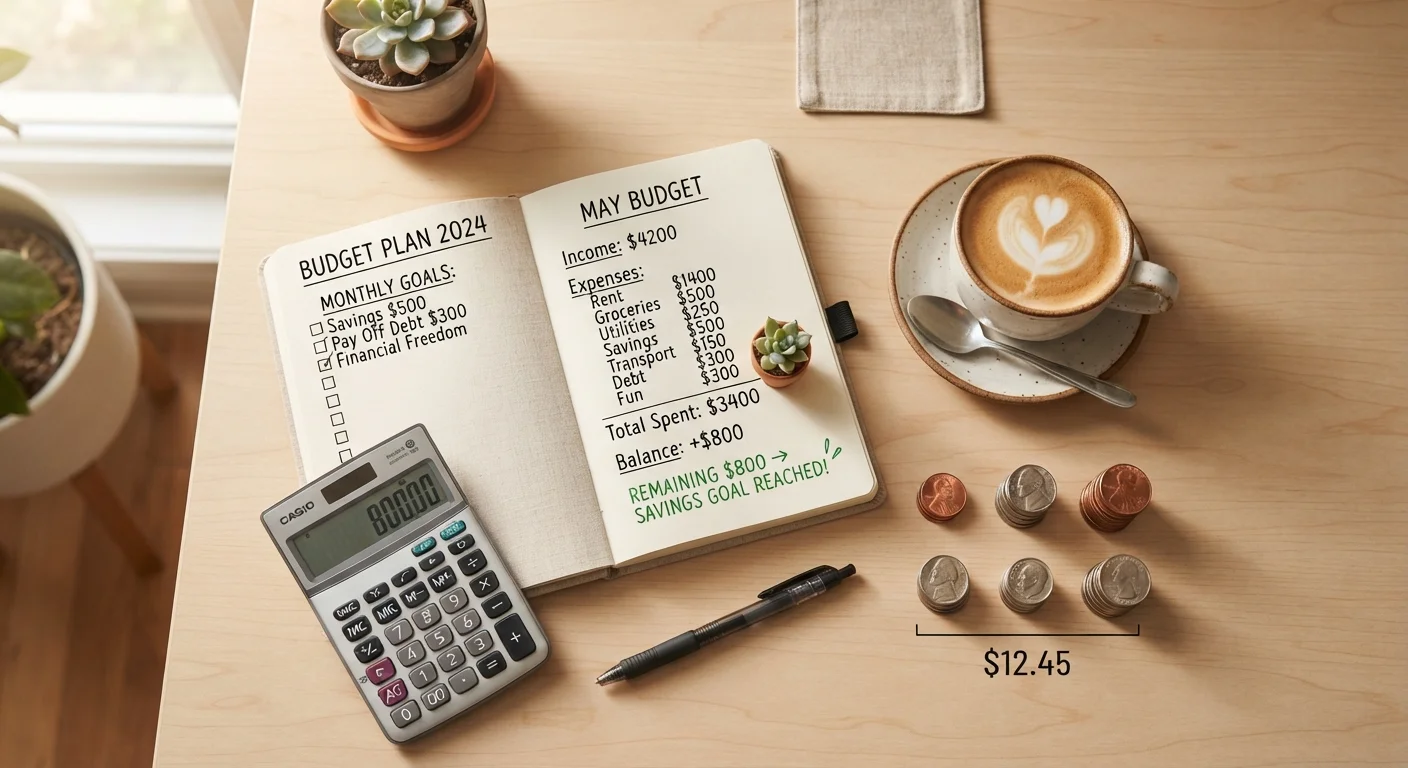
The practical budget template for doing both at once walks through how to structure this split on a real income. The key insight is that even small, consistent contributions to savings compound in security, while even small extra payments accelerate debt payoff through reduced interest accrual.
“Personal finance is more personal than it is finance. The best plan is the one you will actually stick to - not the one that looks perfect on a spreadsheet.”
— Carl Richards, Certified Financial Planner and author of 'The Behavior Gap'
Explore the everyday money habits hub for quick tactics that free up additional dollars for this dual approach.
Staying on Track Over Time
A plan you set once and never revisit will drift. Schedule a monthly check-in - even fifteen minutes - to confirm your allocations still make sense relative to your balances and income. Major life events (a raise, job loss, new expense) should trigger an immediate review.
As high-interest debts are eliminated, redirect those freed-up minimum payments to the next target or to expanding your emergency fund toward the full three-to-six-month goal. This is sometimes called a debt payoff cascade - the payment you were making to one balance rolls directly into the next. It accelerates progress without requiring any additional income.
For broader context on building the habits that sustain all of this, the budgeting basics hub covers tracking, spending categories, and monthly reviews in plain language.
Don't Skip Minimum Payments to Save Faster
Missing minimum debt payments triggers late fees, penalty interest rates, and credit score damage that can increase your total cost of debt significantly. Always cover minimums on every account before directing extra funds anywhere else - savings or accelerated payoff included.
This article is for general informational and educational purposes only and does not constitute personalized financial, tax, or legal advice. Consult a qualified financial professional for guidance specific to your circumstances.