

Key Takeaways
Option A
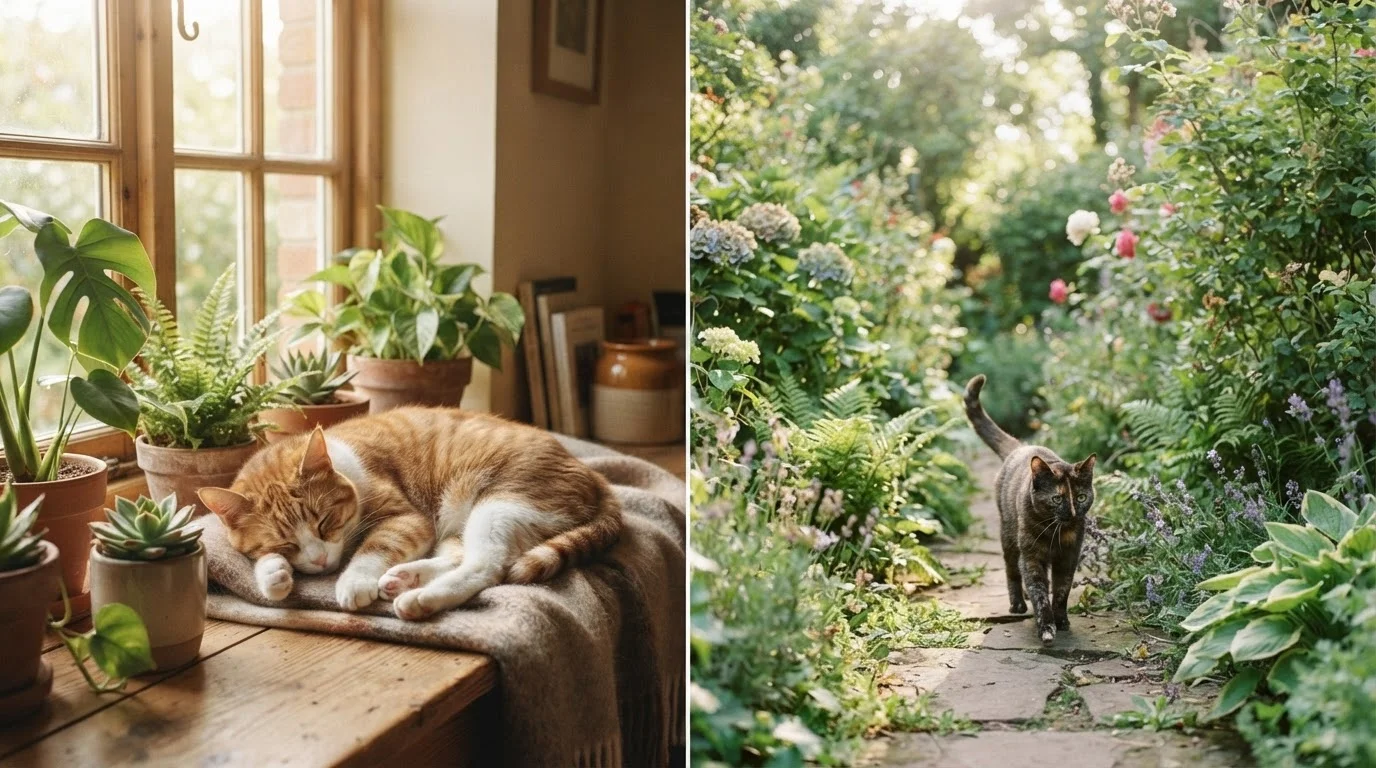
Indoor Cats
The protected, enrichment-dependent lifestyle.
Best for: Cats in urban or suburban environments where outdoor hazards - traffic, predators, disease - are significant concerns.
Option B
Outdoor Cats
The free-ranging, stimulation-rich lifestyle.
Best for: Cats in lower-density rural areas where owners can mitigate risks and the cat has a strong roaming disposition.
If your cat lives in a city or high-traffic suburban area
Indoor Cats
Urban hazards including vehicles, stray animals, and toxin exposure make full outdoor access genuinely high-risk. A well-enriched indoor environment is a safer, responsible choice.
If your cat has a history of anxiety or stress indoors
Outdoor Cats
Some cats display persistent stress behaviors when confined. Controlled outdoor access, ideally supervised, may meaningfully improve their quality of life.
If you want the benefits of outdoor stimulation with reduced risk
Indoor Cats
A catio, enclosed garden run, or harness training lets indoor cats experience fresh air and sensory variety without uncontrolled roaming dangers.
If you live in a rural area with low traffic and space to roam
Outdoor Cats
Rural settings reduce some urban-specific risks, though parasites, wildlife encounters, and disease exposure remain considerations regardless of location.
If your cat is elderly or has a chronic health condition
Indoor Cats
Senior and health-compromised cats benefit from a predictable, controlled environment that makes monitoring their condition and managing care far easier.
Lifespan and Health Outcomes
One of the most-cited differences between indoor and outdoor cats is lifespan. Veterinary organizations generally report that indoor cats live significantly longer on average than their outdoor counterparts - estimates typically place indoor cat lifespans between 12 and 18 years, compared to figures as low as 2 to 5 years for free-roaming cats, though ranges vary depending on geography and individual circumstance.
The gap reflects accumulated risk exposure rather than any inherent biological difference. Outdoor cats encounter vehicles, predatory wildlife, territorial fights, and infectious diseases spread through contact with other cats - including feline leukemia virus (FeLV) and feline immunodeficiency virus (FIV). They are also more likely to ingest parasites or toxins. Indoor cats bypass most of these threats by default.
That said, the indoor lifestyle carries its own health considerations. Reduced activity and high-calorie diets contribute to obesity in indoor cats, which in turn elevates risk for diabetes, joint problems, and urinary issues. Several persistent cat health myths - including the idea that outdoor cats are automatically healthier because they're more active - deserve scrutiny when weighing this decision.
| Criterion | Indoor Cats | Outdoor Cats |
|---|---|---|
| Average lifespan | 12-18 years (generally) | 2-10 years (highly variable) |
| Injury and trauma risk | Low | Significantly higher |
| Infectious disease exposure | Minimal with no outdoor contact | Elevated (FeLV, FIV, rabies) |
| Parasite risk | Low to moderate | Higher; regular prevention needed |
| Natural stimulation | Requires deliberate enrichment | Environment provides naturally |
| Obesity risk | Higher without active management | Generally lower due to activity |
| Wildlife predation impact | None | Cats kill billions of birds annually |
| Veterinary monitoring ease | Easier; symptoms more visible | Harder; injuries may go unnoticed |
Behavioral Needs and Enrichment
Cats are predators with a strong drive to stalk, chase, climb, and explore. Outdoor access satisfies much of that drive naturally - novel smells, variable terrain, and live prey offer continuous mental stimulation. The behavioral case for outdoor access is real, particularly for cats that show signs of frustration or under-stimulation when confined.
Indoor cats don't lose those instincts - they simply need owners to meet them deliberately. Puzzle feeders, vertical space (cat trees, wall shelves), rotating toys, and regular interactive play sessions are not optional extras; they're essential care. If your cat is knocking things over, vocalizing excessively, or engaging in destructive scratching, these may signal unmet behavioral needs. Our guide on signs your cat may be under-stimulated walks through what to look for and how to respond.
Understanding your individual cat's temperament matters here. A low-drive, older cat may thrive contentedly indoors with modest enrichment, while a young, high-energy cat may show genuine stress when confined without adequate outlets. Learning to read your cat's body language helps you gauge whether their needs are being met.
Outdoor Access and Local Wildlife
Free-roaming cats are documented to have a significant impact on local bird and small mammal populations - a consideration that extends beyond individual cat welfare. Studies suggest outdoor and feral cats collectively account for substantial wildlife mortality in the US each year. This ecological dimension is increasingly cited by conservation organizations as a reason to consider contained or supervised outdoor models rather than unrestricted roaming, even in rural settings.
The Middle Ground: Supervised and Contained Outdoor Access
The indoor/outdoor binary has a practical alternative that many cat owners find effective: structured outdoor access. Catios - enclosed outdoor structures attached to windows or doors - allow cats to experience fresh air, sunlight, and sensory variety without uncontrolled roaming. They've grown substantially in popularity as owners seek compromises that serve both safety and enrichment goals.
Harness and leash training is another option, though it requires patience and works best when introduced gradually during kittenhood or early adulthood. Not all cats will accept a harness, and forcing the issue can create lasting aversion. Supervised garden time - where the owner is present and the space is secure - can also work in lower-density environments.
These middle-ground approaches are worth considering in the context of your cat's full care picture. As part of responsible cat ownership, the goal is matching your cat's environment to their species-specific needs, individual temperament, and health status - not defaulting to convenience or convention.
12-18 yrs
Typical indoor cat lifespan
Veterinary sources commonly cite this range for well-cared-for indoor-only cats, compared to significantly lower averages for free-roaming cats.
~1.3-4B
Birds killed by cats annually in the US
A widely referenced estimate from a 2013 study published in Nature Communications attributed the majority of this mortality to free-roaming cats.
50%+
Higher obesity prevalence in indoor cats
Research consistently finds indoor cats are at elevated risk of overweight and obesity compared to outdoor cats, driven by reduced activity and ad-libitum feeding.