

| Primary communication mode (cat-to-cat) | Body language and scent |
| Meowing directed at | Mostly humans, not other cats |
| Trust signal to watch for | Slow blink |
| Warning sign: do not handle | Ears fully flattened, puffed tail |
| Belly exposure means | Deep trust - not always a touch invitation |
| Raised tail greeting indicates | Friendliness and confidence |
Why Body Language Matters More Than Vocalization
Cats are not naturally vocal animals in the wild. Meowing evolved largely as a communication tool directed specifically at humans - but the deeper, more reliable signal system cats use with each other (and still carry into our homes) is body language. Learning to read it accurately helps you respond appropriately to your cat's needs, reduce accidental conflict, and build a stronger bond.
Unlike dogs, cats rarely broadcast emotions loudly. Instead, signals are often subtle, layered, and context-dependent. A cat's tail, ears, eyes, whiskers, and overall posture all transmit information simultaneously. No single signal tells the full story - reading the combination is what matters.
This is part of what makes cats feel "mysterious" to many owners. They aren't withholding; they're speaking fluently in a language that takes some learning. For a broader look at responsible cat care, see what responsible cat ownership involves.
Piloerection
The involuntary raising of fur along a cat's back or tail, making them appear larger. It typically signals fear, defensive aggression, or extreme arousal and is not under conscious control.
Slow blink
A deliberate, relaxed closing and opening of the eyes that cats use as a trust and affiliative signal. Returning a slow blink to your cat is widely recognized as a way to reinforce calm interaction.
Airplane ears
Informal term for ears rotated sideways and flattened, resembling airplane wings. This posture indicates anxiety, irritation, or early-stage fear and is a warning to reduce stimulation.
Scent-marking (allorubbing)
The behavior of rubbing the face or body against a person or object to deposit scent from facial glands. When directed at a person, it typically signals social bonding and affiliation.
Loaf position
A resting posture where a cat tucks all four paws beneath the body, resembling a loaf of bread. It indicates relaxation combined with mild alertness - comfortable but not fully vulnerable.
Decoding the Key Body Language Signals
Below are the most reliable indicators to watch, organized by body part.
Tail Position
- Tail raised high, possibly with a slight curl at the tip: Confidence, friendliness, and an invitation to interact. This is a greeting posture.
- Tail tucked low or between legs: Fear, submission, or discomfort. Avoid pushing interaction.
- Puffed-out tail (piloerection): Defensive fear or high arousal - the cat is trying to appear larger. Back off and give space.
- Slow, low tail lash: Agitation building. Stop whatever is triggering it. This is different from the happy wag seen in dogs.
- Tail wrapped around another cat or your leg: Social bonding and affection.
Ear Angle
- Forward-facing ears: Engaged, alert, interested.
- Ears rotated sideways or flat ("airplane ears"): Anxiety, irritation, or fear. A sign to reduce stimulation.
- Ears fully flattened against the skull: Defensive aggression or intense fear. Do not attempt to handle the cat.
Eyes and Slow Blinks
- Slow blink: One of the clearest trust signals a cat gives. Returning a slow blink communicates safety and calm back to them.
- Dilated pupils in low light: Normal. Dilated pupils in bright light signal fear, extreme excitement, or pain.
- Hard, direct stare: A challenge or threat. Avoid prolonged eye contact with an unfamiliar or agitated cat.
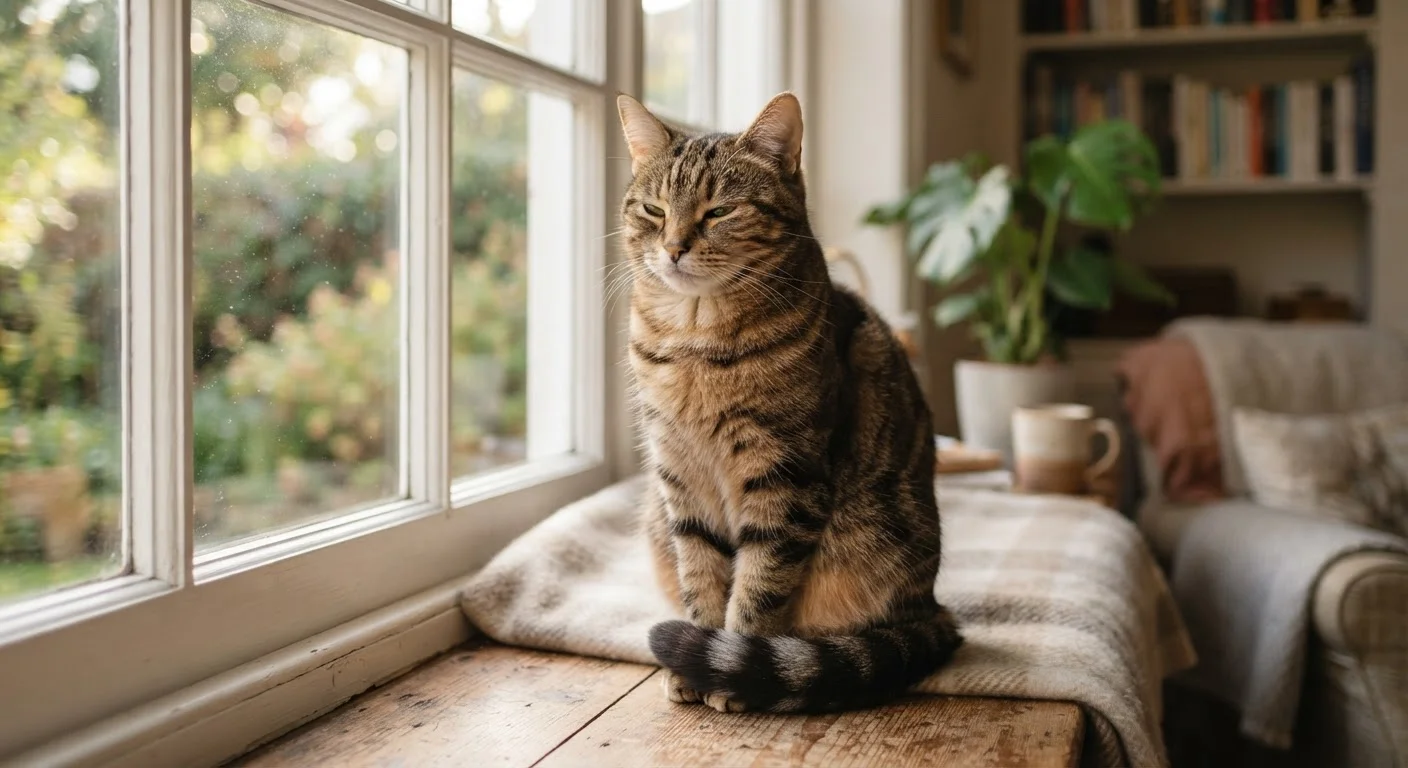
- Half-closed eyes in a resting cat: Contentment and relaxation.
Posture and Position
- Loaf position (paws tucked under body): Relaxed but alert - comfortable enough to rest without full vulnerability.
- Belly exposed: Often misread as an invitation to touch. It signals deep trust and relaxation, but many cats will swat if you actually reach for the belly - respect the signal without assuming it's a request.
- Arched back with raised fur: Defensive threat display, not playfulness.
- Rubbing face or body against you: Scent-marking as social bonding - a genuine sign of affiliation.
| Primary communication mode (cat-to-cat) | Body language and scent |
| Meowing directed at | Mostly humans, not other cats |
| Trust signal to watch for | Slow blink |
| Warning sign: do not handle | Ears fully flattened, puffed tail |
| Belly exposure means | Deep trust - not always a touch invitation |
| Raised tail greeting indicates | Friendliness and confidence |
Context Is Everything
The same signal can mean different things depending on situation. Dilated pupils during play are excitement; dilated pupils in a cat hunched in a corner may indicate pain. Always read signals in clusters and within context.
Pay particular attention to changes from your cat's individual baseline. A normally confident cat suddenly hiding or showing flattened ears is more significant than the same behavior in a habitually shy cat. Persistent behavioral shifts - especially alongside other physical changes - warrant a veterinary conversation. Cats commonly mask discomfort, so subtle cues matter; the same principle applies to signs of illness that owners commonly miss in other small pets.
Environmental stress also shapes how cats express themselves. A cat experiencing boredom or under-stimulation may redirect frustration into behaviors that look aggressive or attention-seeking. Learn the signs your cat may be under-stimulated to distinguish stress behaviors from genuine communication. Curious about why your cat intentionally knocks objects off surfaces? That, too, is communicative - explore what that behavior actually signals.
When Body Language Signals a Health Issue
Sudden changes in posture or behavior - such as a normally social cat hiding, crouching protectively, or showing unprovoked aggression - can indicate pain or illness rather than a purely behavioral issue. Cats are instinctively inclined to mask vulnerability. If a change in body language persists for more than a day or two without an obvious environmental cause, consult your veterinarian. This article provides general educational information and is not a substitute for professional veterinary guidance.