

Key Takeaways
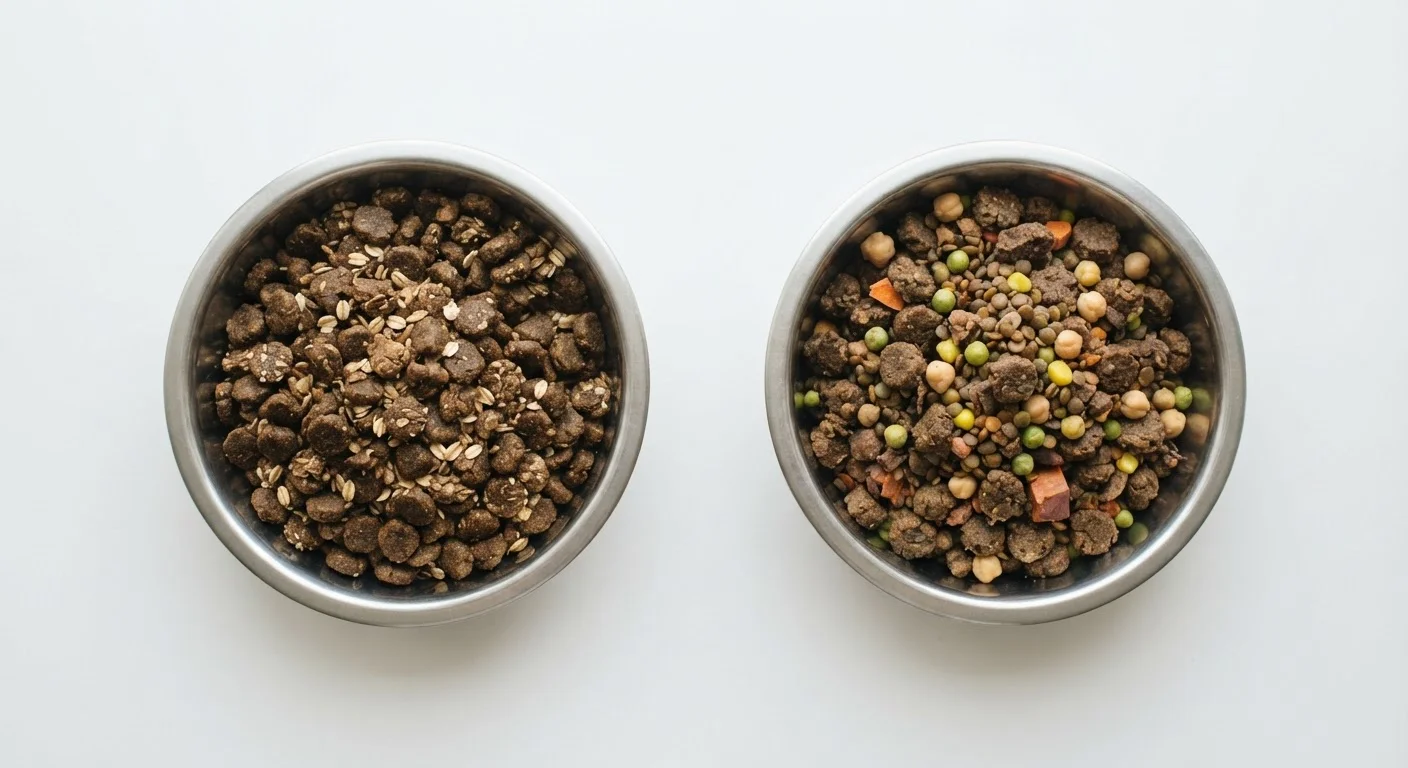
Option A
Grain-Free Dog Food
The popular alternative that swaps grains for legumes and starches.
Best for: Dogs with confirmed grain allergies or specific dietary needs under veterinary supervision.
Option B
Grain-Inclusive Dog Food
The established, research-backed standard for canine nutrition.
Best for: Most healthy adult dogs seeking a nutritionally complete and balanced daily diet.
If your dog has no diagnosed food allergy or sensitivity
Grain-Inclusive Dog Food
Grain-inclusive diets have a long track record of supporting canine health and meet AAFCO nutritional standards without the uncertainties surrounding grain-free formulations.
If your vet has confirmed a grain allergy
Grain-Free Dog Food
In the rare cases where grains are a confirmed allergen, a grain-free diet managed with veterinary oversight can be appropriate.
If you have a large or giant breed dog prone to heart issues
Grain-Inclusive Dog Food
Given the FDA's ongoing investigation into DCM and grain-free diets, grain-inclusive options are the more cautious choice for breeds already at elevated cardiac risk.
If you want maximum ingredient transparency
Grain-Inclusive Dog Food
Grain-inclusive formulas have decades of feeding trial data and published nutritional research behind them, making it easier to verify safety and adequacy.
What Sets These Two Diet Types Apart
At its core, the distinction is straightforward: grain-inclusive dog foods contain ingredients such as rice, oats, barley, or corn, while grain-free formulas omit those cereals entirely. However, grain-free does not mean low-carbohydrate. Most grain-free products replace grains with legumes - peas, lentils, chickpeas - or starchy vegetables like potatoes and sweet potatoes to maintain kibble structure and calorie density.
Grains have been part of commercial dog food since its inception, and dogs have evolved digestive enzymes that allow them to process starch effectively. Whole grains also contribute dietary fiber, B vitamins, and minerals. Grain-free diets emerged largely as a response to human dietary trends and the perception that grains are filler ingredients - a characterization that nutrition researchers generally dispute.
To understand what's actually listed on either type of bag, see our guide on reading a dog food label without getting lost.
| Criterion | Grain-Free Dog Food | Grain-Inclusive Dog Food |
|---|---|---|
| Primary carbohydrate source | Legumes, potatoes, tapioca | Rice, oats, barley, corn |
| DCM risk signal | Under FDA investigation | No known association |
| Suitable for grain allergies | Yes (vet-confirmed cases) | Not appropriate |
| Long-term research base | Limited; relatively recent | Decades of feeding trial data |
| Fiber and micronutrient profile | Varies; depends on legume mix | Consistent; whole grains contribute B vitamins |
| AAFCO compliance | Available; verify per product | Widely available |
The DCM Debate: What the Science Currently Says
In 2018, the U.S. Food and Drug Administration (FDA) began investigating a potential association between grain-free diets and dilated cardiomyopathy (DCM) - a serious heart condition - in dogs. The investigation was triggered by reports of DCM in breeds not typically genetically predisposed to the disease, with a disproportionate number of affected dogs eating grain-free, legume-heavy foods.
As of the FDA's most recent public updates, researchers have not established a definitive causal mechanism. Taurine deficiency has been proposed as one pathway, since certain legumes may interfere with taurine synthesis or bioavailability in dogs. However, the picture remains complex, and the FDA investigation is ongoing. Veterinary cardiologists generally advise caution - particularly for large and giant breeds already at higher cardiac risk.
FDA Investigation Status
The FDA's inquiry into diet-associated DCM remains open and has not resulted in a product recall or a definitive causal finding. The agency continues to work with veterinary cardiologists and nutritionists to evaluate the data. Pet owners with concerns should discuss their dog's specific diet with a veterinarian rather than drawing conclusions from the investigation alone.
This does not mean grain-free food is proven harmful for every dog, but it does mean the risk-benefit calculation deserves serious discussion with your veterinarian before making a switch.
Allergies, Sensitivities, and the Grain Myth
One of the most persistent reasons owners choose grain-free food is the belief that their dog has a grain allergy. Genuine grain allergies do exist but are considered uncommon. Research consistently shows that the most frequent dietary allergens in dogs are animal proteins - particularly beef, dairy, and chicken - not grains.
If your dog shows signs of a food sensitivity such as chronic itching, ear infections, or gastrointestinal upset, a veterinarian-guided elimination diet is the appropriate diagnostic step. Eliminating grains without guidance may mask the real allergen while adding unnecessary dietary complexity. For a closer look at skin-related symptoms that can overlap with food reactions, our article on common dog skin conditions covers how to recognize and distinguish them.
~1-2%
Dogs affected by true food allergies
Veterinary dermatology estimates suggest food allergies affect a small minority of dogs, with grains rarely identified as the primary trigger.
500+
DCM cases reported to FDA
The FDA received over 500 reports of DCM potentially linked to diet between 2014 and 2019, prompting an ongoing investigation into grain-free formulas.
~90%
Protein-source allergens in dogs
Studies in veterinary allergy literature indicate the majority of confirmed food hypersensitivities in dogs involve animal proteins rather than grains.
For a broader look at how grain-free compares within the wider landscape of feeding approaches, see our breakdown of dry food, wet food, and raw diets.
Making the Decision With Your Vet
Neither diet type suits every dog universally. The right choice depends on your dog's health history, breed, age, and any confirmed sensitivities. Before switching, your vet can rule out non-dietary causes of symptoms, recommend an appropriate elimination trial if allergy testing is warranted, and flag whether your dog's breed carries elevated DCM risk.
When evaluating any diet, look for an AAFCO nutritional adequacy statement - it indicates the food meets minimum nutritional requirements either through formulation or feeding trials. A statement based on feeding trials provides a higher level of assurance. Whether grain-free or grain-inclusive, the quality of protein sources, overall ingredient balance, and manufacturer transparency matter more than the presence or absence of grains alone.
This article is for general informational purposes only and does not constitute veterinary or medical advice. Always consult a licensed veterinarian before making significant changes to your dog's diet, especially if your dog has existing health conditions.