

Key Takeaways
Why Community Tank Planning Matters
Building a peaceful community aquarium is one of the most rewarding experiences in the freshwater fishkeeping hobby - and one of the most commonly mishandled. Walk into any pet store and you'll see dozens of species crowded together in display tanks, but that proximity doesn't mean they belong together at home.
True compatibility means matching water temperature, pH range, hardness preferences, and behavioral tendencies. A fish that nips fins, defends territory aggressively, or requires dramatically different water chemistry can destabilize an entire tank. Conversely, species that share the same general environment and exhibit calm, non-predatory behavior can coexist for years with minimal conflict.
If you're still in the setup phase, our guide to setting up a freshwater fish tank covers the foundational steps - from cycling your water to selecting your first inhabitants. Once your tank is established, the species below represent some of the most reliably peaceful options for a community setup.
Research Before You Buy
Before purchasing any fish, look up its adult size, preferred water parameters, and typical temperament. A species that appears calm as a juvenile - like many cichlids - may become territorial once mature. Cross-referencing two or three sources helps confirm that compatibility claims are consistent and not anecdotal.
Freshwater Species Known for Peaceful Community Behavior
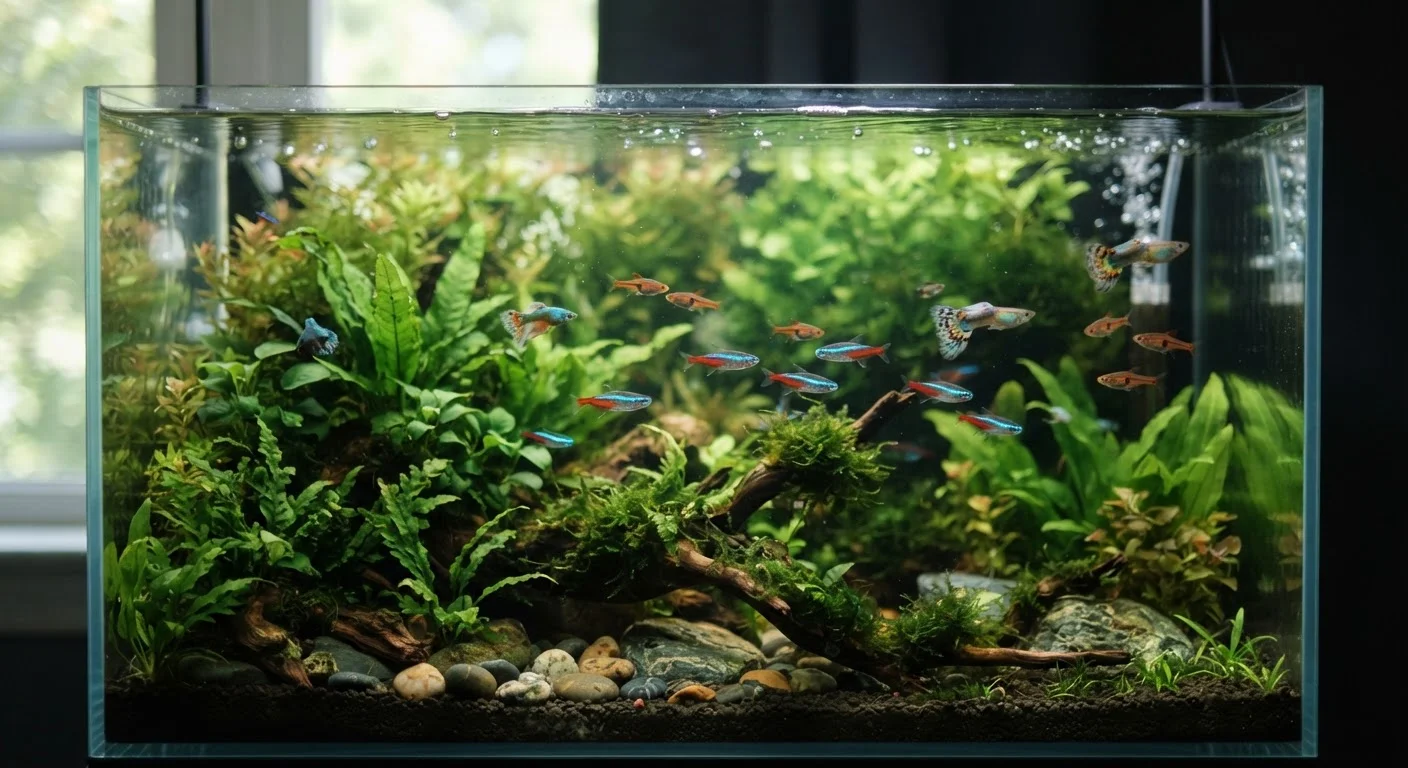
Neon Tetra
One of the most widely kept freshwater fish in the world, neon tetras are small, schooling fish that rarely bother tankmates. They prefer soft, slightly acidic water (pH 6.0-7.0) and thrive at temperatures between 72-78°F. Their small mouths mean they pose no threat to similarly sized fish, and their active mid-water schooling behavior adds visual dynamism without aggression.
Keep them in groups of at least six to reduce stress and encourage natural schooling. Avoid pairing them with large or predatory fish - their small size makes them vulnerable despite their peaceful temperament.
Neon tetras are visually striking, genuinely peaceful, and among the most forgiving community fish for hobbyists.
Corydoras Catfish
Corydoras are armored bottom-dwellers that spend most of their time sifting through substrate for food. They are non-aggressive, pose no threat to tankmates, and provide a practical benefit by consuming leftover food that sinks to the tank floor. Most species prefer temperatures in the 72-78°F range and neutral to slightly acidic pH.
Because corydoras are social among their own kind, they do best in groups of three or more. They are compatible with nearly any peaceful mid- or upper-water species, making them one of the most versatile community tank additions available.
Corydoras catfish fill the bottom zone without aggression and actively help keep substrate clean.
Harlequin Rasbora
Harlequin rasboras are a hardy, adaptable schooling fish that pair well with a wide range of peaceful species. They prefer slightly soft, acidic to neutral water (pH 6.0-7.5) and temperatures around 72-77°F. Their calm temperament and mid-water swimming habits make them excellent companions for tetras, danios, and dwarf gouramis alike.
Unlike some schooling fish, harlequin rasboras remain relatively calm even when kept in smaller groups, though groups of six or more still show noticeably more natural behavior and reduced stress.
Harlequin rasboras are tolerant of a broad pH range, making them compatible with many common community setups.
Dwarf Gourami
Dwarf gouramis are labyrinth fish - they breathe surface air as well as using gills - and bring a splash of color to the upper portion of the tank. Males can show mild territorial behavior toward other dwarf gouramis, so it's generally advisable to keep only one male per tank unless the aquarium is large enough to establish separate territories.
They are otherwise peaceful with non-gourami tankmates and adapt well to a wide variety of planted community setups. They prefer warm, slow-moving water with ample plant cover, mimicking the densely vegetated streams of their native South and Southeast Asia.
Dwarf gouramis add bold color at the surface level and coexist peacefully with most non-aggressive species.
Zebra Danio
Zebra danios are energetic, fast-moving schooling fish that are exceptionally resilient across a range of water conditions. They tolerate temperatures from around 65-77°F and a pH range of 6.5-7.5, making them compatible with many other community species. Their constant motion tends to be playful rather than aggressive, though their activity level can occasionally stress slower, more timid tankmates.
Avoid pairing them with long-finned species like fancy guppies or bettas, as danios may nip extended fins in confined spaces. In a well-sized tank with appropriate companions, they are among the easiest community fish to maintain.
Zebra danios are among the hardiest and most adaptable community fish, tolerating a wide range of water conditions.
Otocinclus Catfish
Often called 'otos,' otocinclus catfish are tiny algae-eating fish that attach to glass, plants, and décor to graze continuously. They are entirely non-aggressive and pose absolutely no threat to other fish. Their primary role in a community tank is biological - they help control soft algae growth without disturbing the ecosystem.
Otos are more sensitive to water quality than many community fish and require a fully cycled, well-maintained aquarium. They do best in groups of three or more, as lone individuals tend to become stressed. Their ideal companions are other small, gentle species in a planted setup.
Otocinclus catfish provide natural algae control and are among the most peaceful fish in any freshwater setup.
No Community Tank Is Universally Safe
Even among reliably peaceful species, individual fish can occasionally display unexpected aggression due to stress, illness, or competition over food and territory. Monitor new additions closely during the first two weeks and be prepared to separate fish if persistent conflict occurs. General compatibility guidelines describe typical behavior - they cannot guarantee outcomes in every tank.
Building a Balanced Community
Selecting compatible species is only half the equation. How you arrange and stock your tank shapes the long-term health of the community. Aim for representation across all three water column zones - surface swimmers, mid-water schooling fish, and bottom-dwellers - to reduce territorial overlap and competition for food.
Keep an eye on population ratios. Schooling fish like neon tetras and harlequin rasboras feel more secure - and behave more naturally - when kept in groups of six or more. Lone schooling fish often become stressed and may display erratic or even aggressive behavior out of character for the species.
Introduce new fish gradually and observe interactions over several days before declaring your community stable. Even typically peaceful species can display aggression when stressed by overcrowding, poor water quality, or an imbalanced male-to-female ratio. Regular water testing and consistent maintenance remain non-negotiable regardless of how compatible your species selection appears on paper.