

Key Takeaways
Why Setup Matters More Than You Think
A freshwater aquarium can be one of the most rewarding small-pet commitments you make - but skipping foundational steps is the number-one reason new tanks fail within the first few months. Fish are highly sensitive to water chemistry, temperature swings, and overcrowding. Unlike a dog or cat that can signal distress clearly, fish often show signs of illness only after problems have compounded.
Understanding what goes into a properly established tank before you bring any fish home will spare you frustration and, more importantly, protect the animals in your care. This guide walks you through every key phase: hardware selection, the nitrogen cycle, water conditioning, and choosing species that will coexist peacefully.
What you will need
Choosing and Assembling Your Equipment
Start with the right hardware. For a first-time setup, a tank between 20 and 55 gallons is a practical range - small enough to manage but large enough that water chemistry remains stable if something goes slightly off. Very small tanks (under 10 gallons) are deceptively difficult: temperature and ammonia levels spike quickly, leaving little margin for error.
Aquarium Tank (20-55 gallons recommended)
Provides the primary habitat; larger volumes maintain more stable water chemistry for beginners.
Hang-on-back or canister filter
Removes physical waste and houses beneficial bacteria essential for the nitrogen cycle.
Submersible heater with thermostat
Maintains a stable water temperature appropriate for the fish species you plan to keep.
Aquarium lighting
Supports plant growth and provides a natural day/night rhythm for fish.
Liquid water test kit
Accurately measures ammonia, nitrite, nitrate, and pH throughout the cycling process and beyond.
Substrate (gravel or sand)
Lines the tank floor, anchors plants, and provides surface area for beneficial bacteria.
Water conditioner/dechlorinator
Neutralizes chlorine and chloramines in tap water that would otherwise harm fish and beneficial bacteria.
Aquarium thermometer
Allows you to monitor water temperature independently of the heater's built-in gauge.
Assemble the equipment before adding any water. Rinse the tank, substrate (gravel or sand), and any decorations with clean water - never use soap or household cleaners. Position the tank on a sturdy, level surface away from direct sunlight and heating/cooling vents, both of which cause temperature fluctuations.
Cycling the Tank: The Non-Negotiable Step
The nitrogen cycle is the biological process that converts toxic fish waste (ammonia) into less harmful compounds through beneficial bacteria. A tank that hasn't completed this cycle will rapidly build up ammonia and nitrite - both lethal to fish even at low concentrations. Cycling typically takes 4-8 weeks and must happen before any fish are added.
Speed Up Cycling Safely
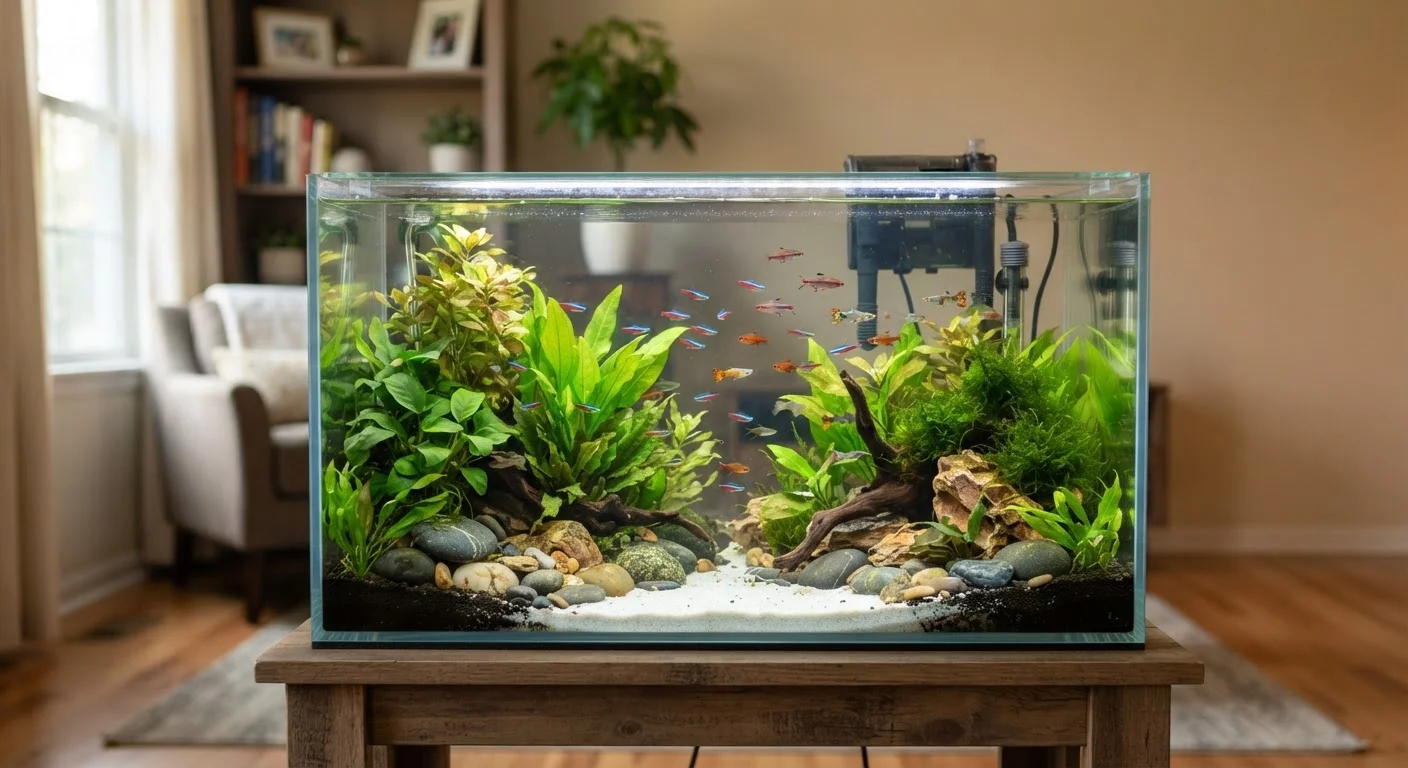
Adding live aquatic plants to the tank during cycling can help buffer ammonia levels and provide additional surface area for bacteria to colonize. Hardy plants like java fern, anubias, and hornwort are good choices that don't require special lighting or CO2. Plants won't replace the cycling process, but they contribute to a healthier overall environment from day one.
To start the cycle, add an ammonia source (a few drops of pure ammonia or a pinch of fish food) and run your filter continuously. Test the water every few days with a liquid test kit. You'll first see ammonia rise, then nitrite spike, and finally nitrate climb as the previous compounds fall. The cycle is complete when ammonia and nitrite both read 0 ppm and nitrate is detectable. At that point, do a 25-30% water change to lower nitrate before adding fish.
Some aquarists use bottled beneficial bacteria products to speed up the process, which can help, though results vary. Patience here pays off significantly.
Rinse and assemble the tank and equipment
Thoroughly rinse the tank, substrate, and all decorations with plain water - no soap or detergent of any kind. Place the substrate (2-3 inches deep), install the filter and heater per manufacturer instructions, and add dechlorinated water. Run all equipment for 24 hours to confirm everything is functioning correctly before starting the cycle.
Start the nitrogen cycle
Add a small ammonia source to kick off bacterial growth. A few drops of pure ammonia or a pinch of fish food every other day works well. Leave the filter running continuously - never turn it off during cycling, as the bacteria colony lives in the filter media. Keep the heater set to the target temperature for your future fish (typically 74-78°F for most community species).
Test water parameters regularly
Use your liquid test kit every 2-3 days to track ammonia, nitrite, nitrate, and pH. Log the results so you can see the cycle progressing. A typical pattern: ammonia rises first, then nitrite spikes as a second bacterial population develops, and finally both drop to zero as nitrate accumulates. This process usually takes 4-8 weeks.
Confirm the cycle is complete and do a water change
The cycle is complete when ammonia reads 0 ppm, nitrite reads 0 ppm, and nitrate is detectable (typically 10-40 ppm). At this point, perform a 25-30% water change to bring nitrate down before introducing fish. Treat all new water with a dechlorinator before adding it to the tank.
Add fish gradually and monitor closely
Introduce a small group of fish (3-5 individuals for a 20-gallon tank) and observe them closely for 1-2 weeks before adding more. Float the store bag in your tank for 15 minutes to equalize temperature, then slowly mix small amounts of tank water into the bag over another 15 minutes before releasing the fish. Test water parameters daily for the first week after each new addition.
Choosing Compatible Fish and Maintaining Water Quality
Once your cycle is complete, resist the urge to stock the tank all at once. Add fish gradually - a few at a time over several weeks - so the bacterial colony can grow to match the bio-load. Overstocking is a leading cause of chronic water quality problems.
Species compatibility goes well beyond size. Consider temperament, preferred water temperature, pH requirements, and swimming levels (top, middle, or bottom of the tank). For example, pairing fin-nipping species with long-finned fish creates ongoing stress and injury. Our guide to compatible community fish explores which freshwater species tend to cohabit well and why choosing the right neighbors matters as much as tank conditions.
Quarantine New Fish Before Adding Them
Whenever possible, keep newly purchased fish in a separate quarantine tank for 2-4 weeks before introducing them to your main aquarium. Fish from retail environments can carry parasites or pathogens that show no visible symptoms initially. Skipping quarantine is one of the most common ways disease spreads through an otherwise healthy tank.
Ongoing maintenance is straightforward once the tank is established. Perform a 25-30% water change weekly, vacuum the substrate to remove waste, and clean filter media with tank water (never tap water, which kills beneficial bacteria). Test water parameters weekly for the first few months, then every two weeks once the system is stable.
Setting up an aquarium shares something with other first-time projects - success comes from understanding the system before diving in. Much like starting a vegetable garden from scratch, the groundwork you lay at the beginning determines how easily everything grows from there.