

Key Takeaways
Option A
New Orleans, Louisiana
The electric, all-in Southern experience.
Best for: Travelers who want bold flavors, live music on every corner, and a city that genuinely never sleeps.
Option B
Savannah, Georgia
The slow-burn, deeply atmospheric escape.
Best for: Travelers drawn to walkable historic squares, ghost-tour intrigue, and a gentler, more contemplative Southern pace.
If you love live music and nightlife culture
New Orleans, Louisiana
The French Quarter and Frenchmen Street offer world-class jazz, brass bands, and a nightlife scene unlike anywhere else in the US.
If you want peaceful, photogenic walks and history
Savannah, Georgia
Savannah's 22 historic squares, draped in Spanish moss, are among the most atmospheric urban spaces in America - ideal for unhurried exploration.
If bold, complex cuisine is your priority
New Orleans, Louisiana
Creole and Cajun food traditions give New Orleans one of the most distinctive and celebrated dining cultures in the country.
If you're traveling as a couple seeking a romantic city break
Savannah, Georgia
Savannah's cobblestone streets, candlelit restaurants, and slower rhythm create a naturally romantic environment that's hard to replicate.
If you want maximum cultural immersion in a short trip
New Orleans, Louisiana
From the Garden District to the Warehouse Arts District, New Orleans packs enormous cultural variety into a compact, walkable footprint.
Atmosphere and Street Life
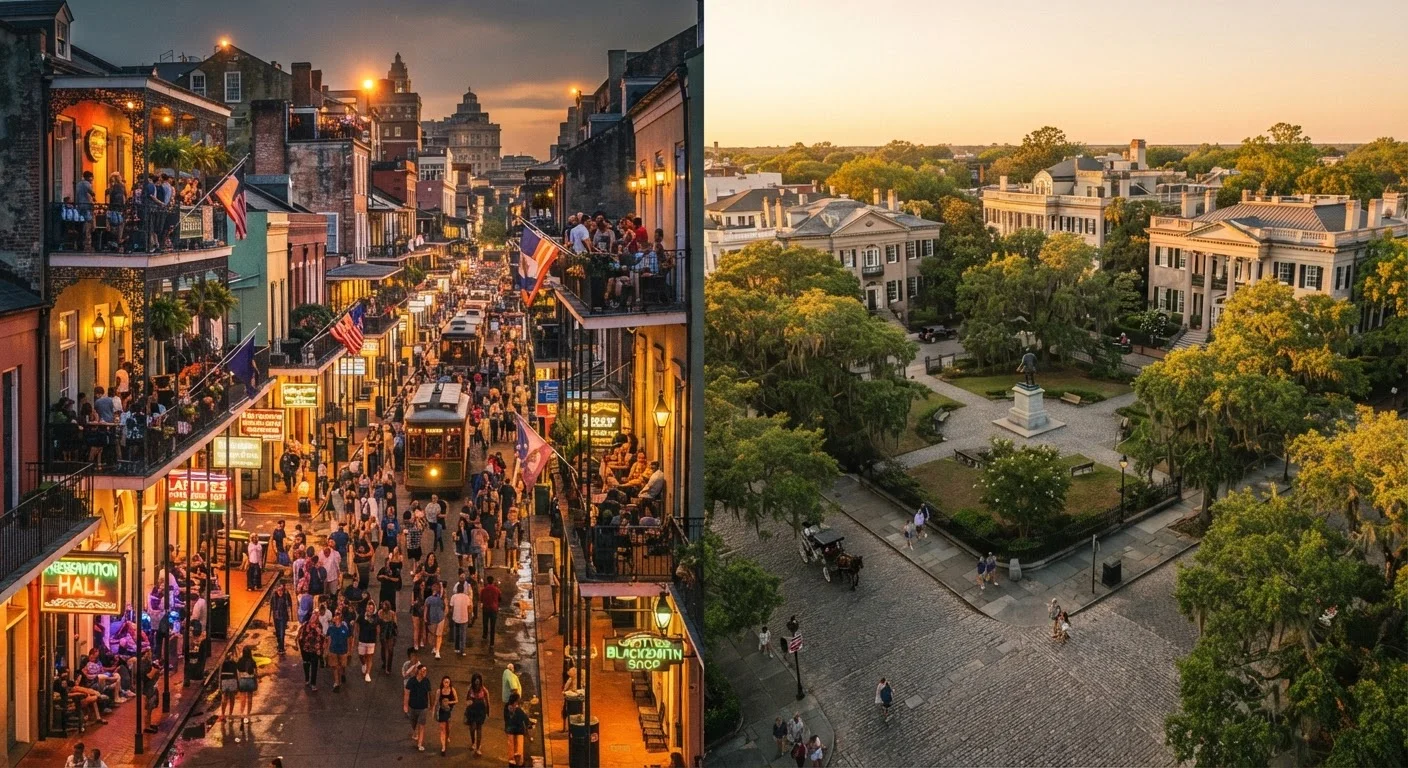
Walking into New Orleans feels like being dropped into a living celebration. The French Quarter hums with brass bands spilling out of doorways, the smell of beignets drifting from open café windows, and wrought-iron balconies overhead draped with ferns and string lights. The city is unabashedly loud, tactile, and alive at every hour. Even weekday afternoons carry an electric undercurrent that's part local culture, part theatrical performance.
Savannah operates on an entirely different frequency. Its 22 historic squares - each one a shaded, fountain-centered oasis - give the city a rhythm of pause and reflection. You don't rush through Savannah; you wander it. Chestnut Street and Jones Street are routinely cited among the most beautiful urban streets in America, and the Spanish moss hanging from ancient oaks genuinely earns its reputation. The atmosphere is Gothic romance rather than Mardi Gras energy.
Neither mood is superior - they simply suit different travelers. If you're deciding between a city break and something wilder, our guide to city breaks vs. nature retreats can help you frame what kind of experience you're actually after.
| Criterion | New Orleans | Savannah |
|---|---|---|
| Overall Vibe | Festive, loud, electric | Tranquil, atmospheric, romantic |
| Culinary Tradition | Creole and Cajun cuisine | Low-country Georgia cooking |
| Music Culture | World-class jazz and brass bands | Smaller, emerging live scene |
| Historic Walkability | Large, varied historic districts | Compact, square-centered layout |
| Best Season to Visit | Fall and spring (heat and storms peak in summer) | Spring and fall (summers are humid) |
| Crowds | Very busy; spikes around festivals | Moderate; busier in spring |
| Ghost Tour Culture | Present but competes with other draws | Major attraction; city leans into it |
Food, Drink, and Culinary Identity
New Orleans is one of America's great food cities - full stop. Creole and Cajun cuisines blend French, West African, Spanish, and Indigenous influences into dishes that are deeply layered and genuinely hard to find elsewhere. Gumbo, red beans and rice, po'boys, crawfish étouffée, and chargrilled oysters are staples, not novelties. The cocktail culture is equally serious: the Sazerac, the Ramos Gin Fizz, and the Obituary Cocktail all originated here, and bartenders take that heritage seriously.
Savannah's food scene has grown considerably in recent years, anchored by low-country Georgia cooking: shrimp and grits, she-crab soup, fried chicken, and peach desserts dominate menus. The City Market and Broughton Street corridor have attracted creative chefs who blend Southern tradition with contemporary technique. It's a smaller, quieter dining scene than New Orleans - but it's genuinely excellent on its own terms.
22
Historic squares in Savannah's city plan
Savannah's original 1733 city plan called for a grid of squares; 22 of the original 24 survive today as public green spaces.
~35
Live music venues in the French Quarter alone
New Orleans is widely documented as one of the densest concentrations of live music venues per square mile of any American city.
For travelers with limited days, focusing your itinerary around food neighborhoods is one of the most efficient ways to experience either city. Our short city trip guide outlines how to structure days around concentrated areas rather than scattering across a map.
History, Architecture, and Museums
Both cities carry the weight of complicated Southern history, and both engage with it - though in different ways. New Orleans layers its past through music history, Creole culture, the Whitney Plantation (one of the country's most serious slavery museums), and a built environment that survived multiple catastrophes while retaining its 18th- and 19th-century French and Spanish Creole character.
Savannah was famously spared during General Sherman's Civil War march and as a result retains an almost unbroken streetscape of Federal and Greek Revival architecture. The Savannah Historic District is a National Historic Landmark and one of the largest in the US. The Telfair Museums and the SCAD Museum of Art give the city a genuine contemporary arts presence alongside its historical offerings.
Verify Entry and Conditions Before You Travel
Festival dates, preservation rules, and local regulations in both cities can affect your experience - especially around Mardi Gras in New Orleans or major events in Savannah. Always check official city tourism resources and verify accommodation policies ahead of time. Conditions can change seasonally, and neither city's peak periods are identical year to year.
If you prefer to let history unfold at your own pace rather than following a rigid schedule, it's worth thinking about your planning style before you arrive. Our fixed vs. open-ended itinerary guide walks through when structure helps and when flexibility serves you better.