

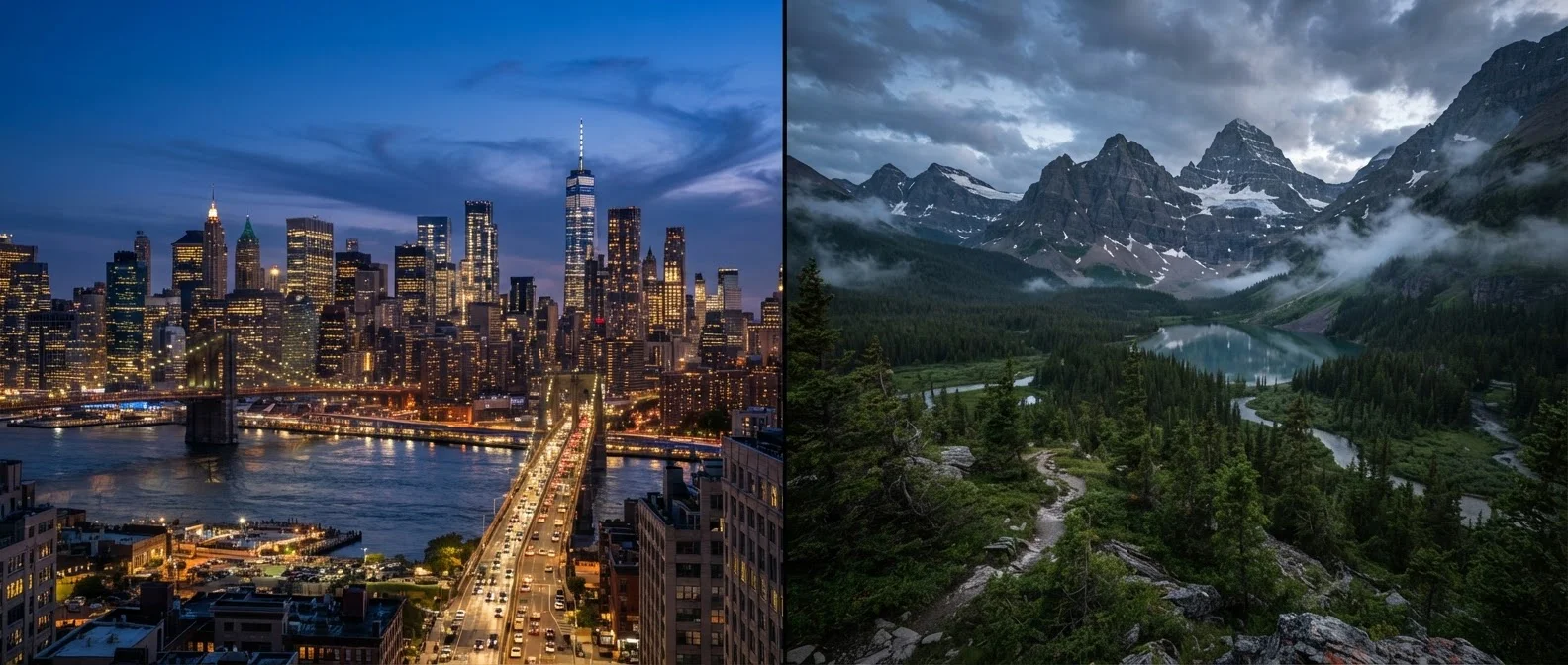
Key Takeaways
Our Verdict
City breaks reward travelers who want cultural depth, efficient use of limited time, and a lower logistical burden. Nature retreats suit those willing to invest more in planning and physical stamina for experiences that cities simply cannot replicate. For most American travelers, the honest answer is that the 'right' trip is the one aligned with what you actually need from this particular journey - not just what sounds appealing in a travel magazine.
| Best for | Recommended |
|---|---|
| Travelers with limited vacation days seeking rich cultural experiences | City Break |
| Those seeking deep rest, physical challenge, or dramatic natural landscapes | Nature Retreat |
| Solo travelers or couples wanting flexible, spontaneous exploration | City Break |
| Small groups or adventurous pairs prioritizing awe over convenience | Nature Retreat |
What Each Style Actually Delivers
The debate between city breaks and nature retreats often gets framed as a personality test - are you a culture vulture or a wilderness seeker? The more useful question is: what does this particular trip need to do for you?
A well-chosen city break - think Lisbon, Tokyo, or Mexico City - packs museums, neighborhoods, food scenes, and human energy into a compact, walkable experience. Infrastructure is reliable, English is often spoken, and a two- or three-day itinerary can feel genuinely complete. Our guide to maximizing a short city trip covers the mechanics of making that density work for you rather than against you.
Nature retreats - Costa Rican cloud forests, Scottish Highlands, Patagonian steppe - deliver something cities physically cannot: silence, scale, and encounters with landscapes that rewire your sense of proportion. But they ask more of you in return: physical readiness, contingency planning, and comfort with uncertainty. Our honest look at Patagonia captures exactly that tradeoff at the extreme end of the spectrum.
How the Two Styles Compare
Before drilling into nuance, it helps to see the major dimensions side by side.
| City Break | Nature Retreat | |
|---|---|---|
| Typical trip length | 2-5 days works well | 5-10+ days recommended |
| Logistical complexity | Moderate - bookings, transport, queues | Higher - permits, gear, remote access |
| Physical demand | Low to moderate | Moderate to high |
| Day-of flexibility | High - easy to pivot | Low - weather and terrain dictate |
| Connectivity | Reliable in most destinations | Spotty to nonexistent in remote areas |
| Primary experience | Cultural immersion, food, history | Landscape, wildlife, physical challenge |
| Best for group dynamics | Easier to accommodate varying interests | Requires aligned fitness and risk tolerance |
A few notes on the table: "Flexibility" refers to day-of adaptability, not overall trip structure - cities allow spontaneous detours far more easily than remote wilderness areas. "Physical demand" is a general pattern, not a rule; urban trips can be exhausting and some nature retreats are very gentle. For more on structuring the trip itself, see our overview of fixed vs. open-ended travel planning.
The Practical Tradeoffs Worth Knowing
Consider a Hybrid Itinerary
Many countries let you combine both styles without excessive travel time. Japan, for instance, pairs Tokyo's urban intensity with mountain regions just a few hours away by rail. New Zealand's South Island mixes compact towns with extraordinary wilderness in close proximity. Building in even two or three days of natural landscape alongside city time can satisfy both impulses without forcing a false choice.
Connectivity: Urban destinations almost always offer reliable mobile coverage. Remote nature destinations may not - something to resolve before you leave. Our breakdown of international roaming versus local SIM cards is especially relevant if you're heading somewhere off the beaten path.
Cost patterns: A city break to a major European capital can run significantly higher per night than an eco-lodge in a national park - or vice versa. Neither style has a monopoly on affordability. Booking timing matters more than destination category. Last-minute versus long-lead planning carries real cost implications for both styles.
Solo versus group dynamics: Cities are generally more forgiving for solo travelers - infrastructure, safety, and social opportunities are built in. Remote nature travel with others introduces coordination complexity; our group travel planning guide addresses how to keep that manageable.
Matching Trip Style to Traveler Type
The most reliable framework isn't about budget or destination prestige - it's about purpose. Ask yourself three questions before booking:
- Am I seeking stimulation or restoration? If you're genuinely burnt out, a city's relentless pace may deepen exhaustion. A quieter landscape can do what a city cannot.
- How much uncertainty can I comfortably handle? Weather cancellations, trail closures, and supply limitations are real in wilderness travel. Cities have their own unpredictability, but the safety net is thicker.
- What do I want to tell people - or feel - when I return? This sounds soft, but it surfaces authentic priorities. Some travelers need the story of a remote glacier; others genuinely prefer the memory of a perfect meal in a foreign city.
For solo travelers in particular, these questions carry extra weight. Our guide to solo travel as an American walks through the honest tradeoffs of going it alone in both environments.
It's also worth noting that many destinations blur the line entirely - national parks accessible from major cities, coastal towns that offer both rugged terrain and cultural depth. Hybrid itineraries aren't a compromise; for many travelers, they're the most satisfying structure of all.