

Key Takeaways
Option A
International Roaming
The familiar, low-setup option for staying connected on your home number.
Best for: Short trips where convenience matters more than cost and you want to keep your existing phone number active.
Option B
Local SIM Card
The cost-conscious approach that trades setup effort for significantly lower rates.
Best for: Longer stays or frequent international travel where data costs and call rates are a genuine concern.
If you're taking a short trip of one to three days
International Roaming
A carrier day-pass or short-term roaming add-on avoids the hassle of sourcing a local SIM for just a few days abroad.
If you're traveling for a week or longer and use significant data
Local SIM Card
Local SIMs almost always offer more data for less money on extended stays, and setup typically takes under 30 minutes.
If keeping your US phone number reachable is essential
International Roaming
Roaming keeps your existing number active for calls, texts, and two-factor authentication messages tied to US services.
If you travel internationally several times a year
Local SIM Card
Frequent travelers often find that buying a local SIM per trip - or using an eSIM service - delivers the most consistent value over time.
If your phone is carrier-locked or you're unsure about compatibility
International Roaming
A locked phone cannot use a foreign SIM, so roaming may be your only option until you confirm your device's unlock status with your carrier.
How Each Option Actually Works
When you land in a foreign country, your phone needs to connect to a local network - the question is whose network and at what price. International roaming lets your home carrier negotiate access to partner networks overseas. Your number stays the same, your contacts don't change, and calls or texts arrive just as they would at home. The tradeoff is that your carrier sets the rates, which can range from reasonable day-pass plans to genuinely startling per-megabyte charges if you haven't added a travel plan before departure.
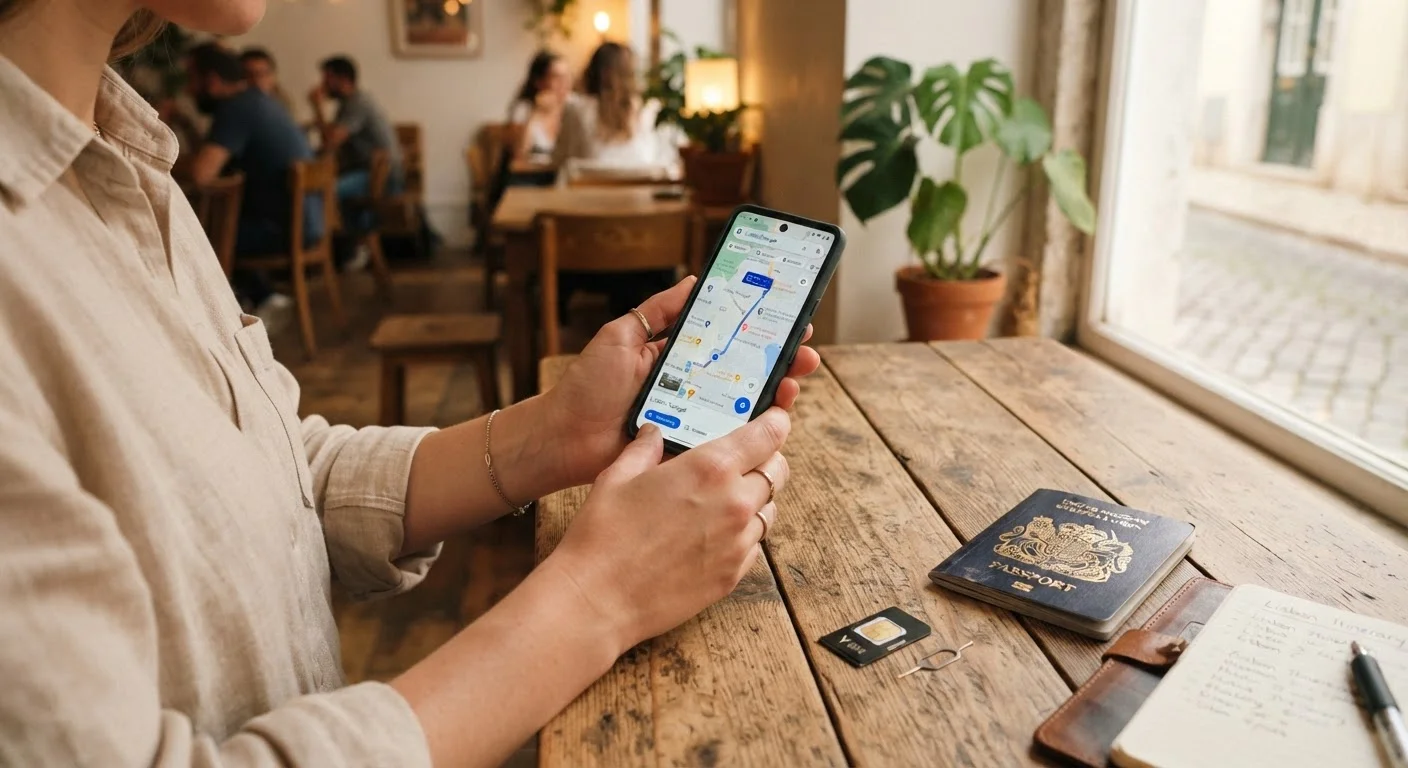
A local SIM card is a small chip you purchase in-country - at an airport kiosk, a carrier store, or even a convenience shop - and swap into your phone. Your phone then operates on that local network at domestic rates. You'll have a temporary local number, which is fine for most data-heavy uses like maps, ride-sharing apps, and messaging, though it does mean your US number goes quiet while the local SIM is inserted.
A newer option worth knowing: eSIM technology allows you to download a carrier profile digitally without touching physical hardware. Many current-generation smartphones support eSIM, and several international data providers offer eSIM plans you can activate before you even board the plane. It's a practical middle ground - especially useful if your phone supports dual SIM, letting you keep your US number active alongside a local data plan. For a broader look at managing expenses while abroad, see our guide to managing money across borders.
Head-to-Head: Key Differences
The table below compares both approaches across the criteria that matter most for everyday travelers. Keep in mind that roaming plan pricing varies significantly by US carrier and destination country.
| Criterion | International Roaming | Local SIM Card |
|---|---|---|
| Setup required | Minimal - add a plan before departure | Purchase and swap SIM in-country |
| Keeps US number active | Yes | No (unless using dual SIM or eSIM) |
| Typical data cost | Higher; varies by carrier plan | Lower; local domestic rates |
| Works on locked phones | Yes | No - phone must be unlocked |
| Coverage reliability | Depends on partner network agreements | Uses local network directly |
| Best trip length | Short trips (1-4 days) | Week-long or extended stays |
| Multi-country flexibility | Usually covered under one plan | May need separate SIMs per country |
77%
Travelers who experienced unexpected roaming charges
A survey by the GSMA found that a large share of international travelers have been surprised by roaming costs at least once, underscoring the importance of planning ahead.
$10-$15/day
Typical US carrier international day-pass cost
Major US carriers commonly offer day-pass roaming add-ons in this range for select countries, though terms, included data, and eligible destinations vary by provider.
~30 min
Average local SIM setup time
Travelers generally report that purchasing and activating a local SIM - including passport verification where required - takes under 30 minutes at an airport kiosk.
What to Consider Before You Decide
Trip length is usually the first filter. For a long weekend in one country, roaming's simplicity is hard to beat - particularly if your carrier offers a flat daily fee for unlimited data. Once you cross into week-long or multi-week territory, the math almost always tips toward a local SIM.
Destination matters too. Some countries have robust, affordable SIM options available at the airport on arrival (much of Western Europe, Japan, and Thailand, for example). Others have more limited options or require passport registration at purchase, which adds a step. Always research local SIM availability for your specific destination before assuming it'll be easy to find.
Your phone's lock status is non-negotiable. A carrier-locked phone cannot use a foreign SIM. Contact your US carrier before you travel to confirm whether your device is unlocked - most carriers will unlock a phone that has been fully paid off and is in good standing, though policies vary.
Security is another angle worth considering. Whether you're roaming or on a local SIM, your cellular data connection is generally more secure than public Wi-Fi. Our companion piece on keeping your devices and data safe while traveling covers the broader picture of digital security on the road.
Finally, if this is your first international trip and you're still sorting out the logistics, our first-time international travel guide walks through connectivity alongside visas, currency, and customs - all in one place.
Two-Factor Authentication and a Local SIM
Swapping to a local SIM means your US number stops receiving SMS messages temporarily. If any of your apps or banking services use text-based two-factor authentication sent to your US number, you may get locked out of those accounts mid-trip. Before you swap, consider switching those accounts to an authenticator app, or keep a roaming-capable device available as a backup for verification texts.