

| Red light urgency | Stop driving as soon as safely possible (NHTSA guidance on dashboard warning systems) |
| Yellow/amber light urgency | Schedule service soon; monitor the situation |
| TPMS mandate | Required on all new US vehicles since 2008 (NHTSA FMVSS No. 138) |
| OBD-II coverage | All US vehicles manufactured after 1996 (EPA & NHTSA OBD-II regulation) |
| Most common MIL cause | Loose or faulty gas cap (evap system leak) |
| Oil pressure warning response | Pull over and shut off engine immediately (Standard automotive safety guidance) |
Why Warning Lights Exist - and What Color Tells You
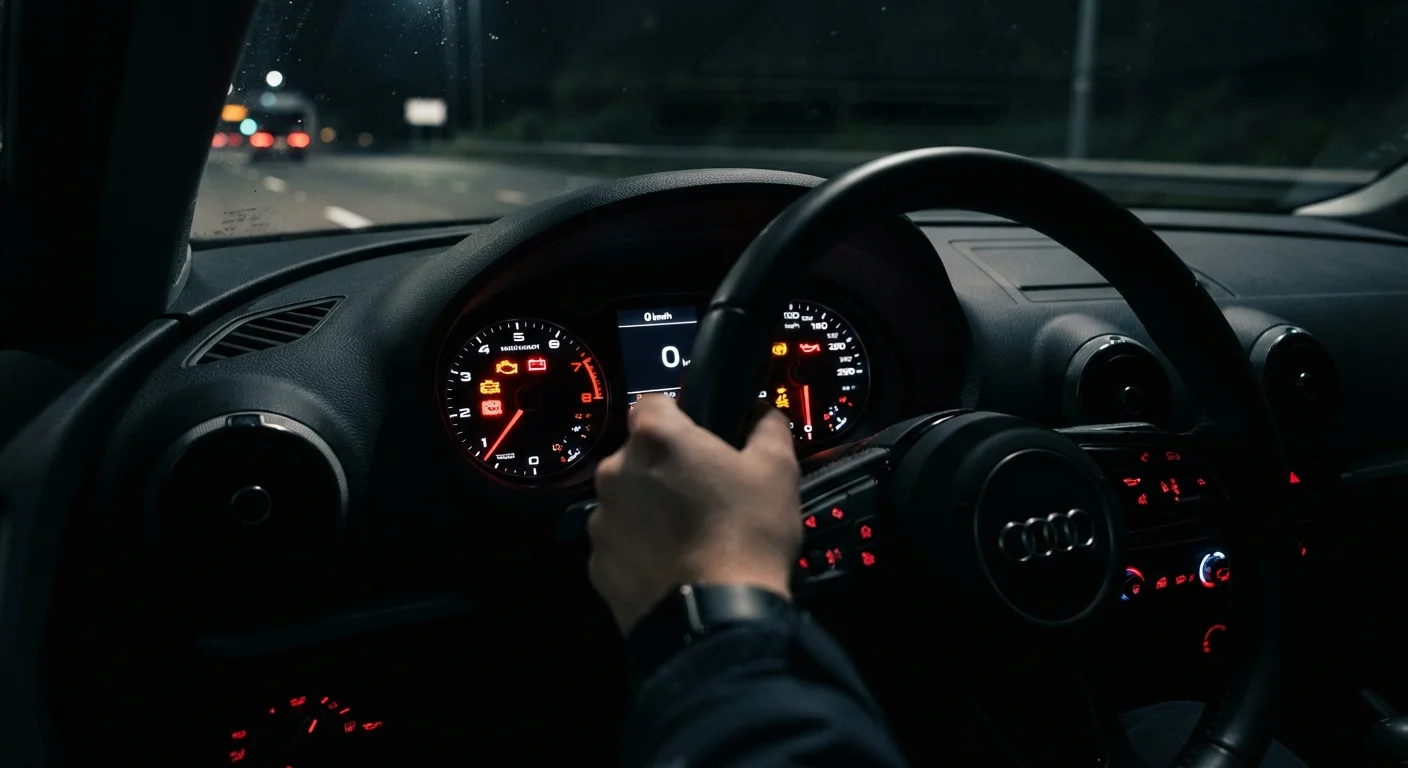
Your car's dashboard is designed to communicate in real time. Every warning light is generated by the vehicle's onboard computer, which continuously monitors dozens of sensors. When a reading falls outside a safe range, a symbol lights up - and the color is your first clue about how urgently you need to act.
Red means stop. These lights signal conditions that can cause immediate engine damage, brake failure, or safety risk. Pull over safely and address the problem before continuing to drive.
Yellow or amber means caution. Something needs attention, but you typically have time to drive to a service facility rather than stopping on the spot. Monitor the situation and avoid delaying repairs.
Green or blue are informational - headlights on, high beams active, turn signal engaged. No action required beyond awareness.
| Red light urgency | Stop driving as soon as safely possible (NHTSA guidance on dashboard warning systems) |
| Yellow/amber light urgency | Schedule service soon; monitor the situation |
| TPMS mandate | Required on all new US vehicles since 2008 (NHTSA FMVSS No. 138) |
| OBD-II coverage | All US vehicles manufactured after 1996 (EPA & NHTSA OBD-II regulation) |
| Most common MIL cause | Loose or faulty gas cap (evap system leak) |
| Oil pressure warning response | Pull over and shut off engine immediately (Standard automotive safety guidance) |
For a broader foundation on keeping your vehicle in safe shape, see our guide to car maintenance for new drivers.
Red Lights: Stop and Act Immediately
These are the lights that demand your full attention. Ignoring them risks serious damage - or a dangerous situation on the road.
- Oil Pressure Warning (oil can icon): Low oil pressure means moving engine parts may not be lubricated. Pull over, turn off the engine, and check the oil level. Do not drive further until the cause is identified by a qualified mechanic.
- Engine Temperature Warning (thermometer in liquid): The engine is overheating. Turn off the AC, pull over safely, and let the engine cool before opening the hood. Continuing to drive risks warped cylinder heads or a seized engine.
- Battery / Charging System (battery icon): The charging system has failed. Your vehicle is running on battery reserve only. Turn off non-essential electronics and drive directly to a service center - the vehicle may stall without warning. A failing alternator is the most common cause.
- Brake Warning Light (exclamation in circle or BRAKE text): Could mean the parking brake is engaged, or - more critically - that brake fluid is low or hydraulic brake pressure has dropped. If the parking brake is off, stop driving and have the brakes inspected immediately. See our article on brake warning signs for related context.
Your Owner's Manual Is the Definitive Source
Warning light symbols can vary between manufacturers and model years. Some automakers use proprietary icons not covered in generic guides. Always cross-reference any unfamiliar light with your vehicle's owner's manual before assuming its meaning. Digital versions are often available through the manufacturer's website if you've misplaced the print copy.
Yellow Lights: Schedule Service Soon
Amber lights don't mean ignore - they mean act within a reasonable timeframe, typically within days to a couple of weeks depending on severity.
Malfunction Indicator Lamp (MIL)
The formal name for the check engine light. It signals that the vehicle's onboard diagnostic system has detected a fault in the engine, transmission, or emissions system. It may indicate anything from a loose gas cap to a serious mechanical issue.
OBD-II
On-Board Diagnostics, second generation - a standardized system in all US vehicles built after 1996 that monitors engine and emissions performance. A scan tool plugged into the OBD-II port can retrieve diagnostic trouble codes (DTCs) that pinpoint the fault.
Diagnostic Trouble Code (DTC)
An alphanumeric code stored by the vehicle's computer when a sensor reading falls outside normal parameters. Mechanics and auto parts stores use a scan tool to read these codes and identify the problem area.
Hydraulic Brake Pressure
The pressurized fluid force that transfers your foot's pressure on the pedal into braking force at each wheel. A drop in hydraulic pressure - due to a fluid leak or failing master cylinder - significantly reduces stopping ability.
TPMS
Tire Pressure Monitoring System. A federal requirement on all new US vehicles since 2008, TPMS uses sensors in the wheels to alert the driver when one or more tires falls 25% or more below the recommended pressure.
Alternator
The component that generates electrical power while the engine is running, keeping the battery charged and powering vehicle systems. A failing alternator will eventually leave the battery drained and the vehicle unable to start or run.
- Check Engine / Malfunction Indicator Lamp (engine outline): The MIL can represent a wide range of faults captured as a DTC in the OBD-II system. A steady light is less urgent than a flashing one - a flashing check engine light typically indicates an active misfire that can damage the catalytic converter and warrants prompt attention. Have the codes read to understand the specific fault.
- TPMS (tire with exclamation mark): One or more tires is significantly underinflated. Check all four tires with a gauge and inflate to the pressure listed on the door jamb sticker - not the number on the tire sidewall. Driving on underinflated tires affects handling and fuel economy and increases blowout risk.
- Traction Control / Stability Control Off (car with skid lines): If illuminated while driving, the system is actively intervening. If it stays on, the system may be disabled or malfunctioning - reduce speed in poor conditions and schedule a diagnostic check.
- Low Fuel (fuel pump icon): Straightforward, but worth noting: repeatedly running the tank near empty can stress the fuel pump, which relies on fuel for cooling.
Before any long drive, a quick systems check helps catch these issues early. Our pre-trip vehicle safety checklist walks through exactly what to inspect.
25%+
Tire pressure drop that triggers TPMS alert
Per NHTSA's Federal Motor Vehicle Safety Standard No. 138, sensors must warn when pressure falls at least 25% below placard level.
1 in 10
Vehicles on US roads with a check engine light on
Industry estimates from automotive data firms have consistently suggested a meaningful share of vehicles in service carry an active MIL at any given time.
When to Drive, When to Stop, and When to Call for Help
The decision to keep driving should hinge on the specific light and your circumstances. As a general framework:
- Red light + abnormal driving feel: Pull over safely as soon as possible. Do not drive to a shop; call for a tow.
- Red light + vehicle driving normally: Proceed with caution to the nearest safe stop. Do not make long trips.
- Amber light: Drive to a service facility within a reasonable timeframe. Avoid highway driving at high speeds until the issue is diagnosed.
- Unknown light: Consult your owner's manual before assuming it's minor.
Developing the habit of scanning your dashboard at the start of every drive is a simple but effective safety practice - a principle consistent with defensive driving techniques that keep you ahead of problems before they escalate.
This article provides general educational information about vehicle warning systems and is not a substitute for diagnosis by a qualified automotive technician. Warning light meanings can vary by vehicle make, model, and year - always consult your owner's manual and a licensed mechanic for guidance specific to your vehicle.