

Key Takeaways
Significantly lower cost than full cabinet replacement
Refacing typically costs a fraction of purchasing and installing entirely new cabinets, making it accessible for homeowners working with limited renovation budgets.
Less disruption to the kitchen during the project
Because cabinet boxes stay in place, your kitchen remains partially functional. There's no need to disconnect plumbing or remove countertops in most cases.
Wide range of material and style options
Doors and veneers come in wood species, thermofoil, RTF, and laminate - allowing you to match contemporary or traditional aesthetics without custom cabinetry pricing.
Faster completion time than a full remodel
A professional refacing job on an average kitchen is often complete within two to four days, compared to weeks for a full cabinet replacement project.
Reduces waste compared to full demolition
Keeping the existing cabinet structure out of the landfill is a meaningful environmental consideration, especially when boxes are still structurally sound.
Cannot change the cabinet layout or configuration
Refacing locks in your existing cabinet positions. If storage is poorly arranged or your kitchen workflow is inefficient, refacing does nothing to improve functionality.
Interior cabinet condition stays the same
Shelving, interior finishes, and drawer hardware inside the boxes are not part of the refacing scope. Worn or discolored interiors will still be visible every time you open a door.
Requires structurally sound existing boxes
Any water damage, warping, or pest damage disqualifies a cabinet from refacing - attempting it over compromised boxes leads to poor adhesion and premature failure.
Veneer can peel if prep work is inadequate
Adhesion depends heavily on surface preparation. Improper deglossing or moisture exposure after installation can cause veneer edges to lift over time.
May not add significant resale value on its own
While refacing improves aesthetics, real estate professionals generally note that buyers scrutinize cabinet function and layout - factors that refacing does not address.
Our Verdict
Cabinet refacing is a practical, cost-conscious option for kitchens where the layout works well and the cabinet boxes are in good condition. It delivers a meaningful visual update without the disruption or expense of a full remodel. However, it won't fix poorly placed cabinets, damaged interiors, or a fundamentally inefficient kitchen layout.
Homeowners with functional, structurally sound cabinets who want a refreshed look without committing to a full kitchen overhaul.
What Cabinet Refacing Actually Covers
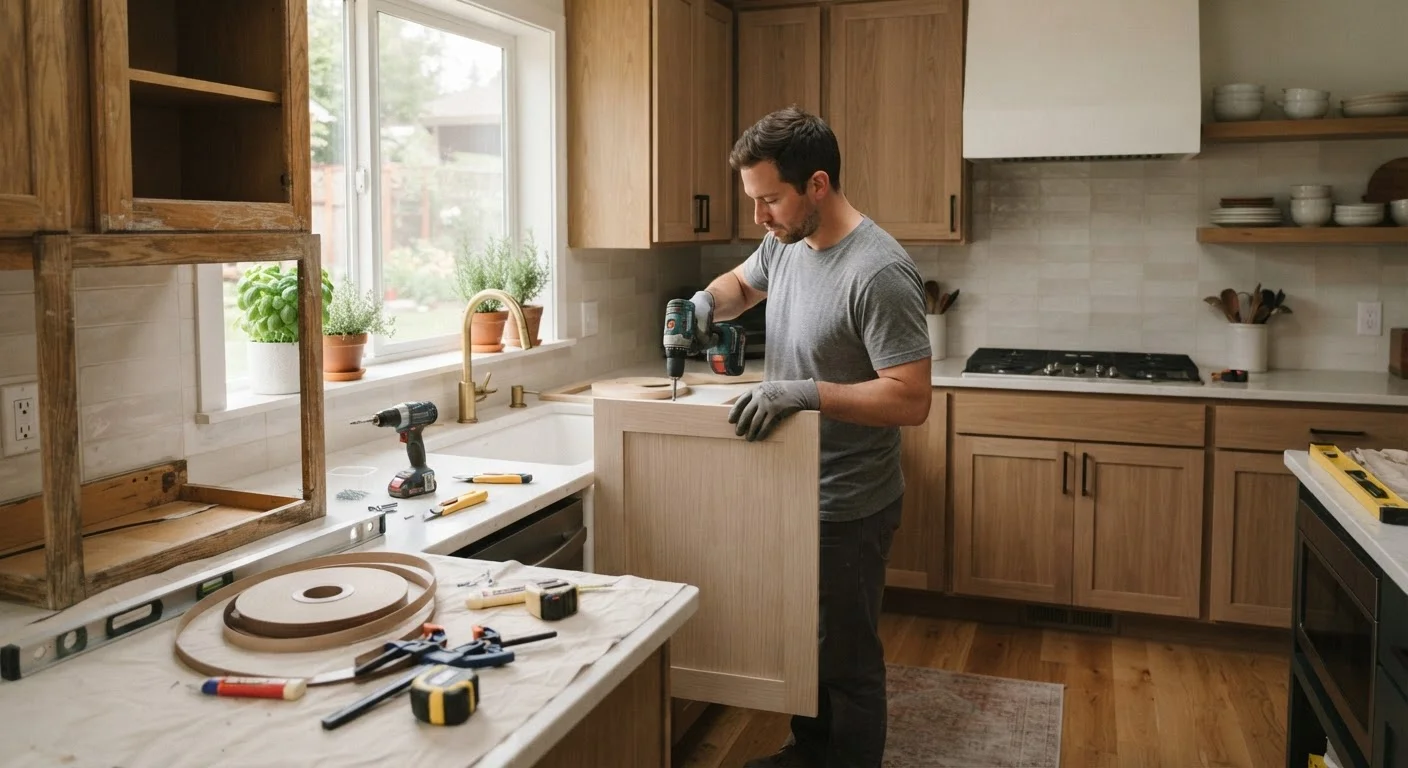
Cabinet refacing is a targeted cosmetic update - not a structural renovation. The process involves replacing the visible-facing components of your cabinets while leaving the existing cabinet boxes (also called carcasses) in place. Here's what typically changes:
- Cabinet doors and drawer fronts are removed and replaced with new ones in your chosen material and style.
- Exposed cabinet frames - the sides, top rails, and face frames - are covered with matching veneer or laminate sheet material.
- Hardware such as hinges, knobs, and pulls is replaced as part of the process.
What doesn't change: the interior shelving, the cabinet box structure, and crucially, the cabinet positions. Refacing works within your existing footprint. If you've ever felt your upper cabinets are too high or your corner configuration wastes space, refacing won't address those issues. For a deeper look at how renovation scope compounds room by room, see our overview of bathroom renovation scope - the same principle applies in kitchens.
The Step-by-Step Process
Understanding the workflow helps you plan realistically and evaluate contractor quotes with confidence.
- Assessment: A professional (or you, if DIYing) inspects each cabinet box for water damage, warping, or structural weakness. Boxes that are soft, swollen, or pest-damaged aren't good candidates for refacing.
- Door and drawer removal: All existing doors and drawer fronts come off. Hardware is removed and set aside or discarded.
- Surface preparation: Exposed frame surfaces are cleaned, sanded, and deglossed so veneer adhesive bonds properly. Skipping this step leads to peeling later.
- Veneer application: Thin wood veneer or rigid thermofoil laminate is cut and glued to the face frames and exposed cabinet sides. Edges are trimmed flush and pressed firmly.
- New door and drawer installation: New doors are hung using concealed hinges, aligned carefully to ensure even reveals (the gap between adjacent doors).
- Hardware installation: New pulls or knobs are drilled and mounted.
Permits and Professional Licensing
Cabinet refacing is generally considered cosmetic work and does not typically require a building permit in most U.S. jurisdictions. However, if the project involves any electrical work - such as relocating under-cabinet lighting - that portion of the job should be handled by a licensed electrician. Always verify local requirements with your municipality before starting work.
Professional jobs typically take two to four days for an average kitchen. DIY projects run longer, especially around veneer cutting and door alignment, which require patience and some woodworking familiarity.
Pros and Cons of Cabinet Refacing
Refacing sits in a specific middle ground between painting your cabinets and replacing them entirely. Whether it makes sense depends on your goals, budget, and cabinet condition.
Significantly lower cost than full cabinet replacement
Refacing typically costs a fraction of purchasing and installing entirely new cabinets, making it accessible for homeowners working with limited renovation budgets.
Less disruption to the kitchen during the project
Because cabinet boxes stay in place, your kitchen remains partially functional. There's no need to disconnect plumbing or remove countertops in most cases.
Wide range of material and style options
Doors and veneers come in wood species, thermofoil, RTF, and laminate - allowing you to match contemporary or traditional aesthetics without custom cabinetry pricing.
Faster completion time than a full remodel
A professional refacing job on an average kitchen is often complete within two to four days, compared to weeks for a full cabinet replacement project.
Reduces waste compared to full demolition
Keeping the existing cabinet structure out of the landfill is a meaningful environmental consideration, especially when boxes are still structurally sound.
Cannot change the cabinet layout or configuration
Refacing locks in your existing cabinet positions. If storage is poorly arranged or your kitchen workflow is inefficient, refacing does nothing to improve functionality.
Interior cabinet condition stays the same
Shelving, interior finishes, and drawer hardware inside the boxes are not part of the refacing scope. Worn or discolored interiors will still be visible every time you open a door.
Requires structurally sound existing boxes
Any water damage, warping, or pest damage disqualifies a cabinet from refacing - attempting it over compromised boxes leads to poor adhesion and premature failure.
Veneer can peel if prep work is inadequate
Adhesion depends heavily on surface preparation. Improper deglossing or moisture exposure after installation can cause veneer edges to lift over time.
May not add significant resale value on its own
While refacing improves aesthetics, real estate professionals generally note that buyers scrutinize cabinet function and layout - factors that refacing does not address.
If your kitchen already functions well but looks dated, refacing can deliver a surprising amount of visual impact. Pairing it with other low-cost interventions - new lighting, updated hardware, or a fresh backsplash - can amplify the effect considerably. For inspiration on layering small upgrades, our guide to small-space upgrades covers complementary improvements scaled to modest budgets.
When to Choose Refacing - and When to Walk Away
Refacing is the right call when all of the following are true: your cabinet boxes are dry, solid, and level; your kitchen layout meets your daily needs; and you're primarily dissatisfied with the visual appearance rather than function or storage capacity.
Walk away from refacing if any boxes show signs of water damage or mold - applying new veneer over compromised wood accelerates deterioration and can become a health concern. Similarly, if you're planning to move walls, add an island, or reconfigure the layout, a full replacement will be necessary regardless of box condition.
~$4,500-$9,500
Typical professional refacing cost range
According to general contractor estimates cited by home improvement resources, refacing an average U.S. kitchen falls in this range, varying by material choice and kitchen size.
50%+
Potential savings vs. full cabinet replacement
Industry guidance consistently positions refacing as roughly half the cost of purchasing and installing entirely new cabinetry of comparable quality.
One practical test: open every cabinet and press firmly on the interior bottom and sides. Any softness, sponginess, or visible swelling is a red flag. A licensed contractor or carpenter can give you a straightforward assessment before you commit to a refacing quote.