
Plumbing Shutoffs, Breaker Panels, and Other Systems Every Homeowner Should Locate

Why Locating These Systems Matters
Most home emergencies give you very little time to react. A burst pipe, a tripped breaker during a storm, or a gas smell in the kitchen demands immediate action - not a frantic search through unfamiliar utility spaces. Yet many homeowners, especially those new to a property, have never taken the time to walk through and document where each critical control is located.
Locating and labeling these systems in advance is one of the lowest-cost, highest-return tasks you can do as a homeowner. It costs nothing but an hour of your time, and it can limit water damage, prevent electrical hazards, and give you confidence when something goes wrong. It also helps any family member, house-sitter, or contractor act quickly in your absence.
This guide walks you through every major shutoff and control system you should know, where to look for each one, and what to confirm about its condition. For a broader overview of home upkeep priorities, see what every new homeowner should understand about home upkeep.
Water Shutoffs: Main Line and Fixtures
Water damage is among the most common and costly home emergencies. Knowing how to stop water flow quickly is essential.
Main Water Shutoff
This valve controls all water entering your home. It is typically located where the water supply line enters the foundation - often in the basement, crawl space, or utility room near the front of the house. In warmer climates, it may be outside near the foundation or in a ground-level access box at the street. Once found, test that it turns freely. A valve that hasn't moved in years can seize; a licensed plumber can free or replace a stuck shutoff.
Fixture-Level Shutoffs
Most toilets, sinks, dishwashers, washing machines, and water heaters have their own individual shutoff valves - usually small oval or lever handles under or behind the fixture. These let you isolate one problem area without cutting water to the whole house. Confirm each one is accessible and moves without resistance.
Outdoor Hose Bibs
Exterior faucets often have interior shutoff valves on the supply line, separate from the main shutoff. Closing these before winter helps prevent frozen and burst pipes. See weatherproofing your home before winter arrives for a full seasonal checklist.
Main water shutoff
A single valve that stops all water flow into a home when closed. It is the first line of defense during a plumbing emergency.
Circuit breaker
A resettable safety switch in the electrical panel that automatically trips to interrupt power when a circuit is overloaded or short-circuits.
Sewer cleanout
A capped access point on the main drain line that allows a plumber to clear blockages without opening walls or floors.
Condensate drain pan
A shallow tray beneath an air handler or furnace that collects moisture produced during cooling. Standing water in it indicates a clogged drain line.
Hose bib
An exterior faucet mounted on the outside wall of a home, typically used for garden hoses. Many have a separate interior shutoff valve to prevent freezing.
Electrical Panel and Circuit Breakers
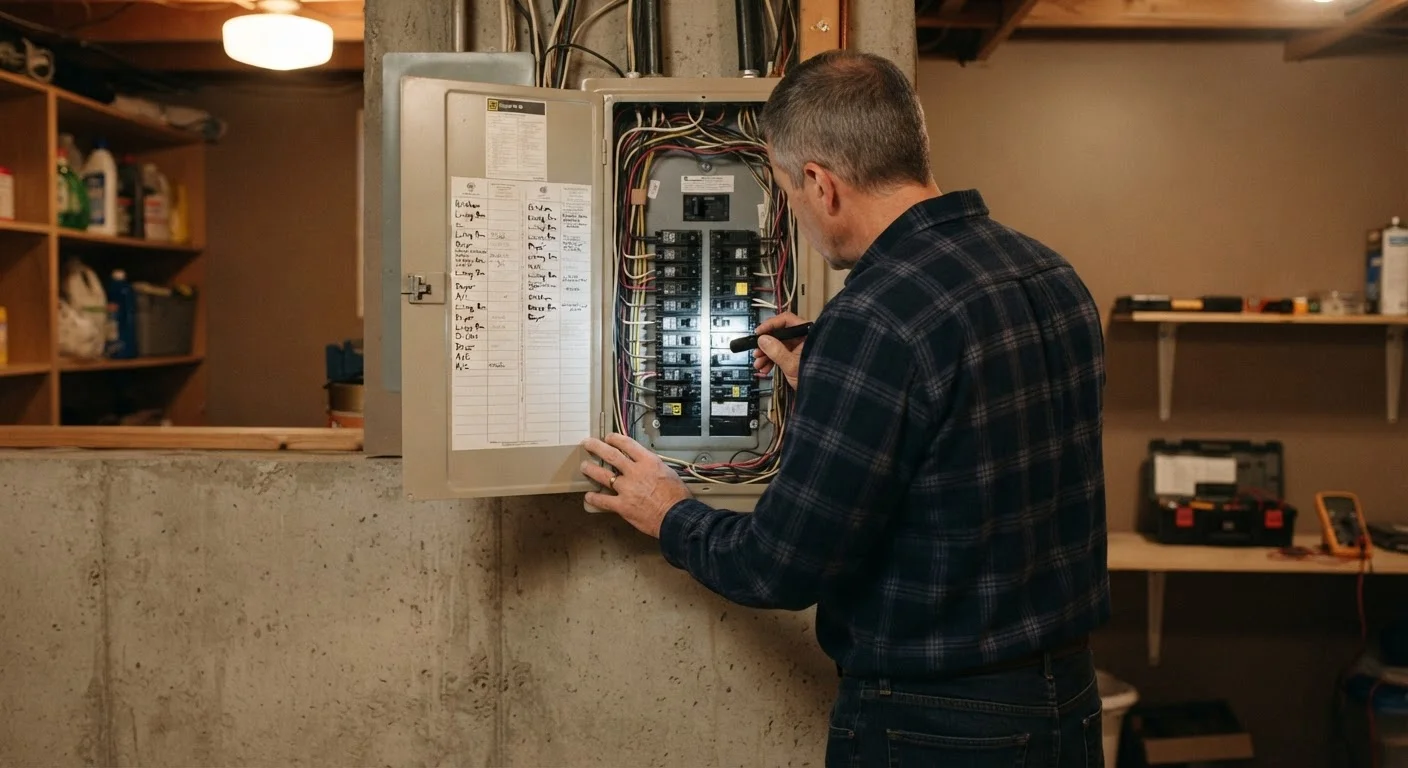
Your home's electrical panel - also called the breaker box or load center - is where power from the utility enters and distributes to individual circuits throughout the house. It is most commonly found in a basement, garage, hallway closet, or utility room. The panel must remain accessible at all times; do not block it with shelving or stored items.
What to Do When You Find It
- Check that each breaker is labeled. Panels often have handwritten or printed labels identifying which circuit controls which rooms or appliances. If yours are unlabeled or inaccurate, map them by switching breakers one at a time while a helper identifies which outlets or lights go dark.
- Locate the main breaker. This large double breaker at the top or side of the panel cuts power to the entire panel. Know where it is before you ever need it.
- Look for a subpanel. Larger homes or those with additions sometimes have a secondary panel in a garage or outbuilding. Find and label it as well.
If you notice signs of scorching, corrosion, or consistently tripping breakers, contact a licensed electrician. Do not attempt to inspect or repair panel wiring yourself - this is regulated work in most jurisdictions. For guidance on when permits and professional inspections apply, see permits, inspections, and code.
Make a Home Systems Reference Sheet
After locating each shutoff and control, write down its location and any quirks (e.g., 'main water shutoff - behind water heater, needs pliers'). Store a printed copy inside a kitchen drawer and share a digital version with family members. This single document can dramatically speed up response time during an emergency and is a useful handoff when you sell the home.
Gas Shutoffs, HVAC Controls, and Other Critical Systems
Beyond plumbing and electricity, several other systems deserve a dedicated walk-through.
Natural Gas or Propane Shutoff
If your home uses gas for heating, cooking, or water heating, locate the main gas shutoff valve on the supply pipe near where it enters the house - typically at the gas meter outside. Each gas appliance also has its own shutoff valve nearby. If you ever smell gas, do not use electrical switches or open flames: leave the house, leave the door open, and call your gas utility from outside. Gas shutoffs typically require a wrench to operate; keep one accessible near the meter.
HVAC System Controls
Know where your furnace or air handler is located, where its power switch is (often a light-switch-style toggle on the unit or nearby wall), and where the air filter slots are. Locate the thermostat and understand how to switch it to emergency heat if applicable. If your system has a condensate drain pan, find it and check it periodically for standing water.
Sewer Cleanout
The sewer cleanout is a capped pipe that provides access to your main drain line for clearing blockages. It is usually a white or black PVC cap at ground level outside the house, or inside near a floor drain. Knowing its location helps a plumber respond faster during a sewage backup.
Smoke and Carbon Monoxide Detectors
Walk every floor and identify where these are installed. Test each one using the test button and note which use replaceable batteries versus hardwired power. Keep a record of installation dates - most manufacturers recommend replacing units every 7-10 years. Staying current with these systems supports the seasonal home maintenance tasks that protect your home year-round.