

Key Takeaways
Summary
24 items · 20-40 minutes to review; ongoing seasonal tasks throughout the year
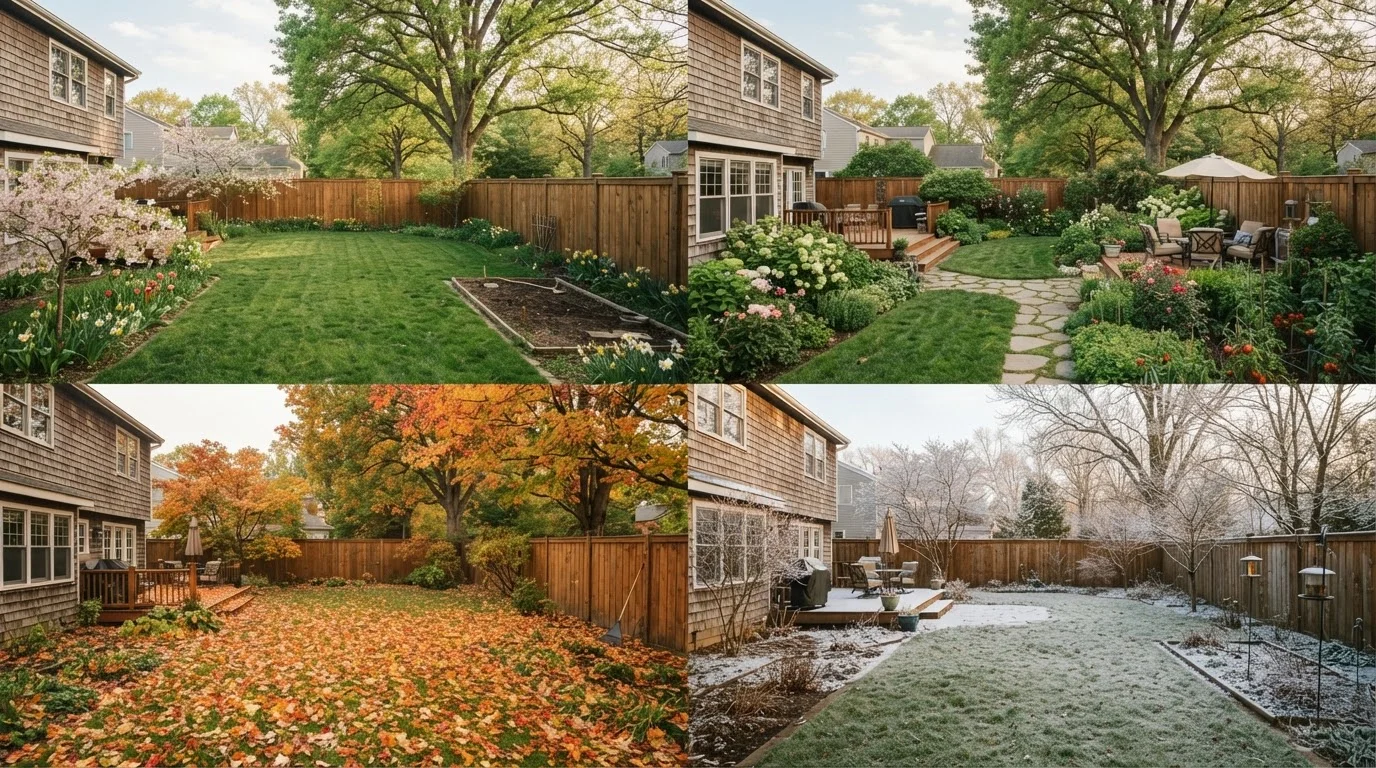
Why a Season-by-Season Approach Makes Yard Care Easier
Trying to tackle yard maintenance without a seasonal framework often leads to missed windows - fertilizing too late, pruning at the wrong time, or letting thatch build up until it chokes your lawn. Breaking tasks into four manageable seasons turns an overwhelming to-do list into predictable, bite-sized work sessions.
Keep in mind that timing varies by region. Homeowners in the Deep South face a different spring than those in the Upper Midwest, and your grass type plays a major role in when tasks like aeration and overseeding deliver the best results. Use this checklist as a framework, then adjust dates to match your local last frost, first freeze, and typical rainfall patterns.
For broader home protection tasks that run parallel to yard work - think gutters, drainage, and exterior surfaces - our seasonal home maintenance guide pairs well with this checklist.
Spring (March-May)
Summer (June-August)
Fall (September-November)
Winter (December-February)
Tools and Supplies You'll Want on Hand
Before diving into the season-specific tasks, make sure your tool kit is ready. Dull mower blades tear grass rather than cut it cleanly, leaving entry points for disease. Clogged spreaders deliver fertilizer unevenly. A quick inventory at the start of each season saves time and frustration.
Soil Test Kit
Measures pH and key nutrient levels so fertilizer applications are targeted rather than guesswork.
Rotary or Drop Spreader
Distributes granular fertilizer, seed, and pre-emergent products evenly across the lawn.
Lawn Aerator (plug type)
Removes small soil plugs to relieve compaction and improve water, air, and nutrient penetration.
Garden Hose with Adjustable Nozzle
Handles targeted watering for beds, new seed areas, and container plants.
Bypass Pruners and Loppers
Make clean cuts on shrubs and small branches without crushing stems, reducing disease entry points.
Mulching Mower
Chops grass clippings and shredded leaves finely so they decompose quickly back into the lawn.
Fuel Stabilizer
Added to gas-powered equipment before winter storage to prevent carburetor and fuel system damage.
Leaf Blower or Rake
Clears leaves from lawn surfaces in fall before they mat down and smother grass.
Don't Skip the Soil Test
Applying fertilizer without knowing your soil's current pH and nutrient profile is a common and costly mistake. Over-application of nitrogen, for example, can burn turf, contaminate groundwater, and trigger rapid but weak growth that's more susceptible to disease. Most state cooperative extension services offer low-cost soil testing, and results typically include specific amendment recommendations for your soil type.
Making the Most of This Checklist
Work through each seasonal group in order, checking off items as you complete them. Must items are non-negotiable for a healthy yard; should items deliver strong returns for the effort; nice-to-have items are worthwhile upgrades when time and budget allow.
Yard debris from pruning, leaf cleanup, and grass clippings doesn't have to go to waste. Composting at home is one of the most cost-effective ways to return nutrients to your soil without buying bags of amendments. If you want to take your lawn health further, our guide to healthy lawn practices covers mowing height, watering discipline, and aeration timing in greater depth.
Permits May Be Required for Tree Work
Removing or significantly pruning large trees - particularly those near structures, utility lines, or property boundaries - may require a permit in your municipality and should generally be handled by a licensed arborist. DIY tree removal near power lines or buildings carries serious safety and liability risks. Always verify local requirements and consult a qualified professional for work beyond routine shrub pruning.