

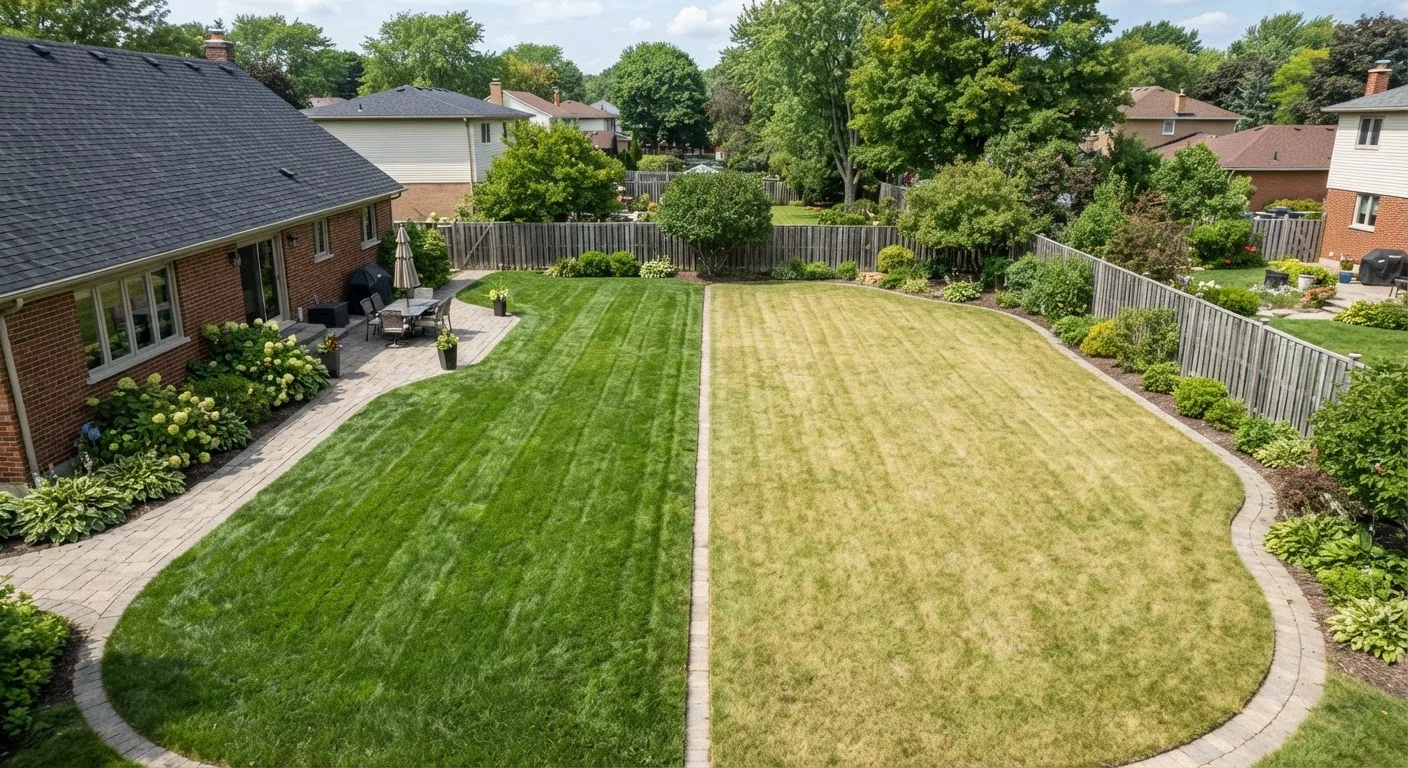
Key Takeaways
Option A
Cool-Season Grasses
The northern performer that thrives in cold and shoulder-season conditions.
Best for: Homeowners in the northern US who want green lawns through fall, winter, and early spring.
Option B
Warm-Season Grasses
The heat-tolerant southern staple built for long, hot growing seasons.
Best for: Homeowners in the South and Southwest who want durable, drought-resilient turf through summer.
If you live in the northern US (Pacific Northwest, Midwest, Northeast)
Cool-Season Grasses
Varieties like tall fescue, Kentucky bluegrass, and perennial ryegrass thrive in the cooler temperatures and moderate rainfall typical of northern states, staying green through fall and spring.
If you live in the southern US (Gulf Coast, Southeast, Southwest desert regions)
Warm-Season Grasses
Bermudagrass, zoysiagrass, and St. Augustinegrass handle heat, humidity, and drought far better than cool-season varieties, which brown out and struggle in sustained summer heat.
If you live in the transitional zone (Virginia, Kansas, northern California, Tennessee)
Cool-Season Grasses
Tall fescue is generally the most adaptable choice in the transition zone, tolerating both summer heat spikes and cold winters better than most alternatives, though no single grass excels perfectly.
If low maintenance and drought tolerance are your top priorities
Warm-Season Grasses
Once established, warm-season varieties typically require less water and fewer inputs during their active growing season, making them better suited to water-conscious homeowners in hot climates.
What Separates Cool-Season from Warm-Season Grasses
Grass types are broadly classified by the temperature range in which they grow most vigorously. Cool-season grasses hit their stride when soil temperatures are between 50°F and 65°F - typically fall and spring in most of the US. Warm-season grasses require soil temperatures above 65°F to 70°F before active growth begins, making summer their peak season.
This distinction matters more than most homeowners realize. Planting a warm-season variety like bermudagrass in Minnesota, or seeding Kentucky bluegrass in Georgia, sets up the lawn for chronic stress, disease vulnerability, and eventual failure. Climate fit is the single most important factor in any lawn decision.
Soil temperature - not calendar date or air temperature - is the real trigger for turf growth. A thermometer pushed two to three inches into the ground gives a more reliable read than any weather app. See our yard-by-season maintenance checklist for timing guidance on when to fertilize, seed, and aerate based on grass type.
| Criterion | Cool-Season Grasses | Warm-Season Grasses |
|---|---|---|
| Active Growth Period | Fall and spring | Late spring through summer |
| Ideal Soil Temp for Growth | 50°F - 65°F | 65°F - 80°F |
| Winter Appearance | Green or semi-green | Dormant and brown |
| Drought Tolerance | Low to moderate | Moderate to high |
| Best US Regions | North, Pacific Northwest | South, Gulf Coast, Southwest |
| Common Varieties | Kentucky bluegrass, tall fescue, ryegrass | Bermuda, zoysia, St. Augustine, centipede |
| Fertilizing Window | Early fall (primary) | Late spring to midsummer |
| Transition Zone Suitability | Moderate (tall fescue only) | Moderate (zoysia in upper South) |
Regional Fit: Where Each Grass Type Belongs
The USDA Plant Hardiness Zone Map and the related concept of a transition zone help define where each grass category performs reliably.
- Cool-season stronghold: The northern tier - New England, the Great Lakes, the Pacific Northwest, and the northern Plains - is classic cool-season territory. Kentucky bluegrass, perennial ryegrass, fine fescues, and tall fescue are the most widely used varieties here.
- Warm-season stronghold: The South and Southwest - from the Carolinas across to Texas and up through southern California - favor bermudagrass, zoysiagrass, centipedegrass, and St. Augustinegrass. These grasses go dormant and turn brown in winter, which is normal and expected.
- The transition zone: A wide band running roughly through Virginia, Kentucky, Tennessee, Missouri, Kansas, and into the mid-Atlantic creates real challenges. Summers are too hot for cool-season grasses to thrive; winters are too cold for most warm-season varieties. Tall fescue is typically the most viable choice here, though it requires more care and overseeding.
~1,000
Grass species found worldwide
Of the roughly 1,000 grass species, only a small fraction are suitable as managed lawn turf in North American climates, according to turfgrass extension resources.
2-4 inches
Recommended mowing height for fescue
University cooperative extension programs generally recommend keeping tall fescue at 2-4 inches to reduce heat stress and maintain root depth in transitional climates.
~40%
Of US land area in the transition zone
Turfgrass specialists estimate that a significant portion of the continental US falls into the challenging transition zone where neither grass category is fully optimal.
If you're weighing native alternatives alongside traditional turf, our guide to native plants for American lawns covers species that may sidestep the cool- vs. warm-season dilemma altogether.
Maintenance Differences You Should Expect
Understanding the maintenance calendar for each grass category prevents common mistakes like fertilizing at the wrong time of year.
Cool-season grasses should be fertilized primarily in fall - their most active growth window. Overseeding bare patches is also most effective in late summer to early fall when soil is warm but air temperatures are cooling. Mowing frequency drops significantly in midsummer heat, when these grasses often go semi-dormant. Heavy summer watering can keep them green but increases disease risk.
Warm-season grasses are fed in late spring through midsummer. Avoid fertilizing them in fall, which can push tender growth vulnerable to frost damage. Aeration and dethatching are most effective in late spring for warm-season lawns - the opposite timing from cool-season care. For a deeper look at consistent practices that keep any lawn dense and resilient, see our article on healthy lawn practices.
Overseeding Warm-Season Lawns for Winter Color
Some southern homeowners overseed bermudagrass or zoysiagrass lawns with annual or perennial ryegrass in fall to maintain a green appearance through winter. While this is a common practice, it adds cost, requires additional mowing during the cool season, and can create competition that slows warm-season grass recovery in spring. It's worth weighing whether year-round color is worth the added maintenance burden.
Weeds often exploit the dormancy periods of whichever grass type you have. Cool-season lawns face higher weed pressure in summer; warm-season lawns are vulnerable in winter. Identifying common lawn weeds helps you respond at the right time with the right approach.