

Key Takeaways
Reduced irrigation needs once established
Plants adapted to local rainfall patterns require significantly less supplemental watering than non-native species, which is particularly valuable in drought-prone regions.
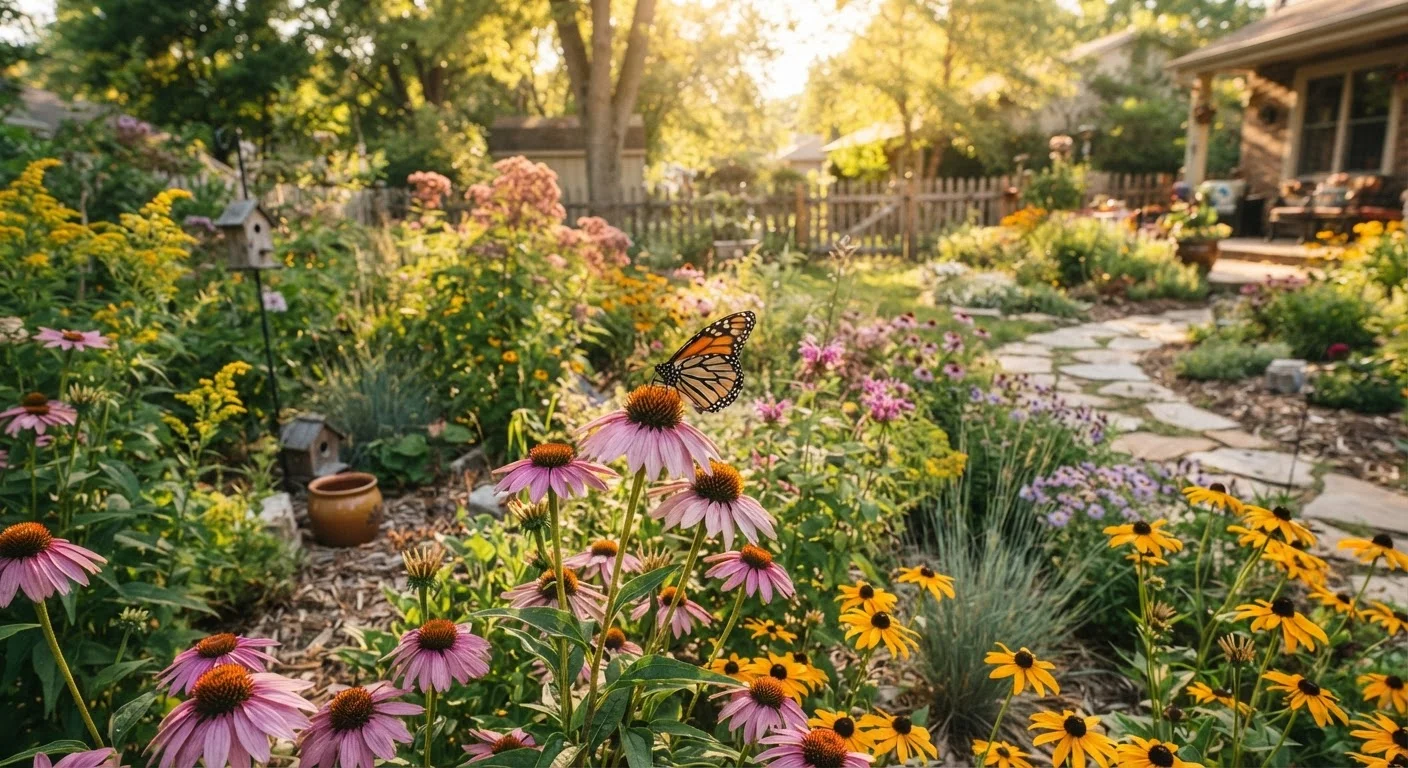
Supports native bees, butterflies, and birds
Many native insect species can only complete their life cycles on specific native plants, meaning native gardens directly restore habitat that generalist plantings cannot replicate.
Little to no synthetic fertilizer required
Natives evolved without fertilizer inputs and are adapted to local soil nutrient profiles, reducing both ongoing costs and the risk of nutrient runoff into waterways.
Deep roots improve soil structure over time
Perennial native grasses and wildflowers develop root systems far deeper than turf grass, improving drainage, reducing compaction, and building organic matter.
Greater long-term resilience to pests and disease
Co-evolved relationships between native plants and local insect communities tend to produce natural pest balance, reducing the need for pesticide applications.
Establishment period requires consistent watering
Most native plants need regular irrigation during their first one to two growing seasons before their root systems are deep enough to sustain themselves independently.
Finding regionally correct species takes research
Not all plants marketed as 'native' are native to your specific ecoregion. Selecting the wrong provenance can undercut the ecological benefits and reduce plant performance.
Informal appearance may conflict with HOA rules
Naturalistic plantings can look unkempt to neighbors or violate community association guidelines, requiring thoughtful design or preemptive communication with HOA boards.
Weed competition is intense during establishment
Disturbed soil in new planting areas invites weed colonization; without active management in year one, invasive and opportunistic species can outcompete newly planted natives.
Upfront plant cost can be higher than conventional options
Specialty native plants from reputable local nurseries often carry a higher per-plant price than mass-produced non-native alternatives, though this is frequently offset by reduced long-term inputs.
Our Verdict
Native plants offer substantial ecological and practical benefits that extend well beyond drought tolerance, from rebuilding pollinator habitat to improving soil structure over time. The tradeoffs-a longer establishment phase and more research required upfront-are manageable with realistic expectations. Most American homeowners will find that even a partial shift toward native plants reduces long-term maintenance burdens while meaningfully supporting local ecosystems.
Ideal for homeowners who want a lower-input yard over the long term and are willing to invest some research and patience during the first one to two growing seasons.
What 'Native' Actually Means-and Why It Matters
A native plant is one that evolved naturally in a specific region without human introduction. In practice, this means a plant that has co-developed over thousands of years with the local soil types, rainfall patterns, insects, and wildlife in your area. A black-eyed Susan (Rudbeckia hirta) native to the mid-Atlantic is not automatically the right choice for a yard in the Pacific Northwest-ecoregion matters, not just national origin.
This distinction is important because the ecological benefits of native plants are highly localized. Research from entomologist Doug Tallamy and others has shown that many specialist native bees and moth species can only complete their life cycles on specific native plant genera. When those plants disappear from a landscape, so do the insects-and the birds that depend on them for food.
Before selecting plants, identify your specific USDA Plant Hardiness Zone and, ideally, your ecoregion. Your local cooperative extension service is a reliable, free resource for regionally appropriate species lists. See also how grass selection varies by region for a parallel example of why local adaptation matters.
The Genuine Advantages of Going Native
The case for native plants rests on more than just water savings, though that benefit is real. Here's a fuller picture of what they contribute to your yard and the broader environment.
Reduced irrigation needs once established
Plants adapted to local rainfall patterns require significantly less supplemental watering than non-native species, which is particularly valuable in drought-prone regions.
Supports native bees, butterflies, and birds
Many native insect species can only complete their life cycles on specific native plants, meaning native gardens directly restore habitat that generalist plantings cannot replicate.
Little to no synthetic fertilizer required
Natives evolved without fertilizer inputs and are adapted to local soil nutrient profiles, reducing both ongoing costs and the risk of nutrient runoff into waterways.
Deep roots improve soil structure over time
Perennial native grasses and wildflowers develop root systems far deeper than turf grass, improving drainage, reducing compaction, and building organic matter.
Greater long-term resilience to pests and disease
Co-evolved relationships between native plants and local insect communities tend to produce natural pest balance, reducing the need for pesticide applications.
On the practical side, reduced irrigation needs translate directly into lower water bills and less time dragging hoses. Native plants that are well-matched to your region typically require supplemental watering only during establishment and during unusually severe drought. This pairs well with efficient delivery systems-our guide to drip vs. sprinkler irrigation explains how to maximize what water you do use.
Soil health is another underappreciated benefit. Deep-rooted native perennials like prairie dropseed or wild bergamot can extend roots several feet underground, improving drainage, reducing compaction, and feeding soil microbial communities in ways that shallow-rooted turf grass cannot. This connects directly to the underground soil biology that supports long-term plant health.
~3x
More bee species supported by native vs. non-native plants
Research published in ecological journals has found that native plant species support roughly three times as many native bee species as non-native ornamentals in comparable garden settings.
50-75%
Potential reduction in landscape water use
The EPA's WaterSense program estimates that converting conventional landscaping to climate-appropriate, native-dominated plantings can reduce outdoor water use by 50 to 75 percent over time.
The Real Drawbacks Worth Knowing
A balanced assessment requires acknowledging the legitimate challenges. Native plant gardening is not effortless, particularly in the early stages.
Establishment period requires consistent watering
Most native plants need regular irrigation during their first one to two growing seasons before their root systems are deep enough to sustain themselves independently.
Finding regionally correct species takes research
Not all plants marketed as 'native' are native to your specific ecoregion. Selecting the wrong provenance can undercut the ecological benefits and reduce plant performance.
Informal appearance may conflict with HOA rules
Naturalistic plantings can look unkempt to neighbors or violate community association guidelines, requiring thoughtful design or preemptive communication with HOA boards.
Weed competition is intense during establishment
Disturbed soil in new planting areas invites weed colonization; without active management in year one, invasive and opportunistic species can outcompete newly planted natives.
Upfront plant cost can be higher than conventional options
Specialty native plants from reputable local nurseries often carry a higher per-plant price than mass-produced non-native alternatives, though this is frequently offset by reduced long-term inputs.
Weed pressure during establishment is one of the most commonly underestimated challenges. When you clear a planting area and introduce young native plants or seeds, opportunistic weeds-including invasive non-natives-will move in quickly. Understanding what's already growing in your soil is genuinely useful here; our article on weed identification and control can help you distinguish desirable seedlings from problem plants early.
Aesthetics can also require adjustment. Many native plants have a looser, more informal appearance than tightly manicured traditional plantings. HOA rules in some communities restrict 'naturalistic' plantings, so verify local guidelines before converting a front yard. Combining native groundcovers and perennials with structured edging or defined beds can address many curb-appeal concerns without sacrificing ecological function.
Check for Local Incentive Programs
A number of municipalities, water utilities, and state agencies across the U.S. offer rebates or cost-share programs for homeowners who replace water-intensive turf with native or drought-adapted plantings. Programs vary widely by location and change over time, so contact your local water utility or cooperative extension office to ask what may be available in your area. These incentives can meaningfully offset the higher upfront cost of sourcing quality native plants.
How to Start Without Overhauling Your Entire Yard
The most sustainable approach for most homeowners is incremental integration rather than wholesale replacement. A few practical starting points:
- Convert one problem area first. Spots with poor drainage, heavy shade, or chronic bare patches are prime candidates. Native sedges, ferns, or woodland wildflowers often thrive where turf grass struggles.
- Add a pollinator border. A three-to-five-foot border along a fence or foundation planted with native flowering perennials can meaningfully support pollinators without changing your overall lawn footprint.
- Replace annuals with native perennials. Swapping out non-native bedding plants for native species in existing beds requires no new infrastructure and delivers ecological benefits season after season.
- Source plants locally. Native plant societies, local nurseries specializing in regional natives, and native plant sales held by botanical gardens are the most reliable sources for plants that are truly local to your ecoregion.
Keep your broader yard schedule in mind as you plant. Integrating natives into your seasonal maintenance routine ensures young plants get the attention they need during critical establishment windows.