
Drip Irrigation vs. Sprinkler Systems: Efficiency, Cost, and Which Gardens Benefit Most

Key Takeaways
Our Verdict
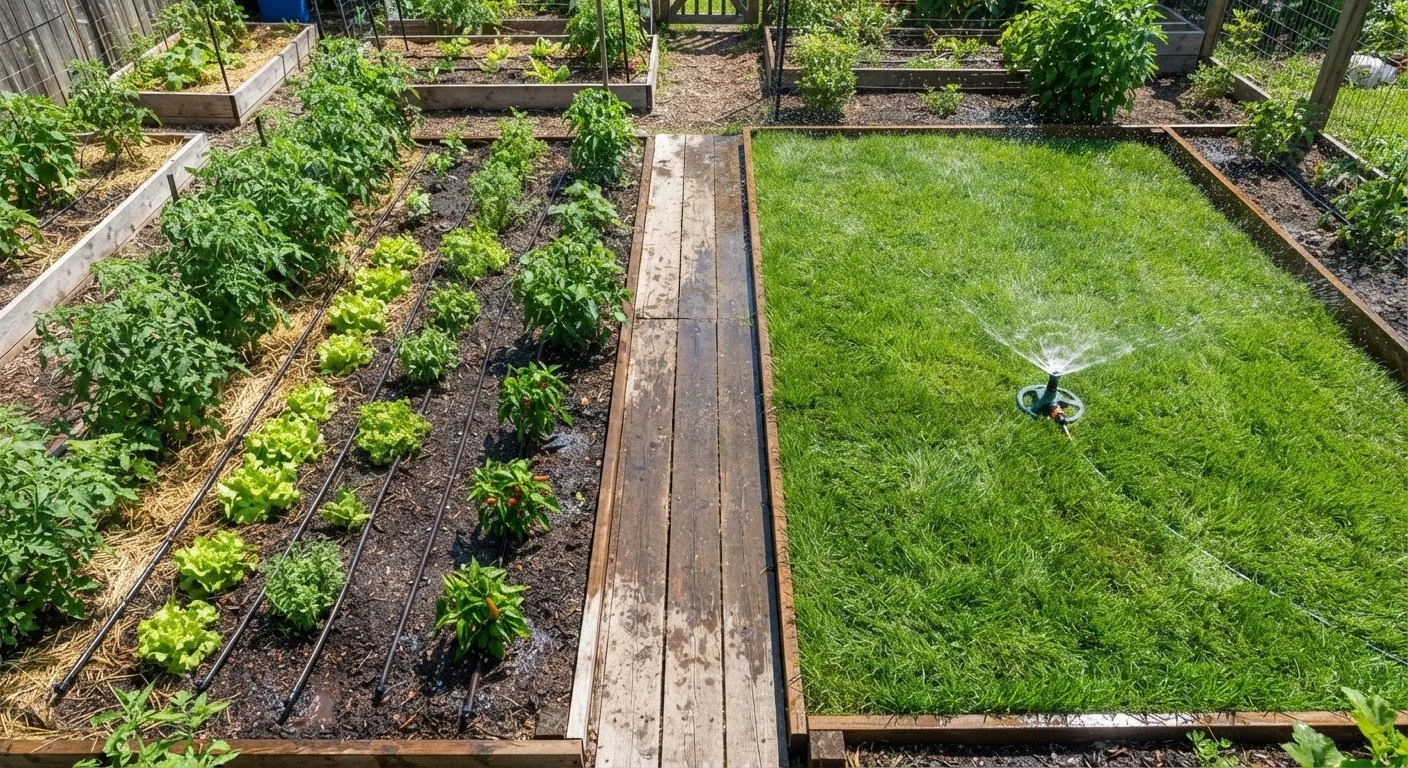
Neither system is universally superior - the right choice depends on what you're watering. Drip irrigation excels in vegetable beds, shrub borders, and sloped terrain where precision and efficiency matter most. Sprinkler systems remain the practical standard for open turf areas that need broad, even coverage.
| Best for | Recommended |
|---|---|
| Vegetable gardens, raised beds, and dense plantings | Drip Irrigation |
| Open lawns, large turf areas, and ground cover | Sprinkler Systems |
| Water-conscious gardeners in drought-prone regions | Drip Irrigation |
| Homeowners wanting low-maintenance, set-and-forget coverage | Sprinkler Systems |
How Each System Works
Understanding the mechanical difference between these two systems is the foundation for making the right choice for your yard.
Drip irrigation delivers water slowly and directly through emitters positioned at or just below the soil surface, right at each plant's root zone. Flow rates are measured in gallons per hour rather than gallons per minute, which means soil absorbs water before it can run off or pool.
Sprinkler systems distribute water through heads that spray or rotate across a broad area. They mimic rainfall, moistening the entire surface zone - soil, foliage, and mulch alike. Most residential in-ground systems operate on a zone-based timer, cycling through different areas of the yard automatically.
Both systems can be automated and paired with smart controllers or soil moisture sensors, which further reduces water waste. For timing guidance that applies to either method, see our article on how watering timing and frequency affect grass health.
Efficiency: Where the Water Actually Goes
Water efficiency is where these two systems diverge most sharply.
Drip systems are widely considered the more efficient option because water goes precisely where plants need it. There's minimal surface evaporation, no wind drift, and foliage stays dry - which also lowers the risk of fungal disease. According to the Environmental Protection Agency's WaterSense program, drip irrigation can be up to 90% efficient, compared to roughly 50-70% for conventional sprinkler systems under typical conditions.
Sprinkler systems lose water to several factors: evaporation in hot weather, overspray onto pavement, and wind carrying droplets away from their target. Watering during early morning hours (before 10 a.m.) reduces these losses considerably.
~90%
Efficiency of drip irrigation systems
The EPA's WaterSense program estimates drip irrigation efficiency at up to 90% under typical conditions.
50-70%
Efficiency of conventional sprinkler systems
Conventional overhead sprinklers lose water to evaporation, wind drift, and overspray, reducing effective delivery.
30-50%
Share of US residential water used outdoors
According to the EPA, outdoor water use accounts for roughly 30 to 50 percent of total household water consumption.
One often-overlooked efficiency factor is soil infiltration rate. Clay-heavy soils absorb water slowly; sprinklers can cause runoff before water penetrates deeply. Drip systems sidestep this problem entirely. Sandy soils drain fast - drip emitters placed correctly can still deliver water to the root zone before it leaches away.
Cost Comparison: Installation and Long-Term Expenses
Cost breaks down into two categories: what you spend upfront and what you spend over time.
| Drip Irrigation | Sprinkler Systems | |
|---|---|---|
| Water efficiency | Up to ~90% efficient | Roughly 50-70% efficient |
| Best for | Garden beds, shrubs, slopes | Lawns, large open areas |
| DIY install difficulty | Low to moderate | Moderate to high |
| Upfront cost (professional install) | Lower for small areas | Higher due to trenching and parts |
| Foliage wetting | Minimal - water goes to soil | High - leaves get wet |
| Maintenance frequency | Inspect emitters seasonally | Check heads each spring |
| Permit typically required | Rarely for surface systems | Often for in-ground systems |
Drip systems are generally less expensive to install yourself - basic kits for a garden bed or shrub border can be assembled for under $100 in parts. However, professional installation for a full yard with multiple zones can approach the cost of a sprinkler system. Emitters and tubing also require periodic inspection; they can clog or shift over time and may need replacement every several years.
In-ground sprinkler systems involve more complex installation - trenching, pipe laying, and backflow preventer requirements - which typically means professional labor. Initial costs for a mid-sized residential lawn commonly run into the thousands of dollars. That said, maintenance costs are relatively predictable: winterization (blowout), head adjustments, and occasional valve replacement.
Over the long run, the water savings from drip systems in garden beds can be meaningful on your utility bill, particularly in regions with tiered water pricing or seasonal drought restrictions. Pairing either system with native plants can extend those savings further - see our guide on native plants for American lawns and gardens.
Which Garden Types Benefit Most from Each System
Matching your irrigation method to your landscape type is the clearest path to good results.
Best uses for drip irrigation
- Vegetable and herb gardens - precise delivery supports consistent soil moisture that edible crops need. Our raised bed gardening guide covers how drip fits into a productive bed setup.
- Shrub and perennial borders - established plants with defined root zones benefit from targeted watering without overhead spray.
- Slopes and hillsides - slow drip rates prevent runoff on grades where sprinklers would waste most of their output.
- Drought-tolerant or native plantings - low-flow emitters allow infrequent, deep watering that mimics natural rainfall patterns.
Best uses for sprinkler systems
- Turfgrass lawns - uniform coverage across open areas is where sprinklers genuinely have no practical rival.
- New seedings or sod - frequent, light watering across a broad surface is essential for germination and establishment.
- Large ground cover plantings - low-growing spreaders across wide areas are difficult to serve with individual emitters.
Consider a Smart Controller for Either System
Smart irrigation controllers adjust watering schedules automatically based on local weather data and soil conditions. They work with both drip and sprinkler setups and can meaningfully reduce overwatering. Look for controllers labeled with the EPA's WaterSense mark, which indicates they meet water-efficiency performance standards.
Many homeowners find the best solution is a zoned hybrid approach: in-ground sprinklers for the lawn, drip lines for beds and borders. Most irrigation controllers support both on separate zones.
Installation Considerations and Maintenance
Before committing to either system, a few practical realities are worth weighing.
Permits and codes: In-ground sprinkler systems often require a permit in many U.S. jurisdictions, and a licensed plumber or irrigation contractor may be needed to install a backflow preventer - a device that protects your drinking water supply from contamination. Always check with your local building or water authority before digging.
Winterization: In climates with freezing winters, both systems need to be shut down and drained or blown out before the first hard freeze. In-ground sprinkler systems especially require this step; water left in pipes can crack them. Drip lines above ground can be more easily disconnected and stored.
Maintenance habits: Drip emitters can clog with mineral deposits or debris - periodic flushing and inspection keeps them functioning correctly. Sprinkler heads can sink, shift, or break; check coverage each spring and after any lawn aeration. Avoiding common watering misconceptions will also help - our piece on lawn care myths that waste your time and money addresses several widely held beliefs about irrigation that can quietly undermine either system.