

Key Takeaways
Feline Scratching Behavior
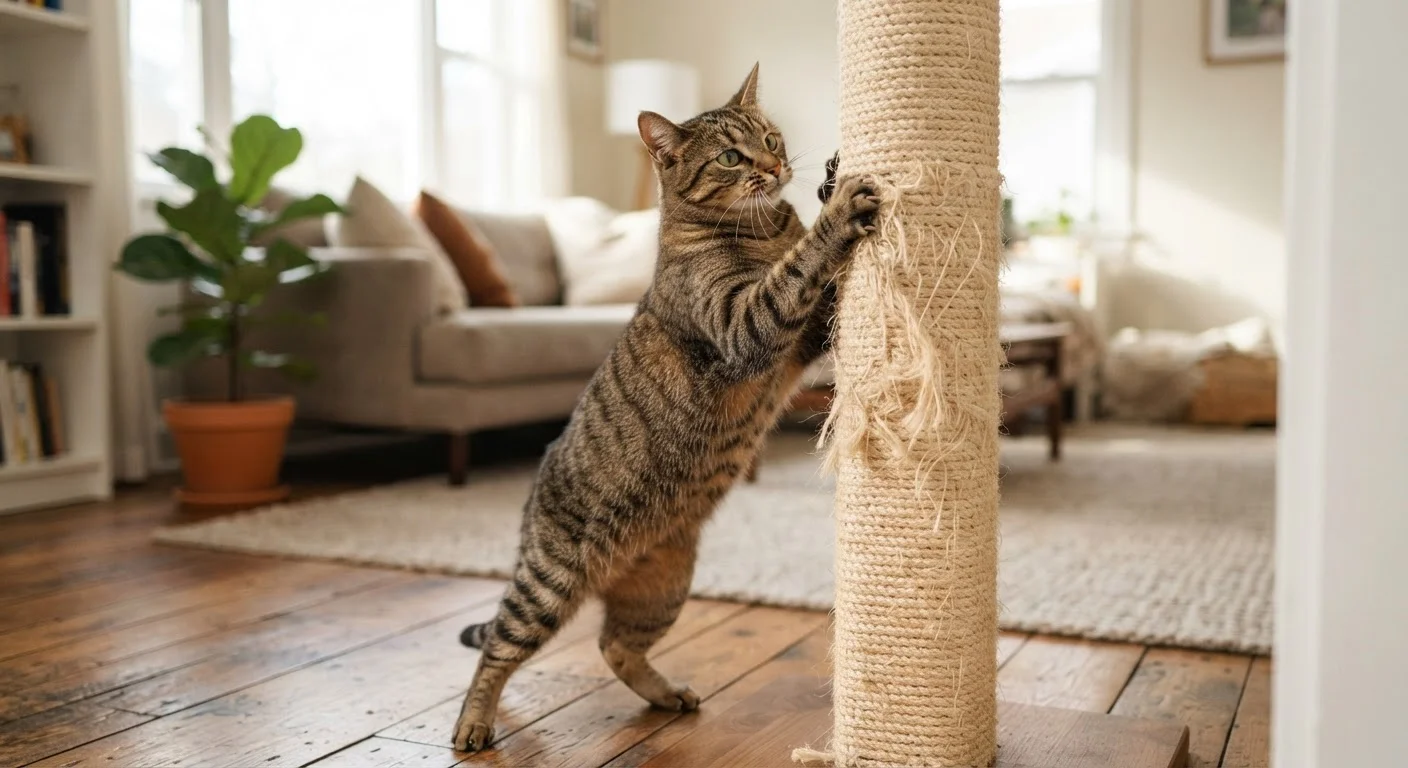
Scratching is a hardwired, instinctual behavior in cats that serves multiple biological purposes. It helps cats shed worn outer claw sheaths, stretch and condition muscles along the spine and shoulders, and deposit scent from glands located in the paw pads. Far from misbehavior, it is a normal part of how cats maintain their bodies and communicate in their environment.
The scent glands located between a cat's digital pads release pheromones during scratching, leaving both a visual and chemical mark that communicates territorial information to other cats.
The Biology Behind the Behavior
When a cat drags its claws down your couch, the impulse behind that action is ancient. Scratching serves three simultaneous biological functions: claw maintenance, physical conditioning, and territorial communication.
Cats' claws grow in layers. Scratching strips away the dull outer sheath to reveal a sharper layer underneath - essentially a built-in nail grooming system. At the same time, the full extension of limbs during a scratch gives the cat a deep spinal and shoulder stretch that supports musculoskeletal health. Finally, scent glands in the paw pads deposit chemical signals - pheromones - that mark the surface as part of the cat's territory.
This is why scratching tends to happen in prominent, high-traffic locations. The cat is not destroying things out of spite; it is quite literally leaving its signature somewhere visible and meaningful. Understanding this changes the entire framing of the problem. As part of responsible cat ownership, recognizing scratching as a need - not a nuisance - is foundational.
Scratching Frequency Can Vary by Age
Kittens and young adult cats typically scratch more frequently as they explore their environment and establish territorial patterns. Senior cats may scratch less due to reduced activity levels or arthritis affecting limb extension. If an older cat suddenly increases scratching, it is worth mentioning to a veterinarian, as discomfort sometimes manifests in behavioral changes.
Why Punishment Makes Things Worse
Spraying a cat with water, shouting, or physically interrupting a scratch does not address the underlying drive. It only teaches the cat to scratch when you are not present - which typically means more covert damage and a more anxious animal.
Cats do not connect delayed or abstract consequences with specific actions the way humans do. Negative reinforcement in this context is ineffective at modifying the behavior and damages the trust between cat and owner. This mirrors a broader pattern of misread feline behavior - similar to the impulse to label knocking objects off surfaces as deliberate mischief when it is actually exploratory or attention-seeking behavior.
Redirect, Don't Reprimand
When you catch your cat scratching furniture, calmly guide them toward the nearest appropriate post rather than reacting with noise or physical deterrence. You can make the post more attractive by rubbing a small amount of catnip on it or dangling a toy nearby. Consistent positive redirection - not punishment - is what changes long-term behavior.
Creating an Environment That Works for Both of You
Redirecting scratching is straightforward once you understand what cats are actually looking for in a scratch surface: height, stability, and texture. Most cats prefer a post tall enough to allow a full-body stretch - roughly 28 to 32 inches - that does not wobble when used. Sisal rope and cardboard are the most commonly preferred textures; looped carpet can actually snag claws uncomfortably.
Placement is just as important as the post itself. Put scratching surfaces near the areas your cat already uses - beside a favorite sleeping spot, near a sofa arm they've targeted, or along a main pathway. Cats often scratch after waking, so proximity to resting areas is especially effective.
~63%
U.S. households reporting cat furniture-scratching issues
Surveys of cat owners consistently identify furniture scratching as one of the most commonly reported behavioral concerns, underscoring how widespread - and normal - the behavior is.
28-32 in
Recommended minimum scratching post height
Animal behaviorists generally recommend posts tall enough for a cat to fully extend its body, as undersized posts fail to meet the stretch-conditioning function of scratching.
If your cat is an indoor-only animal, providing adequate scratching infrastructure becomes even more critical since the behavior cannot be partially expressed outdoors. For a broader look at those trade-offs, see indoor vs. outdoor cat considerations.
Finally, if persistent or unusual scratching patterns accompany other behavioral shifts, separating myth from fact about feline behavior can help you decide when a veterinary check-in is appropriate.